Justplainbill's Weblog

January 17, 2021

Another Validation – 17 Jan 2021

Filed under: Political Commentary — justplainbill @ 6:10 pm

Another Validation – 17 January 2021

If you’ve been following me from the beginning, 2008, or read either of my books, The Heartland Plan and The Albany Plan Revisited, you know that there was much, much more to The War of 1861 than is taught. You will know that slavery, as slavery, had little to do with the secessions. You will also know how much emphasis that I, and many others, place on the mercantilist economics of the Americas, from 1492 through 1888, as being a, if not the, primary force of that age.

In my, and the writings of mostly Southern academics, emphasis is placed on how The South was not only the Milch Cow of the North, but how The South did not profit from the slave-cotton agricultural industry.

In the December issue of BBC History Magazine, Vol 21 no 12, p 44, is an article, The colonial secrets of Britain’s stately homes, by Corinne Fowler. In researching the history of many of Britain’s stately homes and estates, she freely discusses how so many of them were financed through colonialist mal-appropriation of native resources, especially from slavery of so many different peoples. As noted in many places, especially this blog, The South did not profit from the slavery forced upon it by the British Crown in 1620, to the extent that so many ignoranti scree.

For more on the British Colonial Countryside project, visit BBC Radio 3’s Arts & Ideas at bbc.co.uk/sounds/play/07q19kk .

January 15, 2021

Social Media Alternatives to FB & Twit

Filed under: Political Commentary — justplainbill @ 5:27 pm

It is housed on www.the2020panel.com – find box that says LIST OF MEDIA ALTERNATIVES.

December 28, 2020

‘Twas the Night Before Christmas (from US Marine)

Filed under: Political Commentary — justplainbill @ 12:22 am

  TWAS THE NIGHT BEFORE CHRISTMAS,

    HE LIVED ALL ALONE,

    IN A ONE BEDROOM HOUSE MADE OF

    PLASTER AND STONE.

  I HAD COME DOWN THE CHIMNEY

    WITH PRESENTS TO GIVE,

    AND TO SEE JUST WHO

    IN THIS HOME DID LIVE.

  I LOOKED ALL ABOUT,

    A STRANGE SIGHT I DID SEE,

    NO TINSEL, NO PRESENTS,

    NOT EVEN A TREE.

  NO STOCKING BY MANTLE,

    JUST BOOTS FILLED WITH SAND,

    ON THE WALL HUNG PICTURES

    OF FAR DISTANT LANDS.

    WITH MEDALS AND BADGES,

    AWARDS OF ALL KINDS,

    A SOBER THOUGHT

    CAME THROUGH MY MIND.

  FOR THIS HOUSE WAS DIFFERENT,

    IT WAS DARK AND DREARY,

    I FOUND THE HOME OF A SOLDIER,

    ONCE I COULD SEE CLEARLY.

  THE SOLDIER LAY SLEEPING,

    SILENT, ALONE,

    CURLED UP ON THE FLOOR

    IN THIS ONE BEDROOM HOME.

  THE FACE WAS SO GENTLE,

    THE ROOM IN SUCH DISORDER,

    NOT HOW I PICTURED

    A UNITED STATES SOLDIER.

  WAS THIS THE HERO

    OF WHOM I’D JUST READ?

    CURLED UP ON A PONCHO,

    THE FLOOR FOR A BED?

  I REALIZED THE FAMILIES

    THAT I SAW THIS NIGHT,

    OWED THEIR LIVES TO THESE SOLDIERS

    WHO WERE WILLING TO FIGHT.

  SOON ROUND THE WORLD,

    THE CHILDREN WOULD PLAY,

    AND GROWNUPS WOULD CELEBRATE

    A BRIGHT CHRISTMAS DAY.

  THEY ALL ENJOYED FREEDOM

    EACH MONTH OF THE YEAR,

    BECAUSE OF THE SOLDIERS,

    LIKE THE ONE LYING HERE.

  I COULDN’T HELP WONDER

    HOW MANY LAY ALONE,

    ON A COLD CHRISTMAS EVE

    IN A LAND FAR FROM HOME.

  THE VERY THOUGHT

    BROUGHT A TEAR TO MY EYE,

    I DROPPED TO MY KNEES

    AND STARTED TO CRY.

  THE SOLDIER AWAKENED

    AND I HEARD A ROUGH VOICE,

    “SANTA DON’T CRY,

    THIS LIFE IS MY CHOICE;

  I FIGHT FOR FREEDOM,

    I DON’T ASK FOR MORE,

    MY LIFE IS MY GOD,

    MY COUNTRY, MY CORPS.”

  THE SOLDIER ROLLED OVER

    AND DRIFTED TO SLEEP,

    I COULDN’T CONTROL IT,

    I CONTINUED TO WEEP.

  I KEPT WATCH FOR HOURS,

    SO SILENT AND STILL

    AND WE BOTH SHIVERED

    FROM THE COLD NIGHT’S CHILL.

  I DIDN’T WANT TO LEAVE

    ON THAT COLD, DARK, NIGHT,

    THIS GUARDIAN OF HONOR

    SO WILLING TO FIGHT.

  THEN THE SOLDIER ROLLED OVER,

    WITH A VOICE SOFT AND PURE,

    WHISPERED, “CARRY ON SANTA,

    IT’S CHRISTMAS DAY, ALL IS SECURE.”

  ONE LOOK AT MY WATCH,

    AND I KNEW HE WAS RIGHT.

    “MERRY CHRISTMAS MY FRIEND,

    AND TO ALL A GOOD NIGHT.”

    This poem was written by a Marine. The

    following is his request. I think it is reasonable…..

    PLEASE. Would you do me the kind favor of sending this to as many people as you can? Christmas will be coming soon, and some credit is due to our U.S. service men and women for our being able to celebrate these festivities. Let’s try in this small way to
pay a tiny bit of what we owe.

  Make people stop and think of our heroes, living and dead, who sacrificed themselves for us. Please, do your small part to plant this small seed.

  May God Bless You and Have A Great Day!!

December 21, 2020

2020 Election article from the Washington Examiner

Filed under: Political Commentary — justplainbill @ 4:12 pm

https://www.washingtonexaminer.com/news/wh-adviser-navarro-releases-report-election-fraud-swing-victory-to-trump

December 8, 2020

Legal Argument re 2020 election [I]

Filed under: Political Commentary — justplainbill @ 2:50 pm

November 22, 2020

A Sensible and Compassionate Anti-COVID Strategy, by Dr. Jay Bhattacharya, Stanford Univ.

Filed under: Political Commentary — justplainbill @ 10:42 pm
Imprimis

A Sensible and Compassionate Anti-COVID Strategy

 • Volume 49, Number 10 • Jay Bhattacharya

Jay Bhattacharya
Stanford University


Jay Bhattacharya

Jay Bhattacharya is a Professor of Medicine at Stanford University, where he received both an M.D. and a Ph.D. in economics. He is also a research associate at the National Bureau of Economics Research, a senior fellow at the Stanford Institute for Economic Policy Research and at the Freeman Spogli Institute for International Studies, and director of the Stanford Center on the Demography and Economics of Health and Aging. A co-author of the Great Barrington Declaration, his research has been published in economics, statistics, legal, medical, public health, and health policy journals.


The following is adapted from a panel presentation on October 9, 2020, in Omaha, Nebraska, at a Hillsdale College Free Market Forum.

My goal today is, first, to present the facts about how deadly COVID-19 actually is; second, to present the facts about who is at risk from COVID; third, to present some facts about how deadly the widespread lockdowns have been; and fourth, to recommend a shift in public policy.

1. The COVID-19 Fatality Rate

In discussing the deadliness of COVID, we need to distinguish COVID cases from COVID infections. A lot of fear and confusion has resulted from failing to understand the difference.

We have heard much this year about the “case fatality rate” of COVID. In early March, the case fatality rate in the U.S. was roughly three percent—nearly three out of every hundred people who were identified as “cases” of COVID in early March died from it. Compare that to today, when the fatality rate of COVID is known to be less than one half of one percent.

In other words, when the World Health Organization said back in early March that three percent of people who get COVID die from it, they were wrong by at least one order of magnitude. The COVID fatality rate is much closer to 0.2 or 0.3 percent. The reason for the highly inaccurate early estimates is simple: in early March, we were not identifying most of the people who had been infected by COVID.

“Case fatality rate” is computed by dividing the number of deaths by the total number of confirmed cases. But to obtain an accurate COVID fatality rate, the number in the denominator should be the number of people who have been infected—the number of people who have actually had the disease—rather than the number of confirmed cases.

In March, only the small fraction of infected people who got sick and went to the hospital were identified as cases. But the majority of people who are infected by COVID have very mild symptoms or no symptoms at all. These people weren’t identified in the early days, which resulted in a highly misleading fatality rate. And that is what drove public policy. Even worse, it continues to sow fear and panic, because the perception of too many people about COVID is frozen in the misleading data from March.

So how do we get an accurate fatality rate? To use a technical term, we test for seroprevalence—in other words, we test to find out how many people have evidence in their bloodstream of having had COVID.

This is easy with some viruses. Anyone who has had chickenpox, for instance, still has that virus living in them—it stays in the body forever. COVID, on the other hand, like other coronaviruses, doesn’t stay in the body. Someone who is infected with COVID and then clears it will be immune from it, but it won’t still be living in them.

What we need to test for, then, are antibodies or other evidence that someone has had COVID. And even antibodies fade over time, so testing for them still results in an underestimate of total infections.

Seroprevalence is what I worked on in the early days of the epidemic. In April, I ran a series of studies, using antibody tests, to see how many people in California’s Santa Clara County, where I live, had been infected. At the time, there were about 1,000 COVID cases that had been identified in the county, but our antibody tests found that 50,000 people had been infected—i.e., there were 50 times more infections than identified cases. This was enormously important, because it meant that the fatality rate was not three percent, but closer to 0.2 percent; not three in 100, but two in 1,000.

When it came out, this Santa Clara study was controversial. But science is like that, and the way science tests controversial studies is to see if they can be replicated. And indeed, there are now 82 similar seroprevalence studies from around the world, and the median result of these 82 studies is a fatality rate of about 0.2 percent—exactly what we found in Santa Clara County.

In some places, of course, the fatality rate was higher: in New York City it was more like 0.5 percent. In other places it was lower: the rate in Idaho was 0.13 percent. What this variation shows is that the fatality rate is not simply a function of how deadly a virus is. It is also a function of who gets infected and of the quality of the health care system. In the early days of the virus, our health care systems managed COVID poorly. Part of this was due to ignorance: we pursued very aggressive treatments, for instance, such as the use of ventilators, that in retrospect might have been counterproductive. And part of it was due to negligence: in some places, we needlessly allowed a lot of people in nursing homes to get infected.

But the bottom line is that the COVID fatality rate is in the neighborhood of 0.2 percent.

2. Who Is at Risk?

The single most important fact about the COVID pandemic—in terms of deciding how to respond to it on both an individual and a governmental basis—is that it is not equally dangerous for everybody. This became clear very early on, but for some reason our public health messaging failed to get this fact out to the public.

It still seems to be a common perception that COVID is equally dangerous to everybody, but this couldn’t be further from the truth. There is a thousand-fold difference between the mortality rate in older people, 70 and up, and the mortality rate in children. In some sense, this is a great blessing. If it was a disease that killed children preferentially, I for one would react very differently. But the fact is that for young children, this disease is less dangerous than the seasonal flu. This year, in the United States, more children have died from the seasonal flu than from COVID by a factor of two or three.

Whereas COVID is not deadly for children, for older people it is much more deadly than the seasonal flu. If you look at studies worldwide, the COVID fatality rate for people 70 and up is about four percent—four in 100 among those 70 and older, as opposed to two in 1,000 in the overall population.

Again, this huge difference between the danger of COVID to the young and the danger of COVID to the old is the most important fact about the virus. Yet it has not been sufficiently emphasized in public health messaging or taken into account by most policymakers.

3. Deadliness of the Lockdowns

The widespread lockdowns that have been adopted in response to COVID are unprecedented—lockdowns have never before been tried as a method of disease control. Nor were these lockdowns part of the original plan. The initial rationale for lockdowns was that slowing the spread of the disease would prevent hospitals from being overwhelmed. It became clear before long that this was not a worry: in the U.S. and in most of the world, hospitals were never at risk of being overwhelmed. Yet the lockdowns were kept in place, and this is turning out to have deadly effects.

Those who dare to talk about the tremendous economic harms that have followed from the lockdowns are accused of heartlessness. Economic considerations are nothing compared to saving lives, they are told. So I’m not going to talk about the economic effects—I’m going to talk about the deadly effects on health, beginning with the fact that the U.N. has estimated that 130 million additional people will starve this year as a result of the economic damage resulting from the lockdowns.

In the last 20 years we’ve lifted one billion people worldwide out of poverty. This year we are reversing that progress to the extent—it bears repeating—that an estimated 130 million more people will starve.

Another result of the lockdowns is that people stopped bringing their children in for immunizations against diseases like diphtheria, pertussis (whooping cough), and polio, because they had been led to fear COVID more than they feared these more deadly diseases. This wasn’t only true in the U.S. Eighty million children worldwide are now at risk of these diseases. We had made substantial progress in slowing them down, but now they are going to come back.

Large numbers of Americans, even though they had cancer and needed chemotherapy, didn’t come in for treatment because they were more afraid of COVID than cancer. Others have skipped recommended cancer screenings. We’re going to see a rise in cancer and cancer death rates as a consequence. Indeed, this is already starting to show up in the data. We’re also going to see a higher number of deaths from diabetes due to people missing their diabetic monitoring.

Mental health problems are in a way the most shocking thing. In June of this year, a CDC survey found that one in four young adults between 18 and 24 had seriously considered suicide. Human beings are not, after all, designed to live alone. We’re meant to be in company with one another. It is unsurprising that the lockdowns have had the psychological effects that they’ve had, especially among young adults and children, who have been denied much-needed socialization.

In effect, what we’ve been doing is requiring young people to bear the burden of controlling a disease from which they face little to no risk. This is entirely backward from the right approach.

4. Where to Go from Here

Last week I met with two other epidemiologists—Dr. Sunetra Gupta of Oxford University and Dr. Martin Kulldorff of Harvard University—in Great Barrington, Massachusetts. The three of us come from very different disciplinary backgrounds and from very different parts of the political spectrum. Yet we had arrived at the same view—the view that the widespread lockdown policy has been a devastating public health mistake. In response, we wrote and issued the Great Barrington Declaration, which can be viewed—along with explanatory videos, answers to frequently asked questions, a list of co-signers, etc.—online at www.gbdeclaration.org.

The Declaration reads:

As infectious disease epidemiologists and public health scientists we have grave concerns about the damaging physical and mental health impacts of the prevailing COVID-19 policies, and recommend an approach we call Focused Protection.

Coming from both the left and right, and around the world, we have devoted our careers to protecting people. Current lockdown policies are producing devastating effects on short and long-term public health. The results (to name a few) include lower childhood vaccination rates, worsening cardiovascular disease outcomes, fewer cancer screenings, and deteriorating mental health—leading to greater excess mortality in years to come, with the working class and younger members of society carrying the heaviest burden. Keeping students out of school is a grave injustice.

Keeping these measures in place until a vaccine is available will cause irreparable damage, with the underprivileged disproportionately harmed.

Fortunately, our understanding of the virus is growing. We know that vulnerability to death from COVID-19 is more than a thousand-fold higher in the old and infirm than the young. Indeed, for children, COVID-19 is less dangerous than many other harms, including influenza.

As immunity builds in the population, the risk of infection to all—including the vulnerable—falls. We know that all populations will eventually reach herd immunity—i.e., the point at which the rate of new infections is stable—and that this can be assisted by (but is not dependent upon) a vaccine. Our goal should therefore be to minimize mortality and social harm until we reach herd immunity.

The most compassionate approach that balances the risks and benefits of reaching herd immunity, is to allow those who are at minimal risk of death to live their lives normally to build up immunity to the virus through natural infection, while better protecting those who are at highest risk. We call this Focused Protection.

Adopting measures to protect the vulnerable should be the central aim of public health responses to COVID-19. By way of example, nursing homes should use staff with acquired immunity and perform frequent PCR testing of other staff and all visitors. Staff rotation should be minimized. Retired people living at home should have groceries and other essentials delivered to their home. When possible, they should meet family members outside rather than inside. A comprehensive and detailed list of measures, including approaches to multi-generational households, can be implemented, and is well within the scope and capability of public health professionals.

Those who are not vulnerable should immediately be allowed to resume life as normal. Simple hygiene measures, such as hand washing and staying home when sick should be practiced by everyone to reduce the herd immunity threshold. Schools and universities should be open for in-person teaching. Extracurricular activities, such as sports, should be resumed. Young low-risk adults should work normally, rather than from home. Restaurants and other businesses should open. Arts, music, sports, and other cultural activities should resume. People who are more at risk may participate if they wish, while society as a whole enjoys the protection conferred upon the vulnerable by those who have built up herd immunity.

***

I should say something in conclusion about the idea of herd immunity, which some people mischaracterize as a strategy of letting people die. First, herd immunity is not a strategy—it is a biological fact that applies to most infectious diseases. Even when we come up with a vaccine, we will be relying on herd immunity as an end-point for this epidemic. The vaccine will help, but herd immunity is what will bring it to an end. And second, our strategy is not to let people die, but to protect the vulnerable. We know the people who are vulnerable, and we know the people who are not vulnerable. To continue to act as if we do not know these things makes no sense.

My final point is about science. When scientists have spoken up against the lockdown policy, there has been enormous pushback: “You’re endangering lives.” Science cannot operate in an environment like that. I don’t know all the answers to COVID; no one does. Science ought to be able to clarify the answers. But science can’t do its job in an environment where anyone who challenges the status quo gets shut down or cancelled.

To date, the Great Barrington Declaration has been signed by over 43,000 medical and public health scientists and medical practitioners. The Declaration thus does not represent a fringe view within the scientific community. This is a central part of the scientific debate, and it belongs in the debate. Members of the general public can also sign the Declaration.

Together, I think we can get on the other side of this pandemic. But we have to fight back. We’re at a place where our civilization is at risk, where the bonds that unite us are at risk of being torn. We shouldn’t be afraid. We should respond to the COVID virus rationally: protect the vulnerable, treat the people who get infected compassionately, develop a vaccine. And while doing these things we should bring back the civilization that we had so that the cure does not end up being worse than the disease. 

November 21, 2020

Excellent Defensive Weapon, thanks to Capt John for sending

Filed under: Political Commentary — justplainbill @ 5:54 pm

 Excellent Defensive Weapon–Instead Of Purchasing a Hand Gun

No photo                                                          description                                                          available.

If you don’t own, or want, a gun,and even if you do, here’s a way to wreck someone’s evil plans for you. Did you know this? I didn’t. I never really thought of it before. I guess I can get rid of the baseball bat. LOL But seriously, this is great info! Be sure to SHARE!!!

Wasp Spray — A friend who is a receptionist in a church in a high risk area was concerned about someone coming into the office on Monday to rob them when they were counting the collection. She asked the local police department about using pepper spray and they recommended to her that she get a can of wasp spray instead.

The wasp spray, they told her, can shoot up to twenty feet away and is a lot more accurate, while with the pepper spray, they have to get too close to you and could overpower you. The wasp spray temporarily blinds an attacker until they get to the hospital for an antidote. She keeps a can on her desk in the office and it doesn’t attract attention from people like a can of pepper spray would. She also keeps one nearby at home for home protection. Thought this was interesting and might be of use.

On the heels of a break in and beating that left an elderly woman in Toledo dead, self defense experts have a tip that could save your life.

Val Glinka teaches self-defense to students at Sylvania Southview High School . For decades, he’s suggested putting a can of wasp and hornet spray near your door or bed.

Glinka says, “This is better than anything I can teach them.”

Glinka considers it inexpensive, easy to find, and more effective than mace or pepper spray. The cans typically shoot 20 feet; so if someone tries to break into your home, Glinka says “spray the culprit in the eyes”. It’s a tip he’s given to students for decades.

It’s also one he wants everyone to hear If you’re looking for protection, Glinka says look to the spray. “That’s going to give you a chance to call the police; maybe get out.” Maybe even save a life.

Please share this with all the people who are precious to your life.

Did you also know that wasp spray will kill a snake? And a mouse! It will! Good to know, huh? It will also kill a wasp!!!

And best of all, immobilize a human.

November 19, 2020

smiles – 11/19/20

Filed under: Political Commentary — justplainbill @ 11:43 pm

Anti-Depressants to Make You Smile[] 2 ‘Who’s coming?’ 

[]

 3 The best of friends.
[]
4 ‘Tell me doc, is it serious?’
[]
  5 Play time!
[]
6 ‘Don’t be sad, you’ll get your food soon.’
[]

7 Sharing is caring.
[]
  8 Now that’s contentment    
[]
9 . ‘Our father who art in heaven…’
[]
10 . This baby’s guardian angel is right over his shoulder. []
  11 . We know what you’re up to in there!
[]
12 . A helping paw! []
13 . ‘You’re not actually going to go in there, are you?’ []
14 . Kiss me my prince. []

What is a vet?

Filed under: Political Commentary — justplainbill @ 3:10 am

WHAT IS A VET?

Some veterans bear visible signs of their service: a missing limb, a jagged scar, a certain look in the eye. Others may carry the evidence inside them: a pin holding a bone together, a piece of shrapnel in the leg – or perhaps another sort of inner steel: the soul’s ally forged in the refinery of adversity. Except in parades, however, the men and women who have kept America safe wear no badge or emblem. You can’t tell a vet just by looking.

What is a vet?

He is the cop on the beat who spent six months in Saudi Arabia sweating two gallons a day making sure the armored personnel carriers didn’t run out of fuel.

He is the barroom loudmouth, dumber than five wooden planks, whose overgrown frat-boy behavior is outweighed a hundred times in the cosmic scales by four hours of exquisite bravery near the 38th parallel.

She or he is the nurse who fought against futility and went to sleep sobbing every night for two solid years in Da Nang.

He is the POW who went away one person and came back another-or didn’t come back AT ALL.

He is the Quantico drill instructor who has never seen combat-but has saved countless lives by turning slouchy, no-account rednecks and gang members into Marines, and teaching them to watch each other’s backs.

He is the parade-riding Legionnaire who pins on his ribbons and medals with a prosthetic hand.

He is the career quartermaster who watches the ribbons and medals pass him by.

He is the three anonymous heroes in The Tomb Of The Unknowns, whose presence at the Arlington National Cemetery must forever preserve the memory of all the anonymous heroes whose valor dies unrecognized with them on the battlefield or in the ocean’s sunless deep.

He is the old guy bagging groceries at the supermarket-palsied now and aggravatingly slow-who helped liberate a Nazi death camp and who wishes all day long that his wife were still alive to hold him when the nightmares come.

He is an ordinary and yet an extraordinary human being-a person who offered some of his life’s most vital years in the service of his country, and who sacrificed his ambitions so others would not have to sacrifice theirs.

He is a soldier and a savior and a sword against the darkness, and he is nothing more than the finest, greatest testimony on behalf of the

finest, greatest nation ever known.​

So remember, each time you see someone who has served our country, just lean over and say Thank You. That’s all most people need, and in most cases it will mean more than any medals they could have been awarded or were awarded.

Two little words that mean a lot, “THANK YOU.”

“It is the soldier, not the reporter, who has given us freedom of the press. It is the soldier, not the poet, who has given us freedom of speech. It is the soldier, not the campus organizer, who has given us the freedom to demonstrate. It is the soldier, who salutes the flag, who serves beneath the flag, and whose coffin is draped by the flag, who allows the protester to burn the flag.”

Father Dennis Edward O’Brien, USMC

November 15, 2020

Re: BBC History Mag article, The spectre of conspiracies, 11/14/20

Filed under: Political Commentary — justplainbill @ 7:08 pm
5260 So. Ulster St., Ste. 3202 Greenwood Village CO 80111 1+816.805-2127 klocekws@sbcglobal.net

BBC HISTORY Magazine

Immediate Media Co.

Vineyard House

44 Brook Green

London W6 7BT U.K.

letters@historyextra.com

Re:        Vol 21 no 11 Richard J. Evans’ The spectre of conspiracies’ p 59

Ref:       William W. Freehliing’s, Ph.D., The Road to Disunion 3 vols

               Shelby Foote’s, The Civil War: a narrative

               Charles Adams’s, Ph.D., Slavery, Secession & Civil War

What actually determines the elements of a conspiracy? Mr. Evans points to ‘alternative facts,’ p 60 para 1, yet does not clarify his claim

In recent years, the false claim that the American Civil War was fought over slavery has replaced the truth that it was about Jefferson’s 1776 Declaration of Independence, and Thomas Paines’ Common Sense and Rights of Man.

The three references above are but a small part of the body of work available on the subject. Succinctly, slavery is an economic issue, not racial. The American Civil War was fought over the issue of self-government, and the Mercantilist policy of taking taxes from The South and spending them in The North. Slavery was not a major issue of the war until Sharpsburg/ Antietam when the casualty lists were so extensive that both Britain and France decided that they should intervene to stop the bloodshed. In order to prevent the recognition of The Confederate States of America by the United Kingdom and France, Lincoln issued the unconstitutional Emancipation Proclamation, which freed no slaves as evidenced by the continued legality of slavery in such places as Delaware, Maryland, and those areas of Louisiana and Florida occupied by Union Armies.

Thus, are the true facts ‘alternative facts’ because Black Lives Matter and Antifa insist it to be so by destroying our and your histories, or are they actual conspiracists succeeding in Orwellian and Randian prescient prediction?

Respectfully yours,

November 12, 2020

Economics for Beginners, Mises Institute video

Filed under: Political Commentary — justplainbill @ 4:13 pm
We are continuing to roll out new videos in our Economics for Beginners project. Please take a moment to check out the page and share with your friends and family. The latest is What is Capitalism? This short, animated video highlights the role free markets have played in empowering the public, undermining tyranny, and promoting peace and prosperity for all.

As Ludwig von Mises understood, the fate of civilization rests upon the ideas that motivate the masses. If we fail to win the battle of ideas, we will see the horrors of history repeated.
This is why, from the beginning, the Mises Institute has been dedicated to educating people outside of the ivory tower in the ideas of Mises, Rothbard, and the Austrian school. Now, to help us with our goal of pushing back against the socialist tides in this country, we turn to the very young student who is just starting to think and make those all-important early connections. If you start with the unfiltered basics, you don’t have to unlearn concepts later on.
 If you haven’t yet checked out Economics for Beginners, you can do so now at BeginEconomics.org. These short animated videos cover core economic topics, highlighting how economic decisions are a part of our day-to-day life. Perfect for parents looking to supplement their child’s economics education at home or adults looking to broaden their understanding of economics, the series includes discussion questions and additional readings that will ensure no one is fooled by the road to serfdom.

Thank you to everyone who has watched and shared the series so far, the response we have received has been both inspiring and rewarding.

Special thanks to James Kluttz for making this project possible.View Now


You are receiving this email because of your interest in the Mises Institute.

Our mailing address is:
Mises Institute
518 West Magnolia Avenue
Auburn, Alabama 36832

Want to change how you receive these emails?
You can update your preferences or unsubscribe from this list.

November 3, 2020

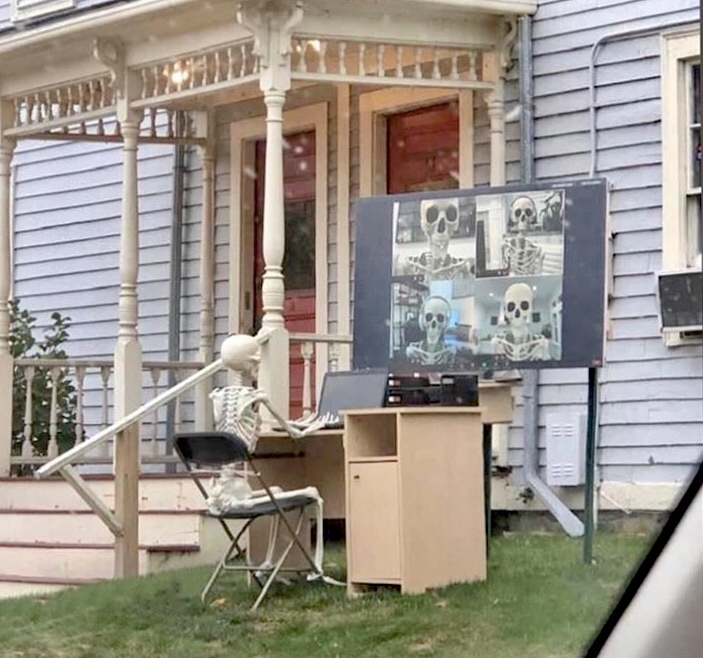
Best Halloween Yard 2020

Filed under: Political Commentary — justplainbill @ 11:34 pm

October 31, 2020

A Sensible and Compassionate Anti-Covid Strategy, by Jay Bhattachyra, M.D., Ph.D.

Filed under: Political Commentary — justplainbill @ 5:39 pm

Support Imprimis

Imprimis

A Sensible and Compassionate Anti-COVID Strategy

 • Volume 49, Number 10 • Jay Bhattacharya

Jay Bhattacharya
Stanford University


Jay Bhattacharya

Jay Bhattacharya is a Professor of Medicine at Stanford University, where he received both an M.D. and a Ph.D. in economics. He is also a research associate at the National Bureau of Economics Research, a senior fellow at the Stanford Institute for Economic Policy Research and at the Freeman Spogli Institute for International Studies, and director of the Stanford Center on the Demography and Economics of Health and Aging. A co-author of the Great Barrington Declaration, his research has been published in economics, statistics, legal, medical, public health, and health policy journals.


The following is adapted from a panel presentation on October 9, 2020, in Omaha, Nebraska, at a Hillsdale College Free Market Forum.

My goal today is, first, to present the facts about how deadly COVID-19 actually is; second, to present the facts about who is at risk from COVID; third, to present some facts about how deadly the widespread lockdowns have been; and fourth, to recommend a shift in public policy.

1. The COVID-19 Fatality Rate

In discussing the deadliness of COVID, we need to distinguish COVID cases from COVID infections. A lot of fear and confusion has resulted from failing to understand the difference.

We have heard much this year about the “case fatality rate” of COVID. In early March, the case fatality rate in the U.S. was roughly three percent—nearly three out of every hundred people who were identified as “cases” of COVID in early March died from it. Compare that to today, when the fatality rate of COVID is known to be less than one half of one percent.

In other words, when the World Health Organization said back in early March that three percent of people who get COVID die from it, they were wrong by at least one order of magnitude. The COVID fatality rate is much closer to 0.2 or 0.3 percent. The reason for the highly inaccurate early estimates is simple: in early March, we were not identifying most of the people who had been infected by COVID.

“Case fatality rate” is computed by dividing the number of deaths by the total number of confirmed cases. But to obtain an accurate COVID fatality rate, the number in the denominator should be the number of people who have been infected—the number of people who have actually had the disease—rather than the number of confirmed cases.

In March, only the small fraction of infected people who got sick and went to the hospital were identified as cases. But the majority of people who are infected by COVID have very mild symptoms or no symptoms at all. These people weren’t identified in the early days, which resulted in a highly misleading fatality rate. And that is what drove public policy. Even worse, it continues to sow fear and panic, because the perception of too many people about COVID is frozen in the misleading data from March.

So how do we get an accurate fatality rate? To use a technical term, we test for seroprevalence—in other words, we test to find out how many people have evidence in their bloodstream of having had COVID.

This is easy with some viruses. Anyone who has had chickenpox, for instance, still has that virus living in them—it stays in the body forever. COVID, on the other hand, like other coronaviruses, doesn’t stay in the body. Someone who is infected with COVID and then clears it will be immune from it, but it won’t still be living in them.

What we need to test for, then, are antibodies or other evidence that someone has had COVID. And even antibodies fade over time, so testing for them still results in an underestimate of total infections.

Seroprevalence is what I worked on in the early days of the epidemic. In April, I ran a series of studies, using antibody tests, to see how many people in California’s Santa Clara County, where I live, had been infected. At the time, there were about 1,000 COVID cases that had been identified in the county, but our antibody tests found that 50,000 people had been infected—i.e., there were 50 times more infections than identified cases. This was enormously important, because it meant that the fatality rate was not three percent, but closer to 0.2 percent; not three in 100, but two in 1,000.

When it came out, this Santa Clara study was controversial. But science is like that, and the way science tests controversial studies is to see if they can be replicated. And indeed, there are now 82 similar seroprevalence studies from around the world, and the median result of these 82 studies is a fatality rate of about 0.2 percent—exactly what we found in Santa Clara County.

In some places, of course, the fatality rate was higher: in New York City it was more like 0.5 percent. In other places it was lower: the rate in Idaho was 0.13 percent. What this variation shows is that the fatality rate is not simply a function of how deadly a virus is. It is also a function of who gets infected and of the quality of the health care system. In the early days of the virus, our health care systems managed COVID poorly. Part of this was due to ignorance: we pursued very aggressive treatments, for instance, such as the use of ventilators, that in retrospect might have been counterproductive. And part of it was due to negligence: in some places, we needlessly allowed a lot of people in nursing homes to get infected.

But the bottom line is that the COVID fatality rate is in the neighborhood of 0.2 percent.

2. Who Is at Risk?

The single most important fact about the COVID pandemic—in terms of deciding how to respond to it on both an individual and a governmental basis—is that it is not equally dangerous for everybody. This became clear very early on, but for some reason our public health messaging failed to get this fact out to the public.

It still seems to be a common perception that COVID is equally dangerous to everybody, but this couldn’t be further from the truth. There is a thousand-fold difference between the mortality rate in older people, 70 and up, and the mortality rate in children. In some sense, this is a great blessing. If it was a disease that killed children preferentially, I for one would react very differently. But the fact is that for young children, this disease is less dangerous than the seasonal flu. This year, in the United States, more children have died from the seasonal flu than from COVID by a factor of two or three.

Whereas COVID is not deadly for children, for older people it is much more deadly than the seasonal flu. If you look at studies worldwide, the COVID fatality rate for people 70 and up is about four percent—four in 100 among those 70 and older, as opposed to two in 1,000 in the overall population.

Again, this huge difference between the danger of COVID to the young and the danger of COVID to the old is the most important fact about the virus. Yet it has not been sufficiently emphasized in public health messaging or taken into account by most policymakers.

3. Deadliness of the Lockdowns

The widespread lockdowns that have been adopted in response to COVID are unprecedented—lockdowns have never before been tried as a method of disease control. Nor were these lockdowns part of the original plan. The initial rationale for lockdowns was that slowing the spread of the disease would prevent hospitals from being overwhelmed. It became clear before long that this was not a worry: in the U.S. and in most of the world, hospitals were never at risk of being overwhelmed. Yet the lockdowns were kept in place, and this is turning out to have deadly effects.

Those who dare to talk about the tremendous economic harms that have followed from the lockdowns are accused of heartlessness. Economic considerations are nothing compared to saving lives, they are told. So I’m not going to talk about the economic effects—I’m going to talk about the deadly effects on health, beginning with the fact that the U.N. has estimated that 130 million additional people will starve this year as a result of the economic damage resulting from the lockdowns.

In the last 20 years we’ve lifted one billion people worldwide out of poverty. This year we are reversing that progress to the extent—it bears repeating—that an estimated 130 million more people will starve.

Another result of the lockdowns is that people stopped bringing their children in for immunizations against diseases like diphtheria, pertussis (whooping cough), and polio, because they had been led to fear COVID more than they feared these more deadly diseases. This wasn’t only true in the U.S. Eighty million children worldwide are now at risk of these diseases. We had made substantial progress in slowing them down, but now they are going to come back.

Large numbers of Americans, even though they had cancer and needed chemotherapy, didn’t come in for treatment because they were more afraid of COVID than cancer. Others have skipped recommended cancer screenings. We’re going to see a rise in cancer and cancer death rates as a consequence. Indeed, this is already starting to show up in the data. We’re also going to see a higher number of deaths from diabetes due to people missing their diabetic monitoring.

Mental health problems are in a way the most shocking thing. In June of this year, a CDC survey found that one in four young adults between 18 and 24 had seriously considered suicide. Human beings are not, after all, designed to live alone. We’re meant to be in company with one another. It is unsurprising that the lockdowns have had the psychological effects that they’ve had, especially among young adults and children, who have been denied much-needed socialization.

In effect, what we’ve been doing is requiring young people to bear the burden of controlling a disease from which they face little to no risk. This is entirely backward from the right approach.

4. Where to Go from Here

Last week I met with two other epidemiologists—Dr. Sunetra Gupta of Oxford University and Dr. Martin Kulldorff of Harvard University—in Great Barrington, Massachusetts. The three of us come from very different disciplinary backgrounds and from very different parts of the political spectrum. Yet we had arrived at the same view—the view that the widespread lockdown policy has been a devastating public health mistake. In response, we wrote and issued the Great Barrington Declaration, which can be viewed—along with explanatory videos, answers to frequently asked questions, a list of co-signers, etc.—online at www.gbdeclaration.org.

The Declaration reads:

As infectious disease epidemiologists and public health scientists we have grave concerns about the damaging physical and mental health impacts of the prevailing COVID-19 policies, and recommend an approach we call Focused Protection.

Coming from both the left and right, and around the world, we have devoted our careers to protecting people. Current lockdown policies are producing devastating effects on short and long-term public health. The results (to name a few) include lower childhood vaccination rates, worsening cardiovascular disease outcomes, fewer cancer screenings, and deteriorating mental health—leading to greater excess mortality in years to come, with the working class and younger members of society carrying the heaviest burden. Keeping students out of school is a grave injustice.

Keeping these measures in place until a vaccine is available will cause irreparable damage, with the underprivileged disproportionately harmed.

Fortunately, our understanding of the virus is growing. We know that vulnerability to death from COVID-19 is more than a thousand-fold higher in the old and infirm than the young. Indeed, for children, COVID-19 is less dangerous than many other harms, including influenza.

As immunity builds in the population, the risk of infection to all—including the vulnerable—falls. We know that all populations will eventually reach herd immunity—i.e., the point at which the rate of new infections is stable—and that this can be assisted by (but is not dependent upon) a vaccine. Our goal should therefore be to minimize mortality and social harm until we reach herd immunity.

The most compassionate approach that balances the risks and benefits of reaching herd immunity, is to allow those who are at minimal risk of death to live their lives normally to build up immunity to the virus through natural infection, while better protecting those who are at highest risk. We call this Focused Protection.

Adopting measures to protect the vulnerable should be the central aim of public health responses to COVID-19. By way of example, nursing homes should use staff with acquired immunity and perform frequent PCR testing of other staff and all visitors. Staff rotation should be minimized. Retired people living at home should have groceries and other essentials delivered to their home. When possible, they should meet family members outside rather than inside. A comprehensive and detailed list of measures, including approaches to multi-generational households, can be implemented, and is well within the scope and capability of public health professionals.

Those who are not vulnerable should immediately be allowed to resume life as normal. Simple hygiene measures, such as hand washing and staying home when sick should be practiced by everyone to reduce the herd immunity threshold. Schools and universities should be open for in-person teaching. Extracurricular activities, such as sports, should be resumed. Young low-risk adults should work normally, rather than from home. Restaurants and other businesses should open. Arts, music, sports, and other cultural activities should resume. People who are more at risk may participate if they wish, while society as a whole enjoys the protection conferred upon the vulnerable by those who have built up herd immunity.

***

I should say something in conclusion about the idea of herd immunity, which some people mischaracterize as a strategy of letting people die. First, herd immunity is not a strategy—it is a biological fact that applies to most infectious diseases. Even when we come up with a vaccine, we will be relying on herd immunity as an end-point for this epidemic. The vaccine will help, but herd immunity is what will bring it to an end. And second, our strategy is not to let people die, but to protect the vulnerable. We know the people who are vulnerable, and we know the people who are not vulnerable. To continue to act as if we do not know these things makes no sense.

My final point is about science. When scientists have spoken up against the lockdown policy, there has been enormous pushback: “You’re endangering lives.” Science cannot operate in an environment like that. I don’t know all the answers to COVID; no one does. Science ought to be able to clarify the answers. But science can’t do its job in an environment where anyone who challenges the status quo gets shut down or cancelled.

To date, the Great Barrington Declaration has been signed by over 43,000 medical and public health scientists and medical practitioners. The Declaration thus does not represent a fringe view within the scientific community. This is a central part of the scientific debate, and it belongs in the debate. Members of the general public can also sign the Declaration.

Together, I think we can get on the other side of this pandemic. But we have to fight back. We’re at a place where our civilization is at risk, where the bonds that unite us are at risk of being torn. We shouldn’t be afraid. We should respond to the COVID virus rationally: protect the vulnerable, treat the people who get infected compassionately, develop a vaccine. And while doing these things we should bring back the civilization that we had so that the cure does not end up being worse than the disease. 

October 24, 2020

Tools, (humor) thanx Jfasb

Filed under: Political Commentary — justplainbill @ 5:50 pm

> DRILL PRESS : A tall upright machine useful for suddenly snatching flat metal bar stock out of your hands so that it smacks you in the chest and flings your beer across the room, denting the freshly-painted project which you had carefully set in the corner where nothing could get to it.
>
> WIRE WHEEL : Cleans paint off bolts and then throws them somewhere under the workbench with the speed of light. Also removes fingerprints and hard-earned calluses from fingers in about the time it takes you to say, ‘Oh sh*t’
>
> DROP SAW : A portable cutting tool used to make studs too short.
>
> PLIERS : Used to round off bolt heads. Sometimes used in the creation of blood-blisters.
>
> BELT SANDER : An electric sanding tool commonly used to convert minor touch-up jobs into major refinishing jobs.
>
> HACKSAW : One of a family of cutting tools built on the Ouija board principle… It transforms human energy into a crooked, unpredictable motion, and the more you attempt to influence its course, the more dismal your future becomes.
>
> VISE-GRIPS : Generally used after pliers to completely round off bolt heads. If nothing else is available, they can also be used to transfer intense welding heat to the palm of your hand.
>
> OXYACETYLENE TORCH : Used almost entirely for lighting on fire various flammable objects in your shop. Also handy for igniting the grease inside the wheel hub out of which you want to remove a bearing race..
>
> TABLE SAW : A large stationary power tool commonly used to launch wood projectiles for testing wall integrity.
>
> HYDRAULIC FLOOR JACK : Used for lowering an automobile to the ground after you have installed your new brake shoes, trapping the jack handle firmly under the bumper.
>
> BAND SAW : A large stationary power saw primarily used by most shops to cut good aluminum sheet into smaller pieces that more easily fit into the trash can after you cut on the inside of the line instead of the outside edge.
>
> TWO-TON ENGINE HOIST : A tool for testing the maximum tensile strength of everything you forgot to disconnect.
>
> PHILLIPS SCREWDRIVER : Normally used to stab the vacuum seals under lids or for opening old-style paper-and-tin oil cans and splashing oil on your shirt; but can also be used, as the name implies, to strip out Phillips screw heads.
>
> STRAIGHT SCREWDRIVER : A tool for opening paint cans. Sometimes used to convert common slotted screws into non-removable screws and butchering your palms.
>
> PRY BAR : A tool used to crumple the metal surrounding that clip or bracket you needed to remove in order to replace a 50 cent part.
>
> HOSE CUTTER : A tool used to make hoses too short.
>
> HAMMER : Originally employed as a weapon of war, the hammer nowadays is used as a kind of divining rod to locate the most expensive parts adjacent the object we are trying to hit.
>
> UTILITY KNIFE : Used to open and slice through the contents of cardboard cartons delivered to your front door; works particularly well on contents such as seats, vinyl records, liquids in plastic bottles, collector magazines, refund checks, and rubber or plastic parts. Especially useful for slicing work clothes, but only while in use.
>
> ADJUSTABLE WRENCH: aka “Another hammer”, aka “the Swedish Nut Lathe”, aka “Crescent Wrench”.  Commonly used as a one size fits all wrench, usually results in rounding off nut heads before the use of pliers.  Will randomly adjust size between bolts, resulting in busted buckles, curse words, and multiple threats to any inanimate objects within the immediate vicinity.
>
> Son of a bitch TOOL : Any handy tool that you grab and throw across the garage while yelling ‘Son of a b*tch’ at the top of your lungs. It is also, most often, the next tool that you will need.

October 23, 2020

Posters to Aggravate Liberals, 10/21/2020

Filed under: Political Commentary — justplainbill @ 3:21 pm

Posters To Aggravate Liberals 

bb

October 22, 2020

7 Predictions (thanks to Myron for sending)

Filed under: Political Commentary — justplainbill @ 3:09 am

  7 Predictions: How 2020 Ends (Gergulis ‘Sends’)Buckle up folks. Rough times ahead.  


7 Predictions: How 2020 Comes To An End

Daniel Bobinski, M.Ed. is a certified behavioral analyst, best-selling author, corporate trainer, executive coach, and columnist. He’s also a veteran and a self-described Christian Libertarian who believes in the principles of free market capitalism – while standing firmly against crony capitalism.

For more great journalism, go to undercover.com 

America is at a crossroads with revolution on our doorstep. On one side are the Patriots; those who seek to preserve, protect, and defend the Constitution. On the other side are Marxist insurrectionists; those who believe that America is evil and the cause of so many problems in world.

The Marxist-friendly side is pulling for Joe Biden to be ushered into the White House. They don’t call themselves Marxists, but as the saying goes, if it talks like a duck and walks like a duck, it’s a duck.

I’ve been writing since January that the Globalists don’t care if there’s bloodshed in America, and in March I wrote that the Left is waging  a scorched-earth war against Trump.

At the risk of sounding like I’m saying, “I told you so,” I told you so.

If you’ve been reading tea leaves from the news lately, you may have already figured out what’s coming at us in the next few months. If so, the following may simply affirm your observations. But I wanted to put this out there so everyone knows what to expect and therefore won’t be surprised.

My Seven Predictions:

Prediction 1: Trump will win the election in a landslide. I know, the media is telling you the polls are tight, but just look around. Trump rallies are packed to the gills while Biden can’t fill the bleachers at a high school football field. Trump supporters hold huge boat parades while we see NONE for Biden. Trump supporters hold freeway caravans around that country that take up all lanes of a freeway, while an attempted caravan for Biden in Las Vegas  drew only 30 people. Just like in 2016, pollsters today are making it look like it’s a close race. This is  gaslighting – they’re telling you something that runs directly opposite of what your own eyes are telling you, but they’re expecting you to believe what they say.

Prediction 2: On the evening of November 3, Joe Biden will not concede the election, even though the vote will clearly be for Trump. Hillary Clinton has publicly stated that Joe should not concede, so the seed has been planted in our minds to expect this. And, because we’re expecting it, we won’t be shocked by it.

Prediction 3: Massive mail voter fraud will create confusion and Marxists (e.g. Democrats) will insist that “every vote counts.” They know Americans want to be fair so Marxists will play on that. They will cry and wail and plead that every vote needs to get counted, so they’ll ask for sympathy for voters who didn’t follow confusing new election rules about how to cast their mail-in ballots. That will be their story, but many votes will be fraudulent. As they’ve demonstrated on America’s streets, Marxists don’t care about following laws; they care about power.

Prediction 4: Because of massive mail fraud ballots showing up late, election results WILL be delayed. The deceptive Mark Zuckerberg at Facebook and the clearly biased Jack Dorsey at Twitter have already announced they will flag any posts or tweets that claim a victory for Trump. They KNOW Trump will have more than enough votes to win, but as  Zuckerberg already told us, we should expect results to take “DAYS OR EVEN WEEKS.” In other words, Facebook and Twitter are well-aware of the planned mail-in voter fraud, and they’re already providing cover for it. The planned vote count confusion will be dragged out as long as possible. The Marxists’ intention is to keep confusion swirling at least until December 14 in hopes that the electoral college won’t be able to identify a winner. Expect ballots to keep showing up out of nowhere.

Prediction 5: If Marxists cannot keep up the façade until December 14, some states will obfuscate the electoral process by choosing not to follow the rules laid out in the 12th Amendment. In fact, both may happen. Either way, by attempting to throw the electoral college into confusion, Marxists (again, the Democrats) will make a push for the electoral college to be eliminated. Believe me when I say you don’t want this. Students of the Constitution know that if the electoral college is eliminated, the Republic will be gone.

Prediction 6: Expect Nancy Pelosi to be acting all patriotic and concerned about the Constitution during the chaos, but rest assured, it’s a passive-aggressive act. She is among the Marxist vanguard in both houses of Congress orchestrating the whole mess. You will also see some Marxist-friendly governors making a lot of noise.

Prediction 7: While Marxists in Congress are messing with the electoral process, Marxists on the streets (Antifa and BLM) will intensify their violence by burning, looting, and murdering even more than what we’ve seen to this point. There’s already a movement that seeks to  lay siege to the White House. Not only do the puppet masters want all the street chaos to distract our attention from what’s going on in the electoral process, the street Marxists see this election as their only chance to either grab power or put up with Trump for four more years. The protestors have been trained to instigate violence, and copy-cat wannabes will want to join in. Street Marxists will view these riots as the fight of their lives: it will get intense.

To perpetuate the riots, puppet masters like George Soros will continue pouring money into organizations that fund them Also remember that Antifa and BLM have threatened to go into the suburbs. Their purpose for doing so is to trigger the Soccer Moms who wants peace at all costs. Marxists will hope that these suburban moms will apply pressure on their elected representatives to give in to the Marxists so the violence will end. Life on American streets will be unpredictable and dangerous.

How does it end? 

The Marxists are desperate, so the fighting will be like nothing the country has ever seen before. I predict we’ll see horrific things happening in our cities and on our streets, and traditional media (read: Marxist-friendly media) will be spewing twisted truths and lies about everything listed above. And we can’t forget that social media giants favor the Marxists in this revolution, so they will be squelching debate in whatever ways they can.

The final months of 2020 will be an emotional roller coaster, but in the end, I predict Trump prevails. It’s not going to be pretty, and many who are now thinking life will return to normal after November 3 will be sadly mistaken. They will be wondering what happened to the country they once knew.

Whether the Democrats implode or not after all this happens remains to be seen, but it is my prayer that when the dust settles, all the Marxists plotters and schemers be exposed and truth will be recognized as truth. And then … maybe then … Trump can get on with his promise to drain the entire swamp.

October 18, 2020

What has Trump done? from jfasb

Filed under: Political Commentary — justplainbill @ 4:00 pm

This list is impressive, it really is.

The next time democrats state Trump has done nothing but divide the country and encourage hate or he’s done nothing but golf…. here’s a list of what he’s done to share.

  Dude has been in office for 3½ years…. what has he done? Other than dodging the darts the media and Pelosi have thrown?!?
 What has PRESIDENT TRUMP and his cabinet accomplished…..
  > Here you go:
 1. Trump recently signed 3 bills to benefit Native people. One gives compensation to the Spokane tribe for loss of their lands in the mid-1900s, one funds Native language programs, and the third gives federal recognition to the Little Shell Tribe of Chippewa Indians in Montana.
 2. Trump finalized the creation of Space Force as our 6th Military branch.
 3. Trump signed a law to make cruelty to animals a federal felony so that animal abusers face tougher consequences.
 4. Violent crime has fallen every year he’s been in office after rising during the 2 years before he was elected.
 5. Trump signed a bill making CBD and Hemp legal.
 6. Trump’s EPA gave $100 million to fix the water infrastructure problem in Flint, Michigan.j > 7. Under Trump’s leadership, in 2018 the U.S. surpassed Russia and Saudi Arabia to become the world’s largest producer of crude oil.
 8. Trump signed a law ending the gag orders on Pharmacists that prevented them from sharing money-saving information.
 9. Trump signed the “Allow States and Victims to Fight Online Sex Trafficking Act” (FOSTA), which includes the “Stop Enabling Sex Traffickers Act” (SESTA) which both give law enforcement and victims new tools to fight sex trafficking.
 10. Trump signed a bill to require airports to provide spaces for breastfeeding Moms.
 11. The 25% lowest-paid Americans enjoyed a 4.5% income boost in November 2019, which outpaces a 2.9% gain in earnings for the country’s highest-paid workers.
 12. Low-wage workers are benefiting from higher minimum wages and from corporations that are increasing entry-level pay.
 13. Trump signed the biggest wilderness protection & conservation bill in a decade and designated 375,000 acres as protected land.
 14. Trump signed the Save our Seas Act which funds $10 million per year to clean tons of plastic & garbage from the ocean.
 15. He signed a bill this year allowing some drug imports from Canada so that prescription prices would go down.
 16. Trump signed an executive order this year that forces all healthcare providers to disclose the cost of their services so that Americans can comparison shop and know how much less providers charge insurance companies.
 17. When signing that bill he said no American should be blindsided by bills for medical services they never agreed to in advance.
 18. Hospitals will now be required to post their standard charges for services, which include the discounted price a hospital is willing to accept.
 19. In the eight years prior to President Trump’s inauguration, prescription drug prices increased by an average of 3.6% per year. Under Trump, drug prices have seen year-over-year declines in nine of the last ten months, with a 1.1% drop as of the most recent month.
 20. He created a White House VA Hotline to help veterans and principally staffed it with veterans and direct family members of veterans.
 21. VA employees are being held accountable for poor performance, with more than 4,000 VA employees removed, demoted, and suspended so far.
 22. Issued an executive order requiring the Secretaries of Defense, Homeland Security, and Veterans Affairs to submit a joint plan to provide veterans access to access to mental health treatment as they transition to civilian life.
 23. Because of a bill signed and championed by Trump, In 2020, most federal employees will see their pay increase by an average of 3.1% — the largest raise in more than 10 years.
 24. Trump signed into a law up to 12 weeks of paid parental leave for millions of federal workers.
 25. Trump administration will provide HIV prevention drugs for free to 200,000 uninsured patients per year for 11 years.
 26. All-time record sales during the 2019 holidays.
 27. Trump signed an order allowing small businesses to group together when buying insurance to get a better price
 28. President Trump signed the Preventing Maternal Deaths Act that provides funding for states to develop maternal mortality reviews to better understand maternal complications and identify solutions & largely focuses on reducing the higher mortality rates for Black Americans.
 29. In 2018, President Trump signed the groundbreaking First Step Act, a criminal justice bill which enacted reforms that make our justice system fairer and help former inmates successfully return to society.
30. The First Step Act’s reforms addressed inequities in sentencing laws that disproportionately harmed Black Americans and reformed mandatory minimums that created unfair outcomes.
 31. The First Step Act expanded judicial discretion in sentencing of non-violent crimes.
 32. Over 90% of those benefitting from the retroactive sentencing reductions in the First Step Act are Black Americans.
 33. The First Step Act provides rehabilitative programs to inmates, helping them successfully rejoin society and not return to crime.
 34. Trump increased funding for Historically Black Colleges and Universities (HBCUs) by more than 14%.

 35. Trump signed legislation forgiving Hurricane Katrina debt that threatened HBCUs.
 36. New single-family home sales are up 31.6% in October 2019 compared to just one year ago.
 37. Made HBCUs a priority by creating the position of executive director of the White House Initiative on HBCUs.
 38. Trump received the Bipartisan Justice Award at a historically black college for his criminal justice reform accomplishments.
 39. The poverty rate fell to a 17-year low of 11.8% under the Trump administration as a result of a jobs-rich environment.
 40. Poverty rates for African-Americans and Hispanic-Americans have reached their lowest levels since the U.S. began collecting such data.
 41. President Trump signed a bill that creates five national monuments, expands several national parks, adds 1.3 million acres of wilderness, and permanently reauthorizes the Land and Water Conservation Fund.
 42. Trump’s USDA committed $124 Million to rebuild rural water infrastructure.
 43. Consumer confidence & small business confidence is at an all-time high.
 44. More than 7 million jobs created since election.
 45. More Americans are now employed than ever recorded before in our history.
 46. More than 400,000 manufacturing jobs created since his election.
 47. Trump appointed 5 openly gay ambassadors.
 48. Trump ordered Ric Grenell, his openly gay ambassador to Germany, to lead a global initiative to decriminalize homosexuality across the globe.
 49. Through Trump’s Anti-Trafficking Coordination Team (ACTeam) initiative, Federal law enforcement more than doubled convictions of human traffickers and increased the number of defendants charged by 75% in ACTeam districts.
 50. In 2018, the Department of Justice (DOJ) dismantled an organization that was the internet’s leading source of prostitution-related advertisements resulting in sex trafficking.
 51. Trump’s OMB published new anti-trafficking guidance for government procurement officials to more effectively combat human trafficking.
 52. Trump’s Immigration and Customs Enforcement’s Homeland Security Investigations arrested 1,588 criminals associated with Human Trafficking.
 53. Trump’s Department of Health and Human Services provided funding to support the National Human Trafficking Hotline to identify perpetrators and give victims the help they need.
 54. The hotline identified 16,862 potential human trafficking cases.
 55. Trump’s DOJ provided grants to organizations that support human trafficking victims – serving nearly 9,000 cases from July 1, 2017, to June 30, 2018.
 56. The Department of Homeland Security has hired more victim assistance specialists, helping victims get resources and support.
 57. President Trump has called on Congress to pass school choice legislation so that no child is trapped in a failing school because of his or her zip code.
 58. The President signed funding legislation in September 2018 that increased funding for school choice by $42 million.
 59. The tax cuts signed into law by President Trump promote school choice by allowing families to use 529 college savings plans for elementary and secondary education.
 60. Under his leadership ISIS has lost most of their territory and been largely dismantled.
 61. ISIS leader Abu Bakr Al-Baghdadi was killed.
 62. Signed the first Perkins CTE reauthorization since 2006, authorizing more than $1 billion for states each year to fund vocational and career education programs.
 63. Executive order expanding apprenticeship opportunities for students and workers.
 64. Trump issued an Executive Order prohibiting the U.S. government from discriminating against Christians or punishing expressions of faith.
 65. Signed an executive order that allows the government to withhold money from college campuses deemed to be anti-Semitic and who fail to combat anti-Semitism.
 66. President Trump ordered a halt to U.S. tax money going to international organizations that fund or perform abortions.
 67. Trump imposed sanctions on the socialists in Venezuela who have killed their citizens.
 68. Finalized new trade agreement with South Korea.
 69. Made a deal with the European Union to increase U.S. energy exports to Europe.
 70. Withdrew the U.S. from the job killing TPP deal.
 71. Secured $250 billion in new trade and investment deals in China and $12 billion in Vietnam.
 72. Okay’ d up to $12 billion in aid for farmers affected by unfair trade retaliation.
 73. Has had over a dozen US hostages freed, including those Obama could not get freed.
 74. Trump signed the Music Modernization Act, the biggest change to copyright law in decades.
 75. Trump secured Billions that will fund the building of a wall at our southern border.
 76. The Trump Administration is promoting second chance hiring to give former inmates the opportunity to live crime-free lives and find meaningful employment.
 77. Trump’s DOJ and the Board Of Prisons launched a new “Ready to Work Initiative” to help connect employers directly with former prisoners.
 78. President Trump’s historic tax cut legislation included new Opportunity Zone Incentives to promote investment in low-income communities across the country.
 79. 8,764 communities across the country have been designated as Opportunity Zones.
 80. Opportunity Zones are expected to spur $100 billion in long-term private capital investment in economically distressed communities across the country.
 81. Trump directed the Education Secretary to end Common Core.
 82. Trump signed the 9/11 Victims Compensation Fund into law.
 83. Trump signed measure funding prevention programs for Veteran suicide.
 84. Companies have brought back over a TRILLION dollars from overseas because of the TCJA bill that Trump signed.
 85. Manufacturing jobs are growing at the fastest rate in more than 30 years.
 86. Stock Market has reached record highs.
 87. Median household income has hit highest level ever recorded.
 88. African-American unemployment is at an all-time low.(was until Covid bullshit)
 89. Hispanic-American unemployment is at an all-time low.
 90. Asian-American unemployment is at an all-time low.
 91. Women’s unemployment rate is at a 65-year low.
 92. Youth unemployment is at a 50-year low.
 93. We have the lowest unemployment rate ever recorded.
 94. The Pledge to America’s Workers has resulted in employers committing to train more than 4 million Americans.
 95. 95 percent of U.S. manufacturers are optimistic about the future— the highest ever.
 96. As a result of the Republican tax bill, small businesses will have the lowest top marginal tax rate in more than 80 years.
 97. Record number of regulations eliminated that hurt small businesses.
 98. Signed welfare reform requiring able-bodied adults who don’t have children to work or look for work if they’re on welfare.
 99. Under Trump, the FDA approved more affordable generic drugs than ever before in history.
 100. Reformed Medicare program to stop hospitals from overcharging low-income seniors on their drugs—saving seniors 100’s of millions of $$$ this year alone.
 101. Signed Right-To-Try legislation allowing terminally ill patients to try experimental treatment that wasn’t allowed before.
 102. Secured $6 billion in new funding to fight the opioid epidemic.
 103. Signed VA Choice Act and VA Accountability Act, expanded VA tele-health services, walk-in-clinics, and same-day urgent primary and mental health care.
 104. U.S. oil production recently reached all-time high so we are less dependent on oil from the Middle East.
 105. The U.S. is a net natural gas exporter for the first time since 1957.
 106. NATO allies increased their defense spending because of his pressure campaign.
 107. Withdrew the United States from the job-killing Paris Climate Accord in 2017 and that same year the U.S. still led the world by having the largest reduction in Carbon emissions.
 108. Has his circuit court judge nominees being confirmed faster than any other new administration.
 109. Had his Supreme Court Justice’s Neil Gorsuch and Brett Kavanaugh confirmed.
 110. Moved U.S. Embassy in Israel to Jerusalem.
 111. Agreed to a new trade deal with Mexico & Canada that will increase jobs here and $$$ coming in.
 112. Reached a breakthrough agreement with the E.U. to increase U.S. exports.
 113. Imposed tariffs on China in response to China’s forced technology transfer, intellectual property theft, and their chronically abusive trade practices, has agreed to a Part One trade deal with China.
 114. Signed legislation to improve the National Suicide Hotline.
 115. Signed the most comprehensive childhood cancer legislation ever into law, which will advance childhood cancer research and improve treatments.
 116. The Tax Cuts and Jobs Act signed into law by Trump doubled the maximum amount of the child tax credit available to parents and lifted the income limits so more people could claim it.
 117. It also created a new tax credit for other dependents.
 118. In 2018, President Trump signed into law a $2.4 billion funding increase for the Child Care and Development Fund, providing a total of $8.1 billion to States to fund child care for low-income families.
 119. The Child and Dependent Care Tax Credit (CDCTC) signed into law by Trump provides a tax credit equal to 20-35% of child care expenses, $3,000 per child & $6,000 per family + Flexible Spending Accounts (FSAs) allow you to set aside up to $5,000 in pre-tax $ to use for child care.
 120. In 2019 President Donald Trump signed the Autism Collaboration, Accountability, Research, Education and Support Act (CARES) into law which allocates $1.8 billion in funding over the next five years to help people with autism spectrum disorder and to help their families.
 121. In 2019 President Trump signed into law two funding packages providing nearly $19 million in new funding for Lupus specific research and education programs, as well an additional $41.7 billion in funding for the National Institutes of Health (NIH), the most Lupus funding EVER.
 122. Another upcoming accomplishment to add: In the next week or two Trump will be signing the first major anti-robocall law in decades called the TRACED Act (Telephone Robocall Abuse Criminal Enforcement and Deterrence.) Once it’s the law, the TRACED Act will extend the period of time the FCC has to catch & punish those who intentionally break telemarketing restrictions. The bill also requires voice service providers to develop a framework to verify calls are legitimate before they reach your phone.
 123. US stock market continually hits all-time record highs.

Because so many people asked for a document with all of this listed in one place, here it is. No links provided to remove bias — as Google search is easy.  Print this out for family, friends, neighbors, etc. I encourage you to drop this list off to voters before the 2020 election, too!

 Trump did all of this while fighting flagrant abuse and impeachment charges.
 People should start thinking for themselves!

October 17, 2020

Too True to be funny

Filed under: Political Commentary — justplainbill @ 6:00 pm

(and, yes, oppressed is misspelt)

October 12, 2020

jfasb funnies 10/12/2020

Filed under: Political Commentary — justplainbill @ 6:40 pm

New Ones

September 27, 2020

Riot Solution, thanks to JFASB for sending

Filed under: Political Commentary — justplainbill @ 6:17 pm

 RIOT  SOLUTION:

Want to stop riots, and stop injuring and killing people?  Call Prime
Minister of Israel, Benjamin Netanyahu, who has dealt with violence as
much as any human leader on earth.  He and his police force came up
with an extremely effective and physically harmless method to disperse
crowds, IMMEDIATELY.

It is easy to deploy safely, never fails, and is very inexpensive.
What is this ingenious and effective method? It is called “Skunk
Water”.  “Skunk Water” smells like, well ya know, and is fired through
fire truck water cannons.  It not only sends the crowds of rioters
running like Col. Jackson’s enemies running down the streets, briars,
brambles, and bushes where the rabbits can’t go, but will send them
home for a long shower and a change of clothes.*  No one, but no one
will continue rioting smelling like a skunk, nor will anyone want to
be around anyone who smells like a skunk, (right politicians?) and it
encourages social distancing.  SKUNK WATER IS THE ANSWER!

*also takes them some time to burn the clothes they were wearing!  By
that time, the urge to riot could be considerably diminished!

« Newer PostsOlder Posts »

Blog at WordPress.com.