Originally published September 1977 in Libertarian Review.
In any debate between a socialist and a free-market capitalist, all too often the socialist quickly puts the free-market advocate on the defensive, and the entire time is consumed by the free-market person fending off attacks on the ability of the market to prevent inequality, or business cycles, or even the ravages of affluence and “materialism.” Being on the offensive, socialism emerges spotless and unbesmirched, and it is implicitly assumed on all sides that the market economy must prove its worthiness to be in the same moral and ideological ballpark as socialism. In fact, the morality of socialism is rarely questioned in these discussions, the critic confining himself to doubts about socialism’s practicality or workability.
Yet, in truth, socialism is neither workable nor moral; both in theory and in practice, it is a system unsurpassed in brutality, despotism, mass murder and exploitation. It deserves no solemn respect or moral salute.
Before turning to socialism, the morality as well as efficacy of the contrasting system of the free market can be established very quickly. The free market is a vast network of two-person exchanges, conducted voluntarily at each step of the way by each participant because each believes he will benefit from the exchange. Since the exchanges and choices are free and voluntary, the free market economy is harmonious and cooperative, while allowing fullest room for the free play of individual choice. And the economy works splendidly, because the free price system and the profit-and-loss incentives arising from that market bring efficiency and order out of the “anarchistic,” seemingly chaotic interplay of free and voluntary choices. Yet it is an order arising spontaneously out of freely adopted choices, rather than one imposed by violence and coercion. Such a free market, in its pure form, does not exist anywhere in the world today.
Let us contrast the system of socialism. What is socialism? It is the ownership or control by the State of the means of production in society. In short, it is total control by the State apparatus over the means of accomplishing virtually any goals that individuals might pursue in society. Since the State has a monopoly over the instruments of violence, and is distinguished from all other organizations or social institutions by the continuing use of violence to achieve its ends, this means that socialism is a system of total coercive violence over all citizens to be wielded by the rulers and managers of the State apparatus. If we briefly contrast socialism to the free market, we can see immediately that socialism implies the coercive outlawry by the State of the myriad of voluntary and mutually beneficial exchanges that make up the free society. For voluntary exchange and mutual benefit, socialism substitutes the rule of maximal coercion, violence and compulsory command. Socialism has been aptly labelled the “command economy.”
Socialism, in short, places the lives, the fortunes, and the sacred honor of every citizen under the total command of the State and its ruling elite. In the name of maximizing human freedom, in the name of eliminating class rule and the exploitation of man by man, in the name even of the “withering away of the State,” socialism gives all power to the State, and therefore to its ruling class; in this way, socialism brings about a class rule and a system of despotism and exploitation of man by man to put all previous systems into the shade. But what else could we expect from a system that places all power into the hands of the State—the State, the biggest mass murderer, exploiter, parasite, robber, and enslaver in all of human history?
At the turn of the twentieth century, such consequences of the seemingly exciting new system of socialism could have been predicted. But now, with almost a century of hindsight, it is all too clear that socialist practice has confirmed our analysis. For this century has seen a great number of socialist regimes spanning much of the globe: Stalin, Hitler, Mao, Castro, and on and on. And what has socialism wrought in this century but mass murder, despair, concentration camps, mass enslavement, shortages and famine?
Unfortunately, in discussions of socialism in the United States, socialists have usually been allowed to get off the hook with a general disclaimer: that it is terribly unfair to tar them with the brush of Hitler, Stalin and Mao. For that is not the kind of “socialism” they want and advocate; in fact, they don’t consider these regimes to be “socialist” at all—despite the fact that these regimes precisely fit the general linguistic definition of socialism that we have mentioned above. For their socialism would be peopled by “good guys,” not by those terrible people who have staffed the actual socialist regimes of this century.
But these disclaimers are simply not good enough. The essence of socialism is not the specific people that the individual socialist would like to see in power. The essence of socialism is the system itself: total State power over the means of production. And if the result of all the socialisms so far has been grisly and monstrous, and if no “humanist” nice guys have yet come to the fore, then perhaps, as the Marxists would say, “this is no accident,” but a result embedded within the system itself. And that is our contention: that Hitler, Stalin, Mao, et al. are inherent systematic tendencies within socialism itself.
Let us briefly examine the reasons for our contention that he who says Socialism must ineluctably also say Auschwitz and Gulag.
First, there is “Rothbard’s Law,” namely that he who is given power will use it. If the State is given total power over everyone else in society, it will doubtless use it both to achieve an increase in wealth and to exercise power and control for other purposes, ranging from power for its own sake to grandiose schemes of social reconstruction. Hence, Auschwitz, Gulag, et al.
Second, there is Hayek’s great insight in the famous chapter of his Road to Serfdom, “Why the Worst Get on Top.” Briefly, the insight holds that for any activity in society, the people who will tend to rise to the top in that activity will be those best suited for it, either in ability, temperament, or enthusiasm. The free market selects for its leading positions those people who are most able to innovate, to satisfy the desires of the mass of consumers better and more efficiently than anyone else. Socialism, on the contrary, selects for Its leading positions those people most adept at the functions they perform: namely, bureaucrats schooled In elaborating red tape and Byzantine court intrigue, at bootlicking superiors and lording over inferiors; and despots and thugs adept at the wielding of force and violence. The market, In short, selects for Thomas Edison, while socialism selects for concentration camp commandants and secret police torturers.
Third, since socialism means central planning, any possible scope for “democratic” revisions or checks and balances will be virtually non-existent. For, since the plan is central, this means that no one will be permitted to interfere with the plan once the State and its technocratic “experts” have made their decision. For who are the public or even a legislature to dare to throw monkey wrenches into the State’s carefully chosen plans? The role of the voters, whether at large or in a parliament, will be strictly plebiscitary: they will only be able to vote Ja, to ratify the plan chosen by the central planners.
Fourth, another chimera of social democrats is that socialism will be able to allow civil liberties, freedom of speech, press, and assembly, while maintaining a command-and-obedience system in the purely economic sphere. These spheres, however, cannot be separated. Stalin murdered millions of Soviet peasants, not because they were political dissenters, but because they resisted being expropriated and nationalized by the Soviet central planners.
Fifth, as a corollary, civil liberties cannot be maintained under socialism for the simple reason that the government, as the owner and manager of all the means of production, of all resources, has the power to allocate these resources to those people and those uses which it favors. There can be no genuine freedom of speech, press, or assembly if a single coercive agency, the government, has the sole power to allocate all newsprint, paper, assembly halls, etc., to uses which it prefers.
Consider, for example, a Socialist Planning Board, which, with all the good will in the world, has the task of allocating precious, scarce newsprint, assembly halls, presses and so forth. Can anyone visualize such a Board actually turning over any of these resources to an anti-socialist periodical? Indeed, from their point of view, why should they? As a result, resources will tend to be allocated to those individuals or groups who do bask in the favor of the regime. Hence, the usual vices of bureaucracy: favoritism, cronyism, and logrolling will proliferate under socialism unhampered by the profit-and-loss checks to which they are subjected on the free market.
Hence, the only freedom to criticize under a socialist regime will be, as in Russia and China, a freedom to criticize petty bureaucrats on the lower level—especially those who are out of favor with the ruling elite. But no criticism whatever will be permitted of the fundamentals of the system: of the ruling class, or of the socialist system itself.
Our discussion of an anti-socialist group trying to obtain an allocation of newsprint and presses from the Planning Board should illuminate the true meaning of the famous case of the Soviet Planning Board’s refusing to allocate resources for the production of matzohs. The important point here is not that the Soviet Union is anti-Jewish, which was the attitude of the Western press. The important point is that it is absurd even to expect that a socialist government committed to atheism would allocate much of its scarce resources to a minority religious group. This problem is inherent in socialism itself.
Sixth, we have stressed that the Socialist government will be the only allocator of resources, of producers’ goods. Hence, it will be the only employer, the only source of jobs in the economy. This will mean that everyone in the society will be totally dependent for their livelihood on one source of employment or income: the ruling class of the State apparatus. While any given socialist government may graciously allow employees to change occupations, jobs or places of work, this can only be a grant of permission by the government rather than a human right basic to each employee: for the government always remains the only employer. This grisly dependency on a single employer is part and parcel of the socialist system. It is particularly ironic that socialists who complain bitterly about the necessity for Americans to choose among hundreds of thousands of employers, think that this alleged condition of dependence can be remedied by confining all people in society to the tender mercies of one single, compulsory employer! This is a remedy for “alienation”?!
Again, civil liberties cannot be secured in such a society. For critics and dissidents can be “sent to Siberia” in the most literal as well as figurative sense. After all, someone has to be allocated to Siberia, right? So who is it going to be in practice: favored persons or those considered by the regime to be trouble-makers?
And so the essence of socialism is forced labor. Where but under a socialist regime could a Mao decide to “end the contradiction between physical and mental labor” by shipping hundreds of thousands of urban students to live permanently in the frontier province of Sinkiang—and to force them to grow rice in a dry climate for the good of their souls—or, to use a more Marxian term, for the benefit of their “reeducation”?
Seventh, socialism with democracy or civil liberties is a chimera because the socialist government will necessarily have total power over the processes of education: over schools and the media. Possessing that power, the ruling cliques will use it to try to mould a subject population that will be filled with love for their rulers and eager willingness to obey their every command. Call it what you will: “brainwashing,” “cultural rehabilitation centers,” or whatever, it is inevitable that a ruling elite given total power over education will use it for such “social” purposes, to create an eagerly sought New Socialist Man: a Man who will love and obey his rulers and who will put his rulers’ commands above any personal qualms or considerations. Hopefully, human nature is such that the government cannot succeed; but the society is a living Hell while the rulers try their best.
Eighth, just as the worker is treated like dirt under a socialist system, so too is the consumer. In a free market economy, the consumers are wooed and courted by business firms as the sole source of income. All the terms of exchange, from quality of product to price, are made to please the consumers and gain their patronage. But, under socialism, the income of the State and its bureaucracy is decided by themselves rather than by the consumer. Instead of the consumer being wooed and cosseted, he is treated as an annoying source of wasteful depletion of the State’s precious scarce resources. Under socialism, the consumer is only grudgingly allowed his meager rations.
The result of all this is a striking contrast in the quality of life as well as the standard of living between socialist and non-socialist nations. Socialist countries are invariably filled with grey, pallid, dispirited people shuffling to line up for their rations; Western non-socialist countries are filled with lively people and smart shops, with a large variety of consumer goods. For example, the contrast between East and West Germany, or even between market-oriented Yugoslavia and the rest of the socialist bloc in Eastern Europe.
Ninth, on top of all this moral and social horror, socialism can’t work; that is, lacking a free price system, socialism cannot operate an advanced industrial economy to suit even the goals of the rulers of the State. A socialist industrial economy will suffer grave shortages, poverty, famine, and breakdown, and ultimately the death of a large portion of its population.
We conclude that Hitler, Stalin, Mao, et al, were in no sense betrayers of socialism; instead, their regimes were socialism’s fulfillment. Let us turn, for example, to what is surely one of the most monstrous regimes in the world today—of course, a socialist one: the government of Cambodia. When the socialist regime took over Cambodia, it was faced with a swollen urban population in the capital city of Phnom Penh, a population which had become enlarged by refugees fleeing war, devastation, and American bombs in the countryside. But, being socialist, the new regime decided to depopulate Phnom Penh by coercion: and masses of people were sent to rural areas on a veritable death march as people were yanked out of hospitals, even during operations, and forced to march out of the city. That the logic of socialism is brutality and death has never been more clearly demonstrated.
I would like to conclude by comparing and contrasting the responses of two “democratic socialists,” both fervent opponents of the Vietnam War, to the gross violations of human rights now taking place in varying ways in the socialist countries of Indochina. One is the distinguished French journalist Jean Lacouture, who angrily refers to the new socialist Cambodia as “the most tightly locked up country in the world, where the bloodiest revolution in history is now taking place.” Lacouture continues:
Ordinary genocide . . . usually has been carried out against a foreign population or an internal minority. The new masters of Phnom Penh have invented something original, auto-genocide. After Auschwitz and the Gulag, we might have thought this century had produced the ultimate in horror, but we are now seeing the suicide [read: murder] of a people in the name of revolution; worse: in the name of socialism.
Lacouture goes on to describe the situation in Cambodia as one where
a group of modem intellectuals, formed by Western thought, primarily Marxist thought [with heavy admixtures of Rousseau], claim to seek to return to a rustic Golden Age, to an ideal rural and national civilization. And proclaiming these ideals, they are systematically massacring, isolating, and starving city and village populations whose crime was to have been born where they were
Lacouture adds that the subjects of Cambodia’s leader, Khieu Samphan,
remain in terror-stricken confinement, one of this regime’s more rational decisions: for how could it let the outside world see its burying of a civilization in pre-history, its massacres? When men who talk of Marxism are able to say . . . that only 1.5 or 2 million young Cambodians, out of 6 million, will be enough to build a pure society, one can no longer simply speak of barbarism; what barbarians have ever acted in this way? Here is only madness.1
But Lacouture’s noble instincts have outrun his intelligence on this question. For, pace Thomas Szasz, the new rulers of Cambodia are not “mad.” They are, simply, socialists, trying to bring about the New Socialist Man of their Marxian-Rousseauan aspirations. Their social system, of course, is no less horrendous for that; quite the contrary.
Contrast this noble if mushy-headed reaction of Lacouture with the reaction of the distinguished Princeton international law professor Richard A Falk to recent disclosures of the admittedly far less horrendous but still abominable “cultural reeducation” concentration camps being conducted by the new socialist government of Vietnam. When such sincerely civil libertarian and anti-war leaders as James Forest and Nat Hentoff called upon the Left to denounce these Vietnamese concentration camps, let us study the shameful Aesopian language of Professor Falk’s measured response:
I referred to the special problems faced by Vietnamese leaders committed to building socialism and facing resistance and opposition. Hentoff contends that I believe that anything goes if it is done to build a socialist society, a grotesque view that I ardently oppose. My actual view is that in the Vietnamese setting what has been done to date has not involved systematic or severe abuse of human rights. What has been done is to remove temporarily from the political order some of those who seem obstructive in a period of national economic emergency. Such removal may be the only alternative to renouncing a socialist development program, a renunciation that would violate the dynamics of self-determination embodied in the outcome of the war.2
We rest our case; for the moral obscenity of Professor Falk’s position should not be allowed to obscure the hard-headed consistency of his socialist outlook. If “removing temporarily from the political order” is the Aesopian phrase with which Professor Falk chooses to cloak bloody oppression, he is absolutely correct when he points out that “such removal may be the only alternative to renouncing a socialist development program. . . .”
In short, Professor Falk has stated the choice before mankind correctly: it is socialism, or human freedom. It is one or the other. Humanistic or democratic socialism is a chimera, a contradiction in terms.
1Jean Lacouture, “The Bloodiest Revolution,” New York Review of Books (March 31, 1977), pp. 9–10. Lacouture’s subsequent “corrections,” much crowed over by the American Left, do not affect the substance of his argument. See Lacouture, “Cambodia: Corrections,” New York Review of Books (May 26, 1977), p. 46. Chomsky and Herman brusquely dismiss such statements of Cambodian officials simply because they appeared in the Thai press. To dismiss any reported statements by government officials themselves merely because they were not authorized and published by the officials is a singular position for authors who presumably applaud the exposures of the Watergate horrors. Noam Chomsky and Edward S. Herman, “Distortions at Fourth Hand,” The Nation, June 25, 1977, pp. 789–794.
The main central banks have been deliberating on the concept of introducing a digital currency. However, many citizens fail to grasp the rationale behind it when the majority of transactions in major global currencies are carried out electronically. Nevertheless, a central bank digital currency is much more than electronic money. I will explain why.
Central banks are raising interest rates and enacting restrictive monetary policies as quickly as governmental regulations allow because they are aware that monetary factors are the primary cause of inflation. Central banks have recently lost credibility by initially disregarding the inflation danger, then attributing it to transitory factors, and finally responding belatedly and gradually.
In a world where there is an excess in money supply growth, there are mechanisms in place to prevent a significant rise in consumer prices caused by the destruction of the purchasing power of the issued currency. Quantitative easing is subject to some constraints that partially prevent inflationary forces. As the banking channel serves as the transmission mechanism of monetary policy, credit demand acts as a constraint on inflationary pressures.
Now, consider if the transmission mechanism was direct and utilizing only one channel, the central bank. It is not the same to have a police officer walking down your street than to have a police officer in your kitchen watching your every move.
A central bank digital currency would be directly issued to your account held at the central bank. At best, it is surveillance masquerading as currency. The central bank would have precise information of your currency usage, savings, borrowing, spending, and transactions. It can enhance the fungibility of money to prevent the common but unfounded problem of “excess savings.” Moreover, as central banks become more politically involved, they might impose penalties on individuals who spend in a manner they consider unsuitable, while rewarding those who follow their recommendations. The entire privacy system and monetary limit mechanism would be removed. Moreover, if the central bank makes a mistake and creates an excess of money supply, as shown in 2020, it would immediately make consumer prices rocket. If the money supply increases dramatically in a year, we would experience massive inflation levels as the existing constraints of the transmission mechanism are eliminated.
Consider a scenario where you have a single account, a central bank, and the government. Guess what would happen? Full monetary financing of government spending leading to elevated inflation within a few years and the destruction of the private sector. Central bank digital currencies are likely to be a computerized rendition of the French Assignats. High inflation, complete government control, and financial repression.
Central bank digital currencies are unnecessary and dangerous. You cannot initiate an experiment pf such magnitude when the autonomy of central banks has been questioned for years and there is abundant evidence of mistakes made with policy measures that do not acknowledge the danger of increased inflation and economic stagnation. Central banks have never successfully prevented bubbles, high levels of risk-taking, excessive debt, or identified inflationary pressures. Given such history, no one should support a proposal that would grant them complete authority and control over the financial and monetary system. What do central banks mean when they discuss a novel digital currency? It is a further advancement in the ongoing process of eroding the purchasing power of the currency,
disguised under the objective of enhancing oversight of payments and facilitating the tracking of specific payment methods.
The primary arguments for considering a central bank digital currency are efficiency and enhancing the transmission mechanism of monetary policy. However, none of them make sense. Central banks often claim the need to enhance the transmission mechanism of monetary policy, but many of their statements are founded on an inaccurate belief that there is an excess of savings that requires a change in behaviour. By manipulating the cost and quantity of the currency issued, central banks aim to correct what they perceive as imbalances. However, monetary policy rarely addresses the largest imbalances, which are the ones created by government deficits and debt accumulation. Disguising risk in sovereign debt leads to more imprudent fiscal policies and adds to the risk of bubbles in financial markets as perceptions of risk are clouded by low rates and high liquidity. A digital currency does not enhance the transmission mechanism of monetary policy unless the word “enhance” is used to hide a desire to boost the size of government in the economy through the erosion of the purchasing power of the currency and the constant monetary financing of public deficits. Another aspect to consider is efficiency. Central banks appear to prioritize the regulation of monetary transactions and encourage spending regardless of the risks involved. Creating a central bank digital money system is not more efficient. It is another form of financial control. If negative interest rates are ineffective in stimulating economic agents, some believe that implementing negative rates and devaluing the currency faster using a digital currency may be more successful. They are wrong. The economy does not strengthen by making the currency a disappearing reserve of value. Introducing a central bank digital currency is unlikely to reduce economic risks or stimulate productive investment but will encourage short-term malinvestment. Central banks are unable to compel economic agents to spend and invest, especially when their strategies continually focus on encouraging debt and prolonging government imbalances. The process of any asset becoming a widely used currency is highly democratic. It is beyond the jurisdiction of governments and cannot be enforced. When governments and central banks implement financial repression and devalue their currency, citizens may turn to other forms of payment that are considered genuine money. Cryptocurrencies have emerged due to a lack of trust in fiat currencies and the ongoing efforts of central banks and governments to devalue currencies in order to conceal underlying fiscal imbalances. A central bank digital currency is a contradiction in terms—an oxymoron. Citizens demand cryptocurrencies because they are not controlled by central banks that seek to grow the money supply and induce currency depreciation through inflation. Central banks should prioritize safeguarding the purchasing power of savings and salaries rather than seeking to destroy them. Using new means of financial repression may lead to a loss of confidence in the local currency. Once central banks acknowledge that they have exceeded the appropriate limits of their policy, it will already be too late.
Central bank digital currencies are unnecessary and dangerous.
The benefits of technology, digitalization and ease of transactions are already there. There is no need to create a currency issued directly to an account at the central bank. They are unnecessary as well because there is absolutely no need to compete with a digital yuan or bitcoin. China is moving closer to sound monetary policy and its central bank is purchasing more gold, not the opposite.
If central banks want to compete with other currencies or cryptocurrencies there is only one way: Make it absolutely clear that you will defend the reserve of value status of your currency. There is no need for the euro or the US dollar to compete with bitcoin or a digital yuan if the Fed and the ECB truly defend their reserve of value and purchasing power.
However, it looks like central banks want to behave like a monopoly that sells bad quality products but demands to remain the main supplier by eliminating the competition. The Fed and the ECB do not need to compete against cryptocurrencies if they show the world that they will defend the purchasing power of the US dollar and the euro.
The world’s financial challenges are not solved by imposing total control implemented by a monetary monopoly whose independence is seriously questioned, but by increasing competition and independence.
Note: The views expressed on Mises.org are not necessarily those of the Mises Institute.
When you hear or read about Medicaid, one of the largest welfare programs in the U.S., the connection to Ernest Hemingway might not be immediately evident.
However, a piece of wisdom from Hemingway’s character Jake in The Sun Also Rises applies to the challenges facing Medicaid today: “Getting something for nothing only delayed the presentation of the bill. The bill always came.”
Nowhere is that sentiment truer than in the Medicaid program. And the bill is coming due in states around the country. Taxpayers and the truly needy had better look out, because the bill must be paid.
Medicaid (not to be confused with Medicare) is a program that was meant for the truly needy, the elderly, the disabled, and poor children. That was before Obama expanded the program to tens of millions of able-bodied adults, including adults with no kids at home, as one of the most controversial parts of Obamacare.
Just twenty years ago, there were only 7 million non-disabled, working age adults on Medicaid. Today, after a decade of Obamacare’s Medicaid expansion, which was partly funded by hundreds of millions of dollars in cuts to Medicare, there are nearly 40 million able-bodied adults on the program.
That means almost half of the people on Medicaid, a program meant for the truly needy, are able-bodied adults who can and should be working. But most of them are not working. State data shows that more than half of those tens of millions of able-bodied adults don’t work at all.
This unrestrained growth in Medicaid, especially among able-bodied adults, is having a major detrimental effect on state budgets. In recent years, the COVID-era deficit spending from Washington D.C. included extra Medicaid funding for states and papered over the budget problems.
Now with that extra federal money going away, the bill has come due for many states. More will soon follow.
So how will New York handle the bill coming due? Predictably, and sadly, by proposing cuts to care for the elderly and truly needy. The governor has already proposed a budget that cut tens of millions that was going to struggling nursing homes.
Where is the discussion of reining in the runaway costs and enrollment of millions of able-bodied adults? Nowhere to be found in New York.
Indiana, which foolishly expanded Medicaid to able-bodied adults years ago despite being a solidly red state, now faces more than a billion-dollar shortfall in Medicaid—just as many conservative opponents of the policy predicted at the time. The Indiana Family and Social Services Administration initially proposed cutting back a service that helps provide in-home care for elderly and disabled individuals. Meanwhile, almost half of Indiana’s two million people on Medicaid are able-bodied adults.
Arizona, another Medicaid expansion state, is facing a huge budget shortfall that could total in the billions of dollars. While the Democrat governor is trying to blame the shortfall on tax cuts and school choice, the reality is that Medicaid expansion is driving the problem. Arizona had just 500,000 people on Medicaid in 2000. After expanding Medicaid, they now have 2.3 million on the program. Nearly a million of those are able-bodied adults.
These are just a few of the states grappling with the Medicaid expansion budget problem. Colorado can’t cut property taxes like they want to because of Medicaid overruns. Maine is proposing to spend millions to hire new state workers to process Medicaid applications after expanding.
The Biden administration is making this problem worse. The Biden Medicaid office, run by the former Attorney General of California, has done everything in its power to keep states from limiting the growth of able-bodied adults on their welfare programs.
The Biden administration has even threatened states that have tried to clean the rolls up after COVID and demanded the adoption of policies that open the door to even more enrollment. This includes, no surprise, pushing states to adopt Medicaid expansion to even more able-bodied adults.
Unless states get the growth in able-bodied adults on their programs under control, there will be proposed cuts to the elderly and truly needy. There will be blown opportunities to cut property taxes. There will be cuts to road repairs and public safety. Or worse.
States that have avoided this Medicaid meltdown like Kansas, Texas, Florida, Alabama, Tennessee, and Mississippi, should stand strong against Medicaid expansion to protect the truly needy who depend on the program, and the taxpayers that fund it.
The bill will always come due. The only question is, who will pay?
Sam Adolphsen is the policy director at the Foundation for Government Accountability, and the former Chief Operating Officer for the Maine Department of Health and Human Services where he oversaw welfare eligibility and fraud investigations.
Scary. Respect for rule of law is in freefall. Democrats have disparaged Supreme Court rulings. State officials try hijacking a presidential election by misinterpreting the 14th Amendment. Biden tries to imprison his opponent. Now, New York State Judge Arthur Engoron inflicts a $355 million penalty on the leading candidate for president – not a good look.
In his 92-page opinion, following a highly personalized trial, the judge makes a victimless non-crime called “business puffing” – no damages – into a crime. He declines the defendant a jury trial, holds kangaroo court, then inflicts a huge penalty.
To get this result, Americans must swallow never-before-asserted legal fictions, interpretations of law, and a politically hostile state prosecutor and judge overseeing the proceeding, despite their rank prejudice.
Almost certainly, this decision will be revised, perhaps thrown out entirely. It simply cannot stand. Why?
First, the facts are hardly damning. Loans were secured from banks with guarantees based on legal documents, clear representations, comparative values, assessing Trump’s credit, and due diligence.
The judge ignores expert witnesses who said no fraud occurred, the banks were content to lend to Trump, no entity lost money on any transaction, nor did any citizen suffer provable damage.
Despite this, the anti-defendant judge who repeatedly tried to gag Trump (reversed) and consistently insulted him – offers a conclusory view. He says Trump’s statements were “blatantly false… resulting in fraudulent financial statements.” Boom, one and done, over, next.
The whole concept that a biased state judge, abetted by a vengeful state prosecutor, is allowed to target, harass, convict, try to bankrupt, and end the campaign of a political opponent – is revolting, utterly anti-democratic. It violates a dozen principles of ethics.
Still, not a single leading Democrat has said this is wrong, political persecution, like the cases being brought by Jack Smith, a prosecutor sanctioned for a political case in 2014 (9-0, Supreme Court), and the embarrassingly unethical, unrepentant Georgia prosecutor.
What else is wrong with this fantastical $355 million dollar penalty, inflicted with apparent joy by two partisans on candidate Trump mid-campaign?
A lot. Throughout this opinion, the judge miscasts his own behavior, visible to the world, shamefully hostile to the defendant, telegraphing with his words, tone and temperament an intent to demean.
Moreover, the prosecutor and judge target the former president’s sons for punishment, making a crime of something never previously viewed as a crime, also not taught as a “crime” in law schools – including New York law schools, just “business puffing” in the subjective realm of value assessment.
The judge then pretends common law fraud is not under discussion, that his punishment is not a penalty, just a civil act of “disgorgement” – giving back money when it is plainly a debilitating punishment.
Listing elements of common law fraud – including false statement, knowledge that it is false, reliance and damages, he sidesteps the entire thing, saying this is not common law fraud.
Why? Because he cannot prove those elements “beyond a reasonable doubt,” cannot prove the statements were false, anyone relied on them, or any damages.
Instead, the judge and prosecutor create their own non-crime crime, saying the “marketplace,” which has shown no harm, is the victim – of statements never proven knowingly false, or exclusively relied upon, or for which there were any damages or complaints.
This pretzel-like approach to trapping a defendant, making up standards and victims, pretending damages exist, that they were somehow horrendous, that anyone has ever been prosecuted like this – is audacious. It is also profoundly anti-democratic, further eroding respect for prosecutors and the courts.
But, we are not done. This judge cites Executive Law 63 (12), from 1956, to shoehorn defendant’s “puffing” into a heinous criminal act, prosecuted in civil form to avoid proof “beyond a reasonable doubt” (criminal standard, versus “more probable than not” the civil standard), just another cheat.
Insufficient room exists to properly unpack this ugly, disingenuous opinion. It rambles, miscasting much of the trial, demeaning the defendant. It oozes prejudice, undisguised hostility. The words “fair administration of justice” do not pop to mind.
Last, one must look at the whole multi-act play. These two actors have knowingly interfered with an election, which is a federal crime. They take no responsibility for that, just plan to skip away scot-free.
Creating something from nothing – making “business puffing” a crime, trying it on a civil standard, imposing a monster penalty on a political candidate they hate speaks to no integrity.
Net-net, this is a judicial system gone wild. The disarray needs to stop with the next election. What a disgrace, what a sad day for America … a $355 million dollar penalty inflicted for politics. Scary.
Our government isn’t serious about defending the United States and its interests. In fact, it has fallen woefully short in carrying out this sacred obligation. I know this sounds harsh, but as we’ll see, the government’s own numbers prove the point.
That our military is weak is not an indictment of the men and women who have volunteered to serve. It is an indictment of a system largely defined by the government and those elected to high office.
That includes senior military officers whose primary obligation should be to ensure that our men and women have what they need to win in war—which is, after all, the primary purpose of our military.
Yes, many people will say the purpose of a strong military is to deter war, but deterrence derives from the belief of the enemy that they would be defeated in battle. So if our military is at great risk of not being able to win … well, it doesn’t have much deterrent value.
Our potential enemies can see this; the American public, not so much.
At present, the U.S. military is roughly half the size it needs to be. Moreover, most of its primary equipment (planes, ships, tanks, etc.) is 30 to 40 years old. Soldiers, sailors, airmen, Marines, and guardsmen are training only a fraction of what they should to be competent in battle.
Yet senior leaders in the Pentagon, White House spokespersons, and even members of Congress who have access to the facts (and should know better) continue to say that we have the best military in the world, as if saying so makes it so. It does not.
Let’s look at the numbers, using references from near the end of the Cold War, when the U.S. last confronted a major competitor on a global stage. Recall that until the collapse of the Soviet Union in the early 1990s, the U.S. maintained forces able to compete with the Soviets in many regions at once, primarily in Europe (in land and air) but also across the seas where naval power was essential.
Back then, Washington had to focus only on one capital and the ambitions of one authoritarian regime. Regardless of where military actions occurred, the signals reverberated to Moscow.
Today, the U.S. must account for regimes in Moscow, Beijing, Tehran, and Pyongyang, and a host of smaller powers and terrorist regimes that challenge U.S. interests. They have different objectives and possess different cultures, values, and networks.
Just because the U.S. acts in the Middle East to thwart Iran doesn’t mean that China alters its activities vis-à-vis Taiwan or its push on territorial claims in the South China Sea, or that Russia lessens its assault of Europe or attempts to divide NATO. They pose different threats to the U.S. in different ways.
What they have in common is the objective of displacing the United States as a global power and reducing America’s ability to shape the future in ways that benefit Americans.
To compete on a global stage against a multitude of adversaries who collaborate against the U.S., at least opportunistically, America must possess military power commensurate with the realities of the current world, not one that is imagined years from now nor held in fond memory.
Consider the following:
In the late 1980s, the Navy possessed nearly 600 ships, keeping approximately 100 at sea on any given day. Today, it has 292 yet maintains the same number deployed, thus working both ships and crew twice as much. It is not uncommon for ships to be 15% undermanned.
In 1989, the Army had 770,000 soldiers in its active component. Today, it has 452,000, shrinking by 33,000 last year alone. By the end of this year, it will shrink further, to 445,000.
Since 2011, the Army has lost 121,000 troops, 22% of its force. The service is the smallest it has been since the 1930s. Most of its major weapons were purchased in the 1980s.
During the Cold War, the average Air Force pilot flew more than 200 hours a year and often exceeded 300 hours. Our pilots made fun of their Soviet counterparts for flying half that number. Today, the average Air Force pilot flies fewer than 130 hours, while their Chinese competitors fly 200-plus.
The average age of an Air Force fighter is 30, older than the pilots flying the aircraft. The average age of the majority of refueling aircraft is 60 years—as old (or older) than the parents of the pilots flying them.
Fourteen years ago, America committed to modernizing its portfolio of nuclear weapons. Since then, our nuclear enterprise hasn’t produced a single new weapon. Meanwhile, China has produced 100 nuclear missiles just the past year and is on track to quadruple its inventory by 2030.
Iran is near-nuclear, having amassed enough uranium enriched to 60% to make a half-dozen warheads in 30 days if it committed to push the enrichment process to 90%, which it is capable of doing. Iran already possesses the largest inventory of ballistic missiles in the Middle East and is placing satellites in orbit to refine militarily relevant technologies.
Although Russia has taken a beating in its war against Ukraine, it has moved to a wartime economy and is making more missiles and tanks now than before it invaded Ukraine. New equipment is rapidly replacing the old Soviet inventory that Russia has consumed or lost in the past two years.
And the soldiers who have survived the Russia-Ukraine war to this point are battle-hardened; U.S. forces last saw major combat when in Iraq, nearly 20 years ago.
Perhaps things wouldn’t be so worrisome if we could count on strong, reliable allies. Unfortunately, their story is worse.
During the Cold War, West Germany had 5,000 main battle tanks. Today, it has 300 Leopard IIs, of which fewer than 100 are considered operational. But that’s better than in 2021, when only 13 were available for deployment.
Germany’s defense minister has reported that the country won’t be able to field a ready division until 2025. Its military infrastructure is so decayed that it will take 300 billion euros (about $329 billion) and 50 years to modernize.
In the United Kingdom, the army is the smallest since 1710 and leaders have said they would struggle to put a single division in the field. Britain’s military services combined (160,000 service members) are smaller than the U.S. Marine Corps at 174,000. The Royal Navy possesses a mere 20 surface combatants.
France only has 19 large surface warships. In the days since the Cold War, the number of France’s tanks has dropped from 1,349 to 222 and the number of fighter aircraft from 686 to 254. A senior defense leader has questioned whether the French military could operate longer than four days in high-intensity combat.
Japan, a major U.S. ally in the Pacific, reportedly has such a limited inventory of munitions that its ships and aircraft could sortie only three times before having nothing more to shoot.
Back at home, 3 out of 4 young Americans are ineligible for military service, without a waiver, due to physical or mental health issues, obesity, criminal records, or substance abuse.
The recruiting environment is so bad that the Navy has increased the maximum age for new enlistees and has begun accepting enlistees in the lowest category of aptitude testing. In the Army, all captains are now automatically promoted to major. In the Air Force, all officers in flight school graduate, with less than one-quarter of 1% failing due to lack of demonstrated proficiency.
Many Americans perceive the military as more interested in pushing social policy agenda programs than in ensuring that our forces are able to win in combat.
Clearly, we have a problem.
All of this is captured in gory detail in The Heritage Foundation’s recently released 2024 Index of U.S. Military Strength. The point of the index is twofold: to inform Americans about the state of their military and to prompt Congress and the Biden administration to do something about correcting the multitude of problems in our country’s ability to defend itself and its interests in a very dangerous world that seems to be spiraling out of control.
Regular citizens can see to their needs for employment, food, medical care, personal protection, and spiritual fulfillment. They help each other in times of distress and routinely come together to celebrate successes in life. But they cannot defend the country at the individual or community level. That responsibility lies with the federal government, which is failing at the task.
This must change, and Americans should demand it. Waiting until the next crisis is upon us will be too late.
Over a century ago the Progressive leadership of the Democrats seceded philosophically from the Founding Principles of the American experiment.[i] Rejecting the principles of natural law and unalienable individual rights, they adopted the statist relativism of Jeremy Bentham’s Utilitarianism and that of his philosophical heirs. They embraced the State as the arbiter of a changeable ‘common good’ and government by the State as preeminent over individuals, regulating personal liberty bestowed by government so long as it supports the state-defined ‘common good.’
Founded upon Woodrow Wilson’s paradigm of a “living constitution” with law making by judicial fiat or Executive Order and day-to-day governance by an unelected, unaccountable, administrative state, the proponents of Progressivism have unceasingly advanced a vision and values directly opposed to, and profoundly irreconcilable with, those the country was founded upon. They have mounted a Second American Civil War by a long march through the institutions of governance, education, culture, commerce, and more recently science and the military, their Grand Strategy to incrementally subvert the Madisonian Constitution and the Founding Principles it was designed to protect. Their strategy is supported by tactics of lawfare, carefully calibrated civil violence, and institutional subversion.
Americans have a sense that things have gone wrong, but their perception is fragmentary, focused on one tactical issue or another. Their focus on individual issues inhibits understanding of how one relates to another and how all support the profound Progressive subversion of American constitutional governance. Shellenberger and Boghossian’s “WOKE RELIGION: A Taxonomy”[ii] demonstrates the scope and interconnectedness of different fronts in this Civil War for the soul of the American republic. Readers are urged to view this link.
In the field of governance Progressives have mounted sustained legislative, judicial, and executive programs that have the aim of compromising essential elements of Madisonian constitutional governance, effectively replacing it with an antithetical political philosophy that seeks to divide and conquer. In much of public life and discourse that philosophy is represented by Critical Race Theory and allied movements, implemented via programs of Diversity, Equity, and Inclusion (DEI). Now, this poisonous ideology has captured our military to the detriment of focus on readiness and lethality. The background and experience of our authors tends to focus on what is happening in and to the military and why it is a danger to our nation. However, it is important to not lose sight of this battle as part of a greater strategic effort to subvert the Madisonian Constitution and the Founding Values it was designed to protect.
By functionally choosing sides and thrusting the entire military establishment into a conflict pitting our founding values against progressive ones, the Civilian & Uniformed leadership of DoD have made a fiction of the principle of an apolitical military that has been the basis of civil-military relations throughout the second half of the 20th Century.[iii] To the extreme detriment of readiness, lethality, retention, morale, and recruitment, the military has been transformed into a political organization with racial quotas; degraded ground combat unit readiness by lowering standards to allow assignment of women; gay pride celebrations; transgendered individuals recruited, placed in limited duty status degrading unit readiness, and provided transitional surgery while in service; promotion of abortion for service members and family members in contravention of long-standing US law; and the embrace of climate change as an existential crisis and top Department of Defense priority.
This political fight for the soul of the military has not only devastated morale, but eroded the esteem in which the military has been held since our founding. Trust and confidence in the U.S. Military has dropped precipitously, from 70% in 2018 to 46% five years later (-24%), according to a recent Reagan Institute survey. Exacerbating this troubling situation, much of the youth of American no longer wish to serve, having been indoctrinated in false history by our nation’s public schools with such revisionist anti-American works as the 1619 Project and Kendi’s “How to be an Antiracist”. Even cadets and midshipmen at our service academies are exposed to these and similar works as recommended reading. To top it off, the progressive ideology now in vogue throughout the military has alienated the prime source for recruiting, young people brought up with traditional patriotic values who are now staying home in droves…thus creating a severe recruiting crisis that gets worse each year.
CALL TO ACTION:
The authors embrace the viewpoint of President Ronald Reagan,
“Freedom is never more than one generation away from extinction. We didn’t pass it to our children in the bloodstream. It must be fought for, protected, and handed on for them to do the same, or one day we will spend our sunset years telling our children and our children’s children what it was once like in the United States where men were free.”
Now is the time for all citizens of like mind to stand up, be counted, and fight for the soul of the nation, our liberties, and the preservation of our Constitutional Governance.
Armed Forces Officers must return to the promises made when they took the Oath of Office to support and defend the Constitution of the United States of America. There is nothing in that oath about diversity, equity, and inclusion. That oath stood us in good stead for over two hundred years.
Citizens, Officers, Retireesand Veterans must remind military leadership that “just following the civilian leadership’s orders” has never been an adequate defense of the indefensible, whether it be DEI as a putative need or benefit with respect to military effectiveness[iv], or subversion of the Constitution and the fundamental American values it protects. EEO is still the law of the land, and it mandates equal treatment. Orders/indoctrination that are counter to that are not lawful orders[v].
Serving Flag and General Officers must repudiate the politicization of the military, resigning if necessary.
Retired Flag and General Officers must acknowledge the active politicization of the armed forces that is underway in support of Constitutional subversion, stop hiding behind the myth of an “apolitical military,” and speak out and LEAD in defense of the Madisonian Constitution and the founding American Values it protects.
Medical and Legal Professionals, particularly in the Armed Forces, must challenge DEI indoctrination as an unethical form of thought reform (i.e., brainwashing) …the application of psychological manipulation without informed consent.[vi]
Like-Minded Citizens must resist Critical Race Theory and its associated DEI programs aimed at destroying American Constitutional Governance. Fight Back![vii]
Understand CRT/DEI
Challenge CRT/DEI under the law
Build grassroots resistance movements
Build broad coalitions
Get the word out to peers, and especially to legislators
Engage the Churches
Confront woke institutions
Stand up to Big Tech censorship
Monitor Federal, State & Local agencies to oppose taxpayers do not subsidize organizations that are hostile to America and American Values
Develop alternatives to DEI training.
Perhaps it is time to recall the passages that George Washington had read to the soldiers of the Continental Army at Valley Forge on the eve of their battles at Trenton and Princeton:
“THESE are the times that try men’s souls. The summer soldier and the sunshine patriot will, in this crisis, shrink from the service of their country; but he that stands by it now, deserves the love and thanks of man and woman. Tyranny, like hell, is not easily conquered; yet we have this consolation with us, that the harder the conflict, the more glorious the triumph. What we obtain too cheap, we esteem too lightly: it is dearness only that gives everything its value. Heaven knows how to put a proper price upon its goods; and it would be strange indeed if so celestial an article as FREEDOM should not be highly rated.”
“I call not upon a few, but upon all: not on this state or that state, but on every state: up and help us; lay your shoulders to the wheel; better have too much force than too little, when so great an object is at stake. Let it be told to the future world, that in the depth of winter, when nothing but hope and virtue could survive, that the city and the country, alarmed at one common danger, came forth to meet and to repulse it.”
Thomas Paine, The American Crisis Number 1, December 19, 1776
This work is about Honor, Courage, and Commitment. We need to restore the concept of Honor to our Armed Forces. We need to show Courage and call out to the nation and its leaders that we are on the wrong course with the embrace of the false doctrine of DEI. We need a nation-wide Commitment to call upon senior military and political leaders to restore the Armed Forces to its traditional values and eliminate divisive identity politics that weakens us and makes us vulnerable to defeat at the hands of our enemies.
If citizens stay silent, our traditional values of Honor, Courage, and Commitment are undermined and the Progressive enemies of Constitutional governance win.
It is up to you… SILENCE IS CONSENT!
Phillip Keuhlen is a retired naval officer and nuclear industry senior manager. He was educated at the U.S. Naval Academy and the Naval Postgraduate School and had the privilege to command USS Sam Houston (SSN-609), a nuclear submarine. He writes on topics related to governance and national security.
CAPT Brent Ramsey, (USN, Ret.) has written extensively on Defense matters. He is an officer with Calvert Group, Board of Advisors member for the Center for Military Readiness and STARRS, and member of the Military Advisory Group for Congressman Chuck Edwards (NC-11).
RE: Austin, SecDef, being missing for days and in the Walter Reed I.C.U., he was having a transgender sex change so that the administration could check another box.
A snowflake forms when cold water droplets freeze onto a nidus of dust or pollen in the atmosphere, creating an ice crystal. Additional droplets are added in an infinitely variable pattern, forming a unique structure. The product of a perfectly natural process taking about 30 minutes, a snowflake is a fragile entity, blown by the wind and threatened by warming, salt, shovels, and plows.
There is nothing natural about the formation of a human snowflake. The nidus is a normal child seeking identity in a complex society. The first step is to disconnect him from traditional social foundations, viewed by the left as oppressive, while offering it nothing of substance to replace them. Teach the child that his nation was built on slavery and is systemically racist, that religion is dictatorial and science-denying, that the traditional family is patriarchal, that gender designation is repressive, and that first names are too restraining.
Having transformed the child into an isolated, self-immersed entity without an anchor, it is next necessary to weaken his resolve. Teach the child that speech and events that may make him uncomfortable are an existential threat to his safety and well-being. Teach him to be alert to microaggressions and to bullying. Tell him that global warming will destroy the planet. Allow him to skip classes and attend bereavement counseling when the Orange Man is elected. Provide him with safe spaces. Reward him not for accomplishment, but for participation. Coddle and indulge him. Capitalize upon his exalted status as the object of permissive parenting. Discipline might be hurtful, especially for someone showing signs of emotional stress. Allow him to find identity, escape, and safety in the alternate universe of social media.
The snowflake is now fully formed — emotionally fragile, sheltered, socially withdrawn, and vulnerable to meltdown. Just as physical stress builds strong bodies, dealing with emotional stress builds strong psyches. Creating a stressful culture, and then taking every possible step to shelter the disenfranchised from having to deal with the stress so created, is how to make a snowflake.
Snowflake creation is but one adverse outcome of leftist “change America” activism — activism that seeks immediate gratification through vengeful attack on the “oppressors,” with apparent disregard for the outcome of its actions. Save the planet — ban fossil fuels! Replace nationalistic xenophobia with open borders. End racism by replacing merit with diversity. Reduce crime by not prosecuting it. Support the economy with fiscal stimulus. Eliminate misogyny by prioritizing career over family. What could go wrong?
If the chaos arising from “changing America” creates snowflakes, they must simply be protected and coddled; excused from social interaction and having to go to school; and given drugs for their increased rates of anxiety, depression, drug addiction, and suicide. But not to worry — they will grow up to be part of the Democrat party base, left with no alternative but to seek solace in the embrace of a nurturing government. (As in Obama’s “The Life of Julia.”)
Turning to the government, led by the Democrat party, to resolve the chaos created by the intentional churning of discontent in matters of race, sex, and class is the ultimate overriding goal of the left. The creation of snowflakes is an integral part of that process.
According to widely accepted research including that of the military services themselves, organizations that are effective have common values, teamwork, unity, cohesion, and a shared vision of what it takes to be successful. The literature is full of training that stresses these values. DOD as required by Congress does annual surveys to determine how things are going. The very first question asked in the 2022 survey is about cohesion! The second question asked is about connectiveness. The third question is about engagement and commitment. The fourth question is about fairness. Despite these known factors, and despite the urgent problems that threaten the Navy’s ability to perform its mission, what appear to be the Navy’s priorities? What we see is a leadership obsessed by race and politics that only serve to divide people into categories of skin color or gender or sexual preference. Emphasis on race and politics is a recipe for division and disunity, not the traits that lead to effective organizations. STARRS has recently published hundreds of testimonies from serving and retired Airmen, Soldiers, Sailors, and Marines expressing their opposition to the identity politics ideology that now is widespread in the military. Those accounts can be found at STARRS. Examples abound of things the Navy does that creates a lack of unity and cohesion.
The Secretary of the Navy gave a speech recently celebrating the naming of the USS Evans for a native American. The officer honored in the naming was indeed a native American. But, that had absolutely nothing to do with his heroic behavior as the Commanding Officer of a ship during WWII. He enlisted in the Navy and performed so well such that he earned an appointment to the United States Naval Academy. After commissioning he served in a variety of positions successfully up until the start of WWII and during the war, he was given the command of the USS Johnston, a Destroyer Escort. He performed exceptionally and heroically, giving his life for his country, like many brave Navy heroes before him and his race was irrelevant to his actions. To politicize the event with the emphasis all on his being native American and to have as the keynote speaker a Biden administration native American official turned an occasion for honoring an American hero into a political story for identity politics. This does a disservice to CDR Evans’ memory.
The Secretary of the Navy announced recently that one of his top priorities is fighting climate change. All the measures being implemented by the Navy in this misguided campaign against climate change have no operational impact but have cost implications for the Navy, i.e., they cost the Navy more for fuel or for other mitigation measures intended to reduce the Navy’s carbon footprint. US officials have admitted that even if the entire US’s emissions went to zero, an impossibility, there would be a zero impact on climate change. US’s emissions represent a tiny fraction of the world’s emissions so what the US does on its own makes no difference. Climate change is a political issue and should not be a focus of the Navy. There is no credible evidence whatsoever that how the Navy operates today is any different than it has operated in its over 200 years of existence due to the climate. Storms are not more frequent or severe. The Navy operates all over the world despite any minor changes in the climate. To emphasize climate change is introducing politics into the military and adds not a whit to the execution of the mission. Furthermore, if fighting climate change was a top priority, why is mitigating climate change less than .4% of the Navy’s budget? It is clear this is injecting politics into the Navy.
I do not oppose gays serving in the military. Many have served honorably and faithfully. However, the celebration of Pride month is a mistake and distraction. The Navy for the 12th consecutive year devoted an entire month to celebrating LGBTQI+ Pride. For Christian sailors (or close to 70% of the Navy according to a 2019 study done by the Congressional Research Service), that is sure a fun month inspiring unity. What one’s sexual preferences are should have nothing to do with being a sailor. To celebrate sexual orientation including increasingly more rare proclivities that many believe are against their beliefs, is unwise and does nothing to ensure unity and a ready and lethal Navy. What does LGBTQI+ mean? L stands for lesbian. G stands for gay. B stands for bi-sexual. T stands for transgender. Q stands for queer. I stands for Intersex (whatever that means?). Take note of the + at the end of the Pride initials. That + indicates that anything goes. Note the progression in this sequence. It glorifies ever smaller and outside of the mainstream categories of people based on their sexual practices. How does this emphasis on what people do in private and with whom, make the Navy more ready? The modern phenomenon of an overweening attention to sexual preferences and practices is never-ending and not healthy. For a Navy whose mission is outwardly focused and based on sacrifice for the good of others, this attention to and even forced celebration of individual preferences and practices is a distraction and an aggrandizement of individualism, the opposite of what the Navy should want of its sailors. With a huge majority of the Navy being both heterosexual and Christian, to draw attention to sexual practices borders on irrational as it distracts from the mission and upsets many who are straight. You want to know why a traditional strong source of recruiting, that of Christians, is drying up….this is part of the reason. The Navy should discontinue celebrating “pride.” It just creates friction and dissatisfaction among many who are already serving and discourages others from joining.
The Naval Academy is hiring a Professor of Gender and Sexuality Studies. For decades the Navy promoted STEM (the S in STEM stands for science). Gender and Sexuality Studies hardly qualifies as settled science. What does teaching highly speculative and controversial gender and sexuality theories to midshipmen have to do with creating the warriors that the Navy needs to win the nation’s wars?
Naval personnel while on duty dress the same in “the uniform of the day.” Yet, at the Naval Academy we find the phenomenon of 19 affinity groups whose membership is exclusive based on arbitrary human characteristics such as skin color or ethnicity or sexual preference. If uniformity is the goal why the promotion of cliques of people based on arbitrary characteristics that have nothing to do with qualifications or skill sets?
The Naval Academy recently hosted its annual Diversity conference. Yet, most of those attending were minorities. Why is that? And, if the purpose of the conference was diversity why was the attendance limited to invited guests? When a member of Calvert Group (an alumni group formed for the express purpose of supporting the USNA and its traditional values and upholding the Constitution) tried to register to attend, he was told the conference was closed and invited guests only were allowed to attend. Why was the Diversity conference devoid of diversity of thought?
The Naval Academy has an office of Diversity and Inclusion consisting of 5 people. If diversity is a priority, why are all the people in this office black? The Naval Academy is already extremely diverse with hundreds of female and minority midshipmen. According to UNIVSTATS.com for the 2022-2023 class year the enrollment at USNA is as follows:
As the figures above prove, the Naval Academy is already tremendously diverse. There is only a tiny variance between the above statistics to national racial or ethnic demographics. So, why devote the manpower and financial resources to staffing a Diversity office at the Naval Academy?
The Naval Academy is the premier commissioning source for naval officers and Marine Corps officers. Admission to the academy is highly selective and USNA brags about its ranking as one of the top universities in the nation. Why are detailed selection criteria for admission to the Naval Academy a secret? As an institution paid for by tax dollars in a Constitutional Republic, doesn’t the public have a right to know how the academy is operated and what admission criteria is being used to select midshipmen? Evidence that this is the situation is backed up by the fact that Students for Fair Admissions (SFFA) has filed a lawsuit against USNA alleging that they unlawfully use the racial preferences in admissions. According to SFFA, the academy “openly admits that race is a factor” in its admissions decisions. How in good conscience can the Navy rely on racial preferences in USNA admissions in the wake of the Supreme Court ruling in the Harvard v. SFFA and UNC v. SFFA cases that the use of racial preferences is a violation of law and is to be terminated. Chief Justice Roberts in his concurrence to the SFFA v. Harvard University and UNC cases wrote, “Eliminating racial discrimination means eliminating all of it.”
There is a Navy wide proliferation of Diversity staffs at every level of command all over the Navy. At every Navy website, Diversity programs are one of the first things you see. Every organization has diversity staff and programs.
Despite evidence that the focus on DEI is detrimental to the mission, retention, and recruiting, the Navy is doubling down. For example, selection board criteria for officer selections were just made public. Those selection criteria contain guidance emphasizing diversity and equity. The emphasis on diversity and equity undermines the concept of merit? If this criterion results in less qualified members being promoted to higher grades, the Navy will see the results in terms of declining readiness, morale, retention, war-fighting effectiveness. Will future leaders selected based on diversity and equity be able to help win the nation’s wars?
For the Navy to be successful, teamwork and cohesion must be paramount. A unique concept has been at work for centuries and that concept is that of shipmates. The concept is explored in depth in my article Shipmates: A Dying Breed. In a ship at sea going in harm’s way impacts every sailor in the exact same way. If the ship sinks, everyone’s life is at risk. That is why in bootcamp, sailors are trained the way they are….to be part of a team. Everyone is treated the same…the same uniform, the same berthing accommodations, the same chow, the same training. You are trained to have your shipmate’s back and he or she has yours. Your race, your ethnicity, your gender, your sexual preference does not mean a thing. When aboard ship you will be a cog in a vast and complicated machine and every cog needs to concentrate on its part, its duty to keep the ship safe and functioning. Individualism goes out the window. The only thing important is to be an effective part of the team to keep the ship safe and to allow the ship to complete its mission. Unity of thought and behavior is paramount. The needs of the ship and safe navigation come first or lives are threatened. For the Navy to emphasize race and ethnicity through its Diversity and Equity ideology is a big mistake as it erodes the concept of a shipmate.
CAPT Brent Ramsey, (USN, ret.) is a writer on Defense matters. He has been featured in Washington Examiner, Real Clear Defense, Armed Forces Press, CD Media, American Thinker, and Patriot Post. He is a Vice President with the Calvert Group, a Board of Advisors member for the Center for Military Readiness and STARRS, and a member of the Military Advisory Group for Congressman Chuck Edwards (NC-11).
Most people have a negative view of business monopolies. Whether for allegedly exploiting workers, causing inefficiency, or crowding out potential challengers, most government-granted monopolies undoubtedly hurt entrepreneurs and customers.
This basic distrust of monopolization disappears as soon as one enters the floors of the United States Senate or Congress. Government-forced monopolization arises in virtually every industry, but nowhere is it as costly as in healthcare.
Just like the government gives special privileges to big tech companies and massive pharmaceutical firms, the state also has an affinity for big hospitals over smaller independently run clinics. Consider that one of the largest government-funded medical programs (Medicare) would pay private clinics nearly 80 percent less than if the same services were billed by a hospital outpatient facility.
In 2010, independent doctors provided an average set of Medicare services to their patients valued at $141,000 per year, according to a study published in Health Services Research. However, if a hospital outpatient facility had billed for these same services, the gross revenue would have been $240,000. This gap is only increasing, widening by nearly 20 percent in just six years.
What separates Medicare payouts in small private practices from huge government-favored hospital centers can be generalized in two words: facility fees. Every time you visit one of these large centers to get a procedure done, it is billed as an “HOPD,” or hospital-based outpatient department.
When it comes to HOPDs, Medicare not only pays a fee for what the doctor has done but also gives some cash on top for facility maintenance. Private practices do not receive this extra cash for their facilities.
With these double payments, it’s no wonder why more and more doctors are choosing to forgo private practice in favor of employment by these huge firms. In 2019, a supermajority (76 percent) of physicians were employed by hospitals, many by huge healthcare firms. As a result, hospitals face less competition, and the quality of care decreases as prices increase. Monopolies like these simply aren’t good in medicine.
These extra handouts to large hospitals only contribute to the ever-increasing costs of healthcare in the United States. Nearly every minimally invasive procedure would cost less when performed by a private doctor or ambulatory surgery center (which specializes in providing care for individuals staying in the center for less than twenty-four hours) than a hospital.
Colonoscopies, for instance, are 60 percent more expensive in a hospital when compared to an ambulatory surgery center. Other crucially important procedures, such as mammography and cataract surgery, are 32 percent and 56 percent costlier, respectively.
Government policies have contributed to the trend of hospital and doctor consolidation, furthering this decline in healthcare options and rapid rise in prices. The “minimum loss ratio” embedded within the Affordable Care Act rigs the playing field in favor of large, consolidated firms.
The minimum loss ratio rules make it more likely for insurers to merge to have a better mix of products that meet the minimum loss ratio requirements (like sharing expenses) or just to save money on administration through the principle of economies of scale.
Following government regulation is generally quite expensive up-front. These are costs large firms can immediately take care of, while small firms must struggle initially, thus artificially limiting competition. Certificate of need laws also artificially limit an independent doctor’s ability to compete, thus driving up costs and reducing a patient’s healthcare options.
A mess caused primarily by the government can be cured with less government. Congress can start by eliminating programs that have been ineffective at addressing the nation’s health concerns. These publicly funded programs kill two birds with one stone by demanding payment while crowding out the private market (lowering the quality of care, thus harming patients’ health) and by being coercively funded through massive budgets (thus hurting the nation’s economic health).
Reforms to the current Medicare system may be a short-term solution to this problem, one that both sides of the political aisle could agree on. Such reforms could include site-neutral payments, where the state stops favoring large medical corporations with extra payouts. It could even the playing field between large organizations and smaller practices while reducing the national debt by approximately $279 billion. However, only widespread privatization would truly give the power to physicians.
As long as the medical bureaucracy exists in Washington, truly individualized, free-market healthcare will be opposed by a myriad of special interests. Trade (more so lobbying) groups like the American Hospital Association, the Federation of American Hospitals, and the Association of American Medical Colleges have reacted negatively every time the idea of expanding neutral payments has been brought up in Congress.
Government courts have a history of siding with these trade groups, although a growing number of congressmen and even Supreme Court justices see the advantages the system has for taxpayers, patients, and even doctors. In 2021, the Supreme Court decided to side with independent doctors and taxpayers by rejecting the American Hospital Association’s pleas to subsidize their inflated, out-of-control procedure prices.
While this is a step in the right direction, America is miles away from competitive private healthcare. Certificate of need laws, medical patents, physician licensing requirements, and numerous other regulations make it more challenging for Americans to access high-quality medical care.
When an independent physician or researcher wants to compete with a government-backed colleague, state regulators will ensure they fail. Anesthesiologists from across the country faced this issue when the Federal Trade Commission sued US Anesthesia Partners (as well as their private equity partner, Welsh, Carson, Anderson & Stowe) for alleged “anti-competitive practices.” In reality, the firm expanded anesthesia access to thousands of people across nine states, particularly serving low-income communities.
Even European nations are seeing the benefits of cutting publicly funded healthcare and embracing private enterprise. Private healthcare providers in Norway, such as Aleris, have garnered the support of 643,000 Norwegians, with membership growing daily. Over eight thousand doctors have eagerly flocked to the private group too. Numerous studies have also confirmed that privately owned and financed groups (like Aleris) are more efficient than their public counterparts.
While the increased presence of private equity in healthcare management and the more-competitive policies of site-neutral payments are nice, they should not be the final step to curing America’s healthcare ills. Physicians will never truly be independent or free until the healthcare market is truly privatized. When that day comes, America’s healthcare workers will be unshackled, and our markets will become competitive.
Ulyana Kubini is a Ukrainian-American entrepreneur and healthcare economics analyst. She is the owner and operator of Mezzno, a nutrition e-commerce platform focused on local economies. Kubini is a writer for the mental health testing organization HIGH5, writing over 300 articles on psychology and self improvement. As a member of the board at the libertarian African Objectivist Movement based out of Nigeria, she is an avid reader of libertarian theory.
[note: today’s WSJ (11/25/23) editorial section has a comment on Sen Warren (D-MA) commenting on how Obamacare has increased the cost of healthcare by over 20% and lowered its efficacy.]
• So now cocaine is legal in Oregon, but straws aren’t. That must be frustrating.
• Still trying to get my head around the fact that ‘Take Out’ can mean food, dating, or murder.
• Threw out my back sleeping, and tweaked my neck sneezing so I’m probably just one strong fart away from complete paralysis.
• Dear paranoid people who check behind their shower curtains for murderers. If you do find one, what’s your plan?
• The older I get, the more I understand why roosters just scream to start their day.
• Being popular on Facebook is like sitting at the ‘cool table’ in the cafeteria of a mental hospital.
• You know you’re over 50 when you have ‘upstairs ibuprofen’ and ‘downstairs ibuprofen’.
How did doctors come to the conclusion that exercise prolongs life, when…
…the rabbit is always jumping but only lives for around two year, and
…the turtle that doesn’t exercise at all, lives over 200 years.
So, rest, chill, eat, drink, and enjoy life!
• I too was once a male trapped in a female body…but then my mother gave birth.
• If only vegetables smelled as good as bacon.
• When I lost the fingers on my right hand in a freak accident, I asked the doctor if I would still be able to write with it. He said, “Probably, but I wouldn’t count on it.”
• I woke up this morning determined to drink less, eat right, and exercise. But that was four hours ago when I was younger and full of hope.
• Anyone who says their wedding was the best day of their life has clearly never had two candy bars fall down at once from a vending machine.
• We live in a time where intelligent people are silenced so that stupid people won’t be offended.
• The biggest joke on mankind is that computers have begun asking humans to prove they aren’t a robot.
• When a kid says “Daddy, I want mommy” that’s the kid version of “I’d like to speak to your supervisor”.
• It’s weird being the same age as old people.
• Just once, I want a username and password prompt to say CLOSE ENOUGH.
• Last night the internet stopped working so I spent a few hours with my family. They seem like good people.
• If Adam and Eve were Cajuns they would have eaten the snake instead of the apple and saved us all a lot of trouble.
• We celebrated last night with a couple of adult beverages …… Metamucil and Ensure.
• You know you are getting old when friends with benefits means having someone who can drive at night.
• Weight loss goal: To be able to clip my toenails and breathe at the same time.
• After watching how some people wore their masks, I understand why contraception fails.
• Some of my friends exercise every day. Meanwhile I am watching a show I don’t like because the remote fell on the floor.
• For those of you that don’t want Alexa or Siri listening in on your conversation, they are making a male version….it doesn’t listen to anything.
• I just got a present labeled, ‘From Mom and Dad’, and I know darn well Dad has no idea what’s inside.
• Now that Covid has everyone washing their hands correctly…next week…Turn Signals.
• Someone said, “Nothing rhymes with orange.” I said, “No, it doesn’t.”
• The pessimist complains about the wind. The optimist expects it to change. The realist adjusts his sails.
• There’s a fine line between a numerator and a denominator. Only a fraction of people will find this funny.
• Reading gives us someplace to go when we have to stay where we are.
• I have many hidden talents. I just wish I could remember where I hid them.
• My idea of a Super Bowl is a toilet that cleans itself.
• Apparently exercise helps you with decision-making. It’s true. I went for a run this morning and decided I’m never going again.
Donna Jackson: Electric Vehicle Agenda Is Failing Families
Posted on Thursday, November 9, 2023
|
by Outside Contributor
|
12 Comments
“Owning a car facilitates upward mobility and a better way of life for low-income individuals and families,” writes Project 21’sDonna Jackson in a commentary syndicated through InsideSources.
Unfortunately, the electric vehicle agenda of the Biden Administration is having the opposite effect: “Their primary goal is to take away private car ownership from low-income families and trap them in their communities.”
Donna’s commentary is reprinted in full below.
Reality is starting to intrude on America’s electric vehicle fantasies. After years of hype, it is becoming undeniable that most people don’t want them, and increasingly fewer can afford them. Millions of Americans will pay a price for this folly, most of all the low-income households that depend so much on the affordable gasoline-powered vehicles that have been the target of this agenda.
Donna Jackson
The higher sticker price of EVs — even with the tax credits — is not the only reason they don’t make sense for those of modest means. Perhaps the greater affordability issue stems from their limited range, long charging times and difficulty charging in urban environments where street parking is the norm compared to the relative ease and reliability of operating gasoline-powered vehicles.
EVs are not practical as a household’s sole vehicle, which is all many struggling families can afford. Indeed, upward of 90 percent of EVs sit in the driveways of multi-car households next to one or more gasoline-powered cars that are typically driven more miles. The EV agenda may be in fashion with those on the upper rungs of the economic ladder, where such virtue signaling is in vogue. Still, it is badly out of touch with the realities of those lower down.
Biden administration policies don’t just favor EVs; they also burden gasoline vehicles with costly regulations. Past and proposed future regulations from the Environmental Protection Agency and National Highway Traffic Safety Administration are a big part of why sticker prices for new cars have skyrocketed.
The average new gasoline-powered vehicle goes for $48,000 — higher than the average Black household income of $46,400 annually — putting it out of reach for low-income and most middle-class households. Used-car prices have risen in tandem. The administration calculated that carrots for EVs alone won’t achieve their all-electric transition and that bigger and bigger sticks are needed to drive gasoline vehicles out of the market. And the poor, who already suffer financially because of energy poverty, are disproportionately paying the price.
Financing is also a growing challenge for car buyers with less than spotless credit. Auto loan default rates are at a 30-year high, particularly on the high-interest subprime loans that many minority and low-income buyers have.
It’s a double whammy. The costs of this anti-car agenda fall on struggling households — the very people who need affordable vehicles the most. For example, many urban poor live in neighborhoods far from the most economically vibrant parts of the city or the suburbs — where the most lucrative jobs often are. And public transportation can only take you to a fraction of the job opportunities that are available if you can drive door to door. It is even worse for those working two or three jobs to make ends meet. Dependence on public transportation also excludes low-income workers from the gig economy.
Beyond jobs, quality of life is greatly improved when low-income families have a car. Everything from being able to take kids to medical appointments or after-school activities to escaping food deserts by driving to supermarkets is all made possible with an affordable, reliable car.
Books could be written about how owning a car facilitates upward mobility and a better way of life for low-income individuals and families. Ironically, these are the aspirations progressives used to support and still claim to support. Still, now they are willing to sacrifice them for the sake of the climate agenda, of which EVs are an integral part.
Rather than acknowledge the importance of affordable transportation to the least fortunate, the administration is doing its best to deny this reality. Worst of all is Transportation Secretary Pete Buttigieg’s recently assembled Advisory Committee on Transportation Equity, filled with academics and activists who decry cars as somehow racist — as if we are doing Black families a favor by making them prohibitively expensive.
This goes to show that their primary goal is to take away private car ownership from low-income families and trap them in their communities. Rather than encouraging economic freedom for low-income families, this is only leading to government-imposed dependence and de-facto segregation.
I am 21 years old and Jewish. Apparently, 48 percent of my peers want people like me dead.
As of October 23, 64 percent of 18- to 24-year-olds think what happened on October 7 was a terrorist attack. Seventy-seven percent of us think “it’s true that Hamas terrorists killed 1,200 Israeli civilians by shooting them, raping and beheading people including whole families, kids and babies.” But when asked, “in this conflict do you side more with Israel or Hamas?”
Forty-eight percent said Hamas.
I am not surprised.
In high school, my homeroom had an exercise where we made a T-chart dividing various ethnicities, religions, and other identities into the categories of “oppressor” and “oppressed.” Women: oppressed. Straight people: oppressor. Black people: oppressed. Then we reached the “Jew” category. And we paused. This being a high school in Los Angeles, many of my classmates were Jewish. I recall we skipped it altogether. But the T-chart stayed on the whiteboard.
If there were fewer Jews in that room, I’m confident that “Jews” would’ve gone squarely in the “oppressor” column.
Social justice theory became part of everything. My senior English class was not about great literature, but about readings in critical theory, mostly about race and gender. I had a nonacademic weekly homeroom class in which we learned that every white person is racist, and all men are evil. It took me a long time to shake off a hatred of men. It wasn’t socially acceptable to disagree, and no one really tried.
My high school got a dean of gender studies and feminism. At the time, one of her roles was to help seniors write their college applications. In answer to the question “What is the most significant challenge that society faces today?” I wrote it was identity politics. She gave me a note saying that meant I was rejecting the advances of the civil rights movement. I changed it.
I see the biggest part of growing up to be the acceptance of gray areas. But Gen Z worships these identity categories and the distinction of oppressor/oppressed. I know that’s true—I am submerged in it every day. The oppressor is always wrong, and the oppressed are always right. Since high school, we’ve been trained to identify and slot people based on their identities alone.
That’s intersectionality for you.
The cheering of Hamas among people my age on college campuses in the U.S. might seem shocking to older people. But it doesn’t shock me. For most of my peers, social issues are unanimous. At my college campus, the tiny group of people who publicly celebrated the overturning of Roe v. Wade were mocked mercilessly.
And so, even a terrorist group’s mass murder of innocent Jews—babies, grandmothers, entire families—cannot defeat my generation’s Manichean belief system. Jews are the worst, and October 7 is about justifiable revenge.
I am a college junior at Stanford. For my freshman and sophomore years, I lived in a dorm with the only dining hall that serves kosher food. Last winter, a Jewish student in my dorm found that a portrait of Hitler had been drawn on his door. My friend was the RA who had to report it. They never found the perpetrator.
Soon after, swastikas were carved into bathrooms in the main quad.
In my freshman year, I took part in a Great Books program: Structured Liberal Education (SLE). Weeks were labeled by students like Shark Week: Plato week, Marx week, Holocaust week. (I’m not kidding.)
In SLE’s third quarter, my classmates and I were lucky enough to dive deeply into the ideologies that have shaped where we are now, a tour of the great books of the past 200 years. That quarter, I recall a conversation where I was shot down during “Fanon week” (which celebrates “anti-colonial” hero Frantz Fanon) for suggesting that approving violence under the guise of “decolonization” could have nasty consequences. I was the only person to vehemently disagree with Marx in my discussion section. In a moment of weakness, I pretended to be a communist during my oral exam to save my grade.
In another section during spring quarter’s “Holocaust week” where we read Arendt’s Eichmann in Jerusalem and Primo Levi’s Survival in Auschwitz, a student gave a presentation on how Zionism is the new Nazism and how Israelis were the new Nazis. He chose this specific week to present. A Chinese student argued with the presenter, but that was that. The class went on as usual.
This is only my small corner of Gen Z. Gen Z, comprised of people born in 1997 to 2013, makes up a fifth of America’s population. Not all of us—thank God—go to elite universities, where the obsession with the so-called “oppressed” is our intellectual north star. But the vast majority of us were raised on Instagram and Twitter—our ideas are tweet-length and infographic-sized. And the oppressor/oppressed framework was made for us.
After seeing a thread on X about how TikTok—the preferred search engine for just over half of Gen Z—is an echo chamber for virulently anti-Israel posts and how its algorithm promotes pro-Palestine content, I re-downloaded the app for the first time since Covid to see how bad it really was.
In my foray back into TikTok, I was reminded of how my friends and I would doomscroll on the app. By osmosis, we mindlessly bleated the same talking points served up to us in thirty-second videos. The same critical theory books we read championing “decolonization” and “resistance” had been distilled into the perfect format: the explainer video.
Dipping my toes back in was a wake-up call as to how sinister this information flow has become. (It’s worth noting that TikTok is owned by Chinese company ByteDance.)
Within the first minute of scrolling under a search for “Zionism” on TikTok, I saw a “Zionism Explained” video with over 125,000 views. It said that Jews are forbidden by God to have their own state, completely ignoring the fact that the State of Israel is secular. “How did this start? Let’s go back to 1897,” the video instructs. But Jewish history in Israel started thousands of years ago, not in 1897.
When I searched “history” on TikTok, a woman with the “cute freckles and lashes” filter told me and over 80,000 viewers that, in “the biggest plot twist of the century,” Jews are using their ancestors’ “tragedy to justify and inflict another Holocaust.”
That explainer video is why, when I went to a pro-Palestine rally at Stanford on Wednesday and asked a fellow student what she meant when she chanted “from the river to the sea,” she said that, after admitting she wasn’t knowledgeable about the issue, Palestine must be free from the Tigris River (in Iraq) to the Black Sea (north of Turkey). This student, though she has no sense of geography, is actually chanting for the land from the Jordan River to the Mediterranean Sea to no longer contain the state of Israel. It is an eliminationist slogan.
I saw a similar message at an off-campus café recently when I walked by a girl whose laptop bore a newly applied sticker with the words “By Any Means Necessary” stamped over an outline of Israel. It’s been less than three weeks since October 7 and already these glib stickers plugging genocide, aimed at my generation, are proliferating.
A new axis of evil—Big Tech, social media companies, and China—has taken the once-fringe position that Jews are undeserving of a homeland, and is now pushing the idea of their mass slaughter via shoddy animation and beautiful women hosting “explainer” videos. And it’s trickling down onto t-shirts and “cute” laptop stickers.
It’s cool to promote hate.
My Jewish parents, whose hearts break to hear about what I go through at college, did everything they could so that my brother and I would reject this simplistic, horrible way of thinking. But they can’t change that my little brother’s high school also teaches ideology with T-charts. I doubt his teachers or classmates care to understand that no T-chart can account for why he and his Jewish friends feel sick when they see slogans calling for their deaths.
Julia Steinberg is an intern at The Free Press. Her last piece was about California’s War on Math. Follow her on X (formerly known as Twitter) @juliaonatroika.
[read also 8:12-15 of the Q’Ran for why this is going on. Also, Mises predicted this in 1927, and Kruschev in 1962. Check out my summary of the Q’Ran on this blog. Take special note of The Legacy of Jihad by Andrew Bostom and Mises’ Omnipotent Government as well as his Liberalism; the classic tradition. Bill]
A favorite tactic of the media and liberal establishment whenever they confront a narrative that undermines their political agenda is to simply dismiss any inconvenient facts as a “conspiracy theory” and “misinformation.” But all too often those “conspiracy theories” turn out to be true, and the left are the ones exposed as knowingly spreading lies. Here are five prominent examples.
The COVID-19 “lab leak” theory was always viable
Former President Donald Trump first floated the idea in April 2020 that the virus which causes COVID-19 could have escaped from a Chinese lab. Trump called for full transparency from China and an investigation.
But instead of working to hold China accountable, Democrats and the mainstream media united behind Beijing in an effort to tear down and discredit Trump, their top political enemy.
Anyone who dared question the Chinese line that COVID-19 originated spontaneously in a wet market near Wuhan was pilloried, deplatformed, and even investigated by the federal government. The New York Times suppressed a story from one of its own science writers that could have lent more credibility to the theory, while multiple media outlets insisted the lab leak hypothesis was “debunked.”
Yet in February of this year, the FBI said that the COVID-19 pandemic was “probably” the result of a lab leak – an assessment further backed up by the Department of Health and Human Services. Democrats and the media were forced to reverse course, although none of them apologized for falsely slandering the lab leak theory as a way to hurt Trump politically.
We’ve also now learned that top U.S. public health experts – including Dr. Anthony Fauci – received emails in early 2020 that the virus looked “engineered.” Yet Fauci too worked to discredit the lab leak theory – possibly to avoid scrutiny about the fact that he had a direct role in funding the Wuhan lab from which COVID-19 may have escaped.
Because of the left’s efforts to chill any discussion of the lab leak theory early on, the world may never know for sure how the pandemic began and what facts the Chinese government covered up.
The COVID-19 vaccine might not be the right choice for everyone
Following the rollout of the COVID-19 vaccine, some people were understandably concerned about potential side effects and its effectiveness.
Instead of educating and communicating with the public, however, public figures like NIH director Anthony Fauci led a relentless smear campaign against anyone who questioned the vaccine. Even simple questions like “What is the efficacy of getting the COVID-19 vaccine if you’ve recently recovered from COVID-19?” were treated as apostasy.
At the peak of vaccine absurdity, personnel at certain New York medical hospitals were fired if they were unvaccinated. Yet, if they were vaccinated and had an active case of COVID with mild symptoms, they were still required to work.
As a result, trust in the scientific community was shattered when it was revealed that the vaccine is linked to a slightly increased risk of myocarditis. Some Americans are on their 7th or 8th booster, yet still find themselves catching the virus.
While the vaccine had its uses, it was never the COVID-19 “silver bullet” it was billed as.
Hunter Biden’s “laptop from hell” was not “Russian disinformation”
When the New York Post first broke the story of Hunter Biden’s “laptop from hell” in the waning days of the 2020 campaign, the Democrat establishment, liberal media, Big Tech, and the Deep State united to dismiss the story as “Russian disinformation.”
Twitter went so far as to ban any account that even shared the story – including the Post’s. More than 50 retired “senior intelligence officials” signed an open letter assuring Americans that the laptop “had all the hallmarks of Russian disinformation.” CNN accused Trump of spreading “Russian disinformation” by mentioning the laptop during the last presidential debate.
Only after the presidency was securely in the hands of Joe Biden did the left stop the charade and admit that it was all true. The New York Times and The Washington Post issued full retractions – but no matter, their deliberate deception had its intended effect, as Biden was in the White House.
As it turns out, the infamous letter declaring the laptop story to be a conspiracy theory was the brainchild of then-Biden campaign adviser Anthony Blinken (now Secretary of State). The acting CIA Director drafted it, and not one of the document signers ever actually evaluated the laptop.
They really did spy on Trump’s campaign
In a March 2017 tweet, Donald Trump stated, “Terrible! Just found out that Obama had my ‘wires tapped’ in Trump Tower just before the victory. Nothing found. This is McCarthyism.”
The liberal media and Democrat establishment, of course, quickly labeled this another “conspiracy theory.”
But during special counsel John Durham’s investigation into the origins of the Trump-Russia collusion hoax, the American people learned that the Clinton campaign was indeed actively spying on the Trump campaign and providing their findings to the CIA and the FBI in the hopes of contriving an investigation. The FBI gleefully signed on while the CIA declined to take the bait.
To this day, the mainstream media will say Trump was lying because there hasn’t yet been a “smoking gun” that Obama himself was involved in the operation. Yet Obama officials and appointees in positions of power did greenlight the investigation and were actively spying on Trump. The idea that Obama had no direct knowledge of such an audacious operation now seems like the actual conspiracy theory.
The Deep State is very real
When Donald Trump first claimed that unaccountable bureaucrats embedded in the executive branch were undermining his administration’s policies and that this was tantamount to “Deep State” collusion, he was pilloried for promoting a baseless conspiracy theory.
Yet as early as 2018, an anonymous op-ed was published in The New York Times titled, “I am Part of the Resistance Inside the Trump Administration.” In the piece, this official stated that there was a “quiet resistance” inside the executive branch actively working to undermine the wishes of a duly-elected president. He outright stated, “Many of the senior officials in his own administration are working diligently from within to frustrate parts of his agenda.”
Despite this clear admission, the left still accused Trump of promoting a conspiracy theory.
Meanwhile, the official was eventually outed, given a cushy job at Google in addition to multiple media contributor contracts, a book deal, and a fellowship position at a university. This type of reward for somebody who actively claimed to be working to undermine the democratic will of the people only shows Americans that the Deep State is not only real, but it protects its own.
Liberals constantly whine about a decline in “trust in institutions,” including government and the media. But as long as they continue to dismiss the truth as a “conspiracy theory” and weaponize those institutions against anyone who disagrees with them, a resurgence in trust seems all but impossible.
Andrew Shirley is a veteran speechwriter and AMAC Newsline columnist. His commentary can be found on X at @AA_Shirley.
Welfare states in Scandinavia are revered by the American Left. Many think that America could reduce social problems by copying their policies. To such people, the success of the Scandinavian states is evidence that socialism works. Confidence in the welfare policies of these places is so great that pundits even attribute the prosperity of Scandinavia to these policies. Few ponder why socialism leads to disastrous consequences elsewhere but fruitful outcomes in Scandinavia.
However, if one truly examines the reasons for Scandinavia’s success, it becomes obvious that the region was already prospering before the advent of the welfare state. Countries like Denmark and Sweden experienced considerable increases in living standards and economic growth before launching welfare states. This occurred because they pursued phases of promarket reforms during the nineteenth and twentieth centuries. In the 1940s, Denmark was already outperforming her peers. After a thorough examination, economist James Beddy concluded that Denmark owed its prosperity to trade openness and high levels of industrial productivity.
Sweden’s prosperity is equally a consequence of adopting promarket policies as the scholar Nima Sanandaji observes in his bookScandinavianUnexceptionalism: Culture, Markets and the Failure of Third-Way Socialism:
Sweden was a poor nation before the 1870s, resulting in massive emigration to the US. As a capitalist system evolved out of the agrarian society, the country grew richer. Property rights, free markets and the rule of law combined with large numbers of well-educated engineers and entrepreneurs. These factors created an environment in which Sweden enjoyed an unprecedented period of sustained and rapid economic development.
Adopting such promarket policies resulted in Sweden recording the highest growth rates in the industrialized world from 1870–1936. However, promoting promarket policies is not unique to Sweden because new research has shown that, from 1850 to 2020, Scandinavian countries have consistently performed well on measures of economic freedom, with Denmark being the best performer. Today, Scandinavians are a symbol of prosperity due to years of hard work and strategic planning. However, while welfare is a primary feature of Scandinavian states, it is not the genesis of their success.
Indeed, several outcomes associated with welfare predate the emergence of the welfare states in Scandinavia. Life expectancy is higher in Scandinavia, but it was also high before the expansion of welfare in the 1970s. Nima Sanandaji explains in his myth-busting bookDebunking Utopia: Exposing the Myth of Nordic Socialism that the Danes lived longer than Americans in 1960 when Denmark’s tax burden was lower than the United States. Sanandaji also observes this pattern for other Scandinavian countries: “Interestingly, Denmark is not alone in this regard. When Nordic countries had similarly sized public sectors as the United States (1960), Swedes lived 3.2 years longer than Americans while Norwegians lived 3.8 years longer. Today the difference has shrunk to 2.9 years in Sweden and 2.6 years in Norway.”
Further, some say that welfare is linked to social mobility in Scandinavia, but new findings have shown that Sweden had high mobility rates before establishing a welfare state. Incomes in Scandinavia are more equal, but they were also more equal before the expansion of welfare. In Scandinavia, income equality is explainable by genetic and cultural similarities. People with similar genes and cultures exhibit similar preferences and traits. Hence, their professional interests are likely to be common, and this often leads to equal earnings. With greater cultural and genetic diversity, there will be more variation in interests and disparities in income. It is no surprise that countries with greater diversity like America and England are more unequal.
People seem to forget that Scandinavia is a trustworthy, productive, and homogenous region. Because Scandinavians are trusting, transaction costs are lower, so it’s easier to build institutions and secure endorsement for major policies. Even more interesting is that, due to high trust levels, people are going to be more supportive of welfare because they won’t impute unscrupulous intentions to other recipients.
Moreover, Scandinavians trust each other because, on average, they are remarkably honest people. So, the risk of people using welfare to defraud the government is substantially lower. Of equal importance is that homogenous societies are supportive of welfare since outsiders are less likely to benefit. Due to the unique peculiarities of Scandinavia, welfare policies that seem to work in this region would fail elsewhere.
Getting people to endorse welfare is harder in diverse societies, so more-diverse places would not develop the necessary social capital to engender support for welfare. Scandinavian-style welfare states are also impossible in unproductive countries where people are less work oriented. Without the productivity to generate resources, there can never be a welfare state. So less-productive places could never afford Scandinavian-style welfare.
Notwithstanding the accolades heaped on welfare in Scandinavian states, Sweden and Denmark had to restructure their economies in the ’90s to rein in the excesses of statist policies. Undoubtedly, Scandinavia boasts a stellar performance, but this is not due to welfare policies. Countries seeking to follow Scandinavia should copy its culture and market policies rather than its welfare initiatives. Typical places simply do not have the norms to preserve a Scandinavian-style welfare state.
Lipton Matthews is a researcher, business analyst, and contributor to Merion West, The Federalist, American Thinker, Intellectual Takeout, mises.org, and Imaginative Conservative. Visit his YouTube channel, with numerous interviews with a variety of scholars, here. He may be contacted at lo_matthews@yahoo.com or on Twitter (@matthewslipton).
Updated October 3, 2023 at 4:54 p.m. EDT|Published October 3, 2023 at 6:00 a.m. EDT
Sick of companies grabbing and selling your address, birth date, location, online activity, dog food brand and even adult-film preferences? Oh boy, do I have some good news. A new iPhone and Android app called Permission Slip makes it super simple to order companies to delete your personal information and secrets. Trying it saved me about 76 hours of work telling Ticketmaster, United, AT&T, CVS and 35 other companies to knock it off.
Did I mention Permission Slip is free? And it’s made by an organization you can trust: the nonprofit Consumer Reports. I had a few hiccups testing it, but I’m telling everyone I know to use it. This is the privacy app all those snooping companies don’t want you to know about. (A surge of interest in Permission Slip has caused technical difficulties for Consumer Reports. If you can’t get on, try again later or reach out to their support line at permissionslip@cr.consumer.org.)
Here’s how it works: Following California in 2020, a dozen states passed laws that finally gave Americans some digital privacy rights. They empower us to tell companies to stop selling and delete our data, but the truth is they’re pretty painful to take advantage of. You have to jump through hoops, going to each and every company that might have your data to fill out forms.
Until now. Permission Slip acts behind the scenes as a legally “authorized agent” — kind of like your own privacy butler. You tell the app your name, email address(es) and phone number, and it does most of the work, sending emails and filling out paperwork on your behalf after it has verified your information. Even if your state isn’t one of the ones with a privacy law, most national companies respect these sorts of data privacy requests from all Americans.
After using Permission Slip, most people notice a decrease in creepy targeted ads, says Ginny Fahs, who has been working on the app for the past three years at the Innovation Lab, a division of Consumer Reports.
So how do you get started? Permission Slip opens up to a series of cards you swipe through, each representing a company that collects and possibly sells your data. Tap on a company card, and up pops a summary of data the company knows and your options to take action, depending on whether you have an account. At the bottom, you usually get two options: “Do Not Sell My Data” or “Delete My Account.” Tap one and Permission Slip starts the process.
Then you can do it again for a different company. Each takes just a few seconds.
This works for far more than just tech companies. Permission Slip covers Starbucks, Netflix, Disney, Lowes, Panda Express, reproductive app Glow and adult website Pornhub, to name a few — and plans to keep adding more. It also includes The Washington Post.
What kind of personal information are we talking about? You might be (unpleasantly) surprised. For example, Permission Slip highlights that the retailer Petco could have your name and address, demographics and locations from where you’ve used their app on your phone, not to mention every little detail of your pet. More eyebrow-raising: Adult website Pornhub collects the email, username, demographics, on-site search history, browser info and interests from people with registered accounts.
What about all those data companies whose names most people don’t recognize — the ones that make money by collecting and selling your information? A second part of the app can automatically ask data brokers to delete their creepy file of personal information about you. (I hope Permission Slip adds some of the obnoxious voter data brokers ahead of us all getting blitzed with political spam and texts for the 2024 election cycle.) “The more data you have out there, the more attack surface there is for security breaches and for data to leak. So having good data hygiene is really helpful for preventing future harm,” Fahs says.
There are a growing number of privacy apps on the market, but Permission Slip stands out in part for being free, not trying to upsell you on a product like a VPN, and not needing access to more data like your email inbox to work. Consumer Reports says it won’t abuse your data — not even to sell subscriptions to its magazine — and minimizes the data it collects about you while working as your agent. Through an open trial period, the app has already processed 200,000 requests.
Sweating the details
Permission Slip was easy for me to use, with the app sweating most of the details. But if you’re going to dive in, there are a few things to know.
It’s super fast to use the app, but can take some time for your requests to be fulfilled. Companies typically have at least 15 business days to opt you out of selling your data, and 45 business days to delete your data.
Permission Slip stays on top of the companies in a dashboard of all your pending and completed requests. Sometimes companies ask for additional information to process requests, and Permission Slip has human agents go through them to minimize the hassle for you. (It pays for those humans and other expenses, in part, with grants from the Omidyar Foundation and others.) Often, companies insist on reaching out to you directly — so you’ll want to keep an eye on your inbox. For example, Disney sent me an email asking to confirm my request, which was easy.
The most cumbersome response I got was from reservation service OpenTable, which emailed to say that if I wanted it to not sell my data I would have to log into their website, navigate to privacy settings, and figure out which of its half-dozen settings I wanted to turn off. Permission Slip told me fewer than 10 percent of the companies in its app do something like this. When I reached out for comment, OpenTable told me its extra steps help “ensure it is not a fraudulent request” and “make it possible for diners to customize their privacy preferences (particularly relevant to those who have created a diner profile with OpenTable).”
You will still need to make some important choices. Before you swipe through the app and tell every company to delete your data, know there may be good reasons you want a company to have your data. For example, if you delete your Netflix account, then you couldn’t use Netflix. There may even be companies you decide to allow to sell or share your data. For example, Permission Slip points out that opting out at Petco could affect your discounts and rewards if you use the retailer’s Pal Rewards program. “What we’re hoping to do is provide a little bit of education on the sorts of data that different companies collect and then help consumers reason with how they want to manage their data,” Fahs says.
Unfortunately, Big Tech companies like Google, Meta and Amazon make it particularly hard to make use of the “do not sell” and “delete” options to protect your privacy. To start with, they say they don’t “sell” your data — instead, they keep it for themselves to make lots of money off your digital life. And deleting your account probably isn’t an option if you want to keep using Google services like Gmail. In some of these cases, Permission Slip offers step by step instructions to download your data or just delete parts of it, but the process isn’t automated.
If you want to reclaim your privacy from these sorts of Big Tech companies, you can also make your way through the Help Desk’s Privacy Reset Guide. It walks you through the most important privacy settings to adjust for Google, Amazon, Facebook, Apple, Android and more. (Friends don’t let friends keep the default settings for any of these companies.) And you can help stop companies from snooping on you in the first place by using a Web browser that stops unwanted tracking, like Mozilla’s Firefox.
Get Your DVD Box Set of “The Federalist Papers” Today—Before They’re Gone—And Defend Liberty Through Education.
“The Federalist Papers” is one of our most important online courses. That’s because every American should understand the principles and institutions set forth in the Constitution and the Declaration of Independence.
It’s no secret that the principles of limited government and personal liberty underlying those documents are under attack, now more than ever. To defend and restore these principles, Americans must study and understand them as our Founders did. “The Federalist Papers” course through Hillsdale College helps you do just that.
Now you can get “The Federalist Papers” in this beautiful DVD box set for viewing in your home or with a small group. You might also find it useful for homeschool curriculum or personal study.
Do you know someone unfamiliar with the principles of liberty underlying our nation’s Constitution? This DVD would make a perfect gift for them!
“The Federalist Papers” DVD box set can be yours for a gift of $100 or more to Hillsdale College.
Not only will you receive your very own copy of the DVD box set, but your gift will help us produce and promote new free online courses similar to this one.
And it will help us expand our efforts to reach and teach millions of Americans about subjects like American history, politics, free-market economics, and the Constitution.
Your tax-deductible gift is also critical because we do all of our work, including free online courses, while refusing to accept ONE PENNY of government support—not even indirectly in the form of federal or state student grants or loans. NOT. ONE. PENNY.
Only a limited number of DVDs are available—secure yours today.
Help educate Americans of all ages and get your special DVD box set of “The Federalist Papers” by making a tax-deductible gift of $100 or more using the secure form below.YOUR DONATION
100
150
250
500
Other Amount
OUR THANK YOU FOR A TAX-DEDUCTIBLE GIFT OF $100 OR MORE TODAY …Federalist Papers DVD
Now you can get “The Federalist Papers” in this beautiful DVD box set for viewing in your home or for use in a small group like a Bible study. The DVD box set also makes an exceptional gift for a friend or loved one.




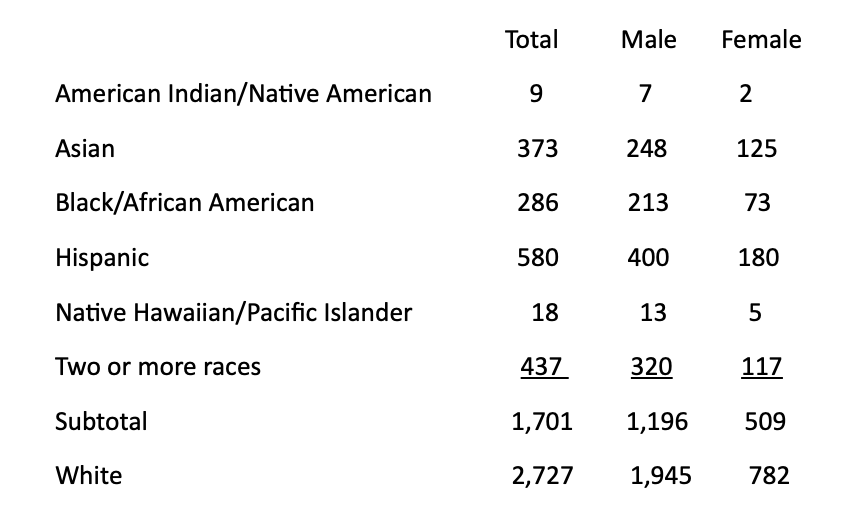








 Justplainbill's Weblog
The Myth of Democratic Socialism, by Murray Rothbard
The Myth of Democratic Socialism
Tags:Free Markets,From the Archives
02/29/2024•Articles of Interest•Murray N. Rothbard
Downloads
Originally published September 1977 in Libertarian Review.
In any debate between a socialist and a free-market capitalist, all too often the socialist quickly puts the free-market advocate on the defensive, and the entire time is consumed by the free-market person fending off attacks on the ability of the market to prevent inequality, or business cycles, or even the ravages of affluence and “materialism.” Being on the offensive, socialism emerges spotless and unbesmirched, and it is implicitly assumed on all sides that the market economy must prove its worthiness to be in the same moral and ideological ballpark as socialism. In fact, the morality of socialism is rarely questioned in these discussions, the critic confining himself to doubts about socialism’s practicality or workability.
Yet, in truth, socialism is neither workable nor moral; both in theory and in practice, it is a system unsurpassed in brutality, despotism, mass murder and exploitation. It deserves no solemn respect or moral salute.
Before turning to socialism, the morality as well as efficacy of the contrasting system of the free market can be established very quickly. The free market is a vast network of two-person exchanges, conducted voluntarily at each step of the way by each participant because each believes he will benefit from the exchange. Since the exchanges and choices are free and voluntary, the free market economy is harmonious and cooperative, while allowing fullest room for the free play of individual choice. And the economy works splendidly, because the free price system and the profit-and-loss incentives arising from that market bring efficiency and order out of the “anarchistic,” seemingly chaotic interplay of free and voluntary choices. Yet it is an order arising spontaneously out of freely adopted choices, rather than one imposed by violence and coercion. Such a free market, in its pure form, does not exist anywhere in the world today.
Let us contrast the system of socialism. What is socialism? It is the ownership or control by the State of the means of production in society. In short, it is total control by the State apparatus over the means of accomplishing virtually any goals that individuals might pursue in society. Since the State has a monopoly over the instruments of violence, and is distinguished from all other organizations or social institutions by the continuing use of violence to achieve its ends, this means that socialism is a system of total coercive violence over all citizens to be wielded by the rulers and managers of the State apparatus. If we briefly contrast socialism to the free market, we can see immediately that socialism implies the coercive outlawry by the State of the myriad of voluntary and mutually beneficial exchanges that make up the free society. For voluntary exchange and mutual benefit, socialism substitutes the rule of maximal coercion, violence and compulsory command. Socialism has been aptly labelled the “command economy.”
Socialism, in short, places the lives, the fortunes, and the sacred honor of every citizen under the total command of the State and its ruling elite. In the name of maximizing human freedom, in the name of eliminating class rule and the exploitation of man by man, in the name even of the “withering away of the State,” socialism gives all power to the State, and therefore to its ruling class; in this way, socialism brings about a class rule and a system of despotism and exploitation of man by man to put all previous systems into the shade. But what else could we expect from a system that places all power into the hands of the State—the State, the biggest mass murderer, exploiter, parasite, robber, and enslaver in all of human history?
At the turn of the twentieth century, such consequences of the seemingly exciting new system of socialism could have been predicted. But now, with almost a century of hindsight, it is all too clear that socialist practice has confirmed our analysis. For this century has seen a great number of socialist regimes spanning much of the globe: Stalin, Hitler, Mao, Castro, and on and on. And what has socialism wrought in this century but mass murder, despair, concentration camps, mass enslavement, shortages and famine?
Unfortunately, in discussions of socialism in the United States, socialists have usually been allowed to get off the hook with a general disclaimer: that it is terribly unfair to tar them with the brush of Hitler, Stalin and Mao. For that is not the kind of “socialism” they want and advocate; in fact, they don’t consider these regimes to be “socialist” at all—despite the fact that these regimes precisely fit the general linguistic definition of socialism that we have mentioned above. For their socialism would be peopled by “good guys,” not by those terrible people who have staffed the actual socialist regimes of this century.
But these disclaimers are simply not good enough. The essence of socialism is not the specific people that the individual socialist would like to see in power. The essence of socialism is the system itself: total State power over the means of production. And if the result of all the socialisms so far has been grisly and monstrous, and if no “humanist” nice guys have yet come to the fore, then perhaps, as the Marxists would say, “this is no accident,” but a result embedded within the system itself. And that is our contention: that Hitler, Stalin, Mao, et al. are inherent systematic tendencies within socialism itself.
Let us briefly examine the reasons for our contention that he who says Socialism must ineluctably also say Auschwitz and Gulag.
First, there is “Rothbard’s Law,” namely that he who is given power will use it. If the State is given total power over everyone else in society, it will doubtless use it both to achieve an increase in wealth and to exercise power and control for other purposes, ranging from power for its own sake to grandiose schemes of social reconstruction. Hence, Auschwitz, Gulag, et al.
Second, there is Hayek’s great insight in the famous chapter of his Road to Serfdom, “Why the Worst Get on Top.” Briefly, the insight holds that for any activity in society, the people who will tend to rise to the top in that activity will be those best suited for it, either in ability, temperament, or enthusiasm. The free market selects for its leading positions those people who are most able to innovate, to satisfy the desires of the mass of consumers better and more efficiently than anyone else. Socialism, on the contrary, selects for Its leading positions those people most adept at the functions they perform: namely, bureaucrats schooled In elaborating red tape and Byzantine court intrigue, at bootlicking superiors and lording over inferiors; and despots and thugs adept at the wielding of force and violence. The market, In short, selects for Thomas Edison, while socialism selects for concentration camp commandants and secret police torturers.
Third, since socialism means central planning, any possible scope for “democratic” revisions or checks and balances will be virtually non-existent. For, since the plan is central, this means that no one will be permitted to interfere with the plan once the State and its technocratic “experts” have made their decision. For who are the public or even a legislature to dare to throw monkey wrenches into the State’s carefully chosen plans? The role of the voters, whether at large or in a parliament, will be strictly plebiscitary: they will only be able to vote Ja, to ratify the plan chosen by the central planners.
Fourth, another chimera of social democrats is that socialism will be able to allow civil liberties, freedom of speech, press, and assembly, while maintaining a command-and-obedience system in the purely economic sphere. These spheres, however, cannot be separated. Stalin murdered millions of Soviet peasants, not because they were political dissenters, but because they resisted being expropriated and nationalized by the Soviet central planners.
Fifth, as a corollary, civil liberties cannot be maintained under socialism for the simple reason that the government, as the owner and manager of all the means of production, of all resources, has the power to allocate these resources to those people and those uses which it favors. There can be no genuine freedom of speech, press, or assembly if a single coercive agency, the government, has the sole power to allocate all newsprint, paper, assembly halls, etc., to uses which it prefers.
Consider, for example, a Socialist Planning Board, which, with all the good will in the world, has the task of allocating precious, scarce newsprint, assembly halls, presses and so forth. Can anyone visualize such a Board actually turning over any of these resources to an anti-socialist periodical? Indeed, from their point of view, why should they? As a result, resources will tend to be allocated to those individuals or groups who do bask in the favor of the regime. Hence, the usual vices of bureaucracy: favoritism, cronyism, and logrolling will proliferate under socialism unhampered by the profit-and-loss checks to which they are subjected on the free market.
Hence, the only freedom to criticize under a socialist regime will be, as in Russia and China, a freedom to criticize petty bureaucrats on the lower level—especially those who are out of favor with the ruling elite. But no criticism whatever will be permitted of the fundamentals of the system: of the ruling class, or of the socialist system itself.
Our discussion of an anti-socialist group trying to obtain an allocation of newsprint and presses from the Planning Board should illuminate the true meaning of the famous case of the Soviet Planning Board’s refusing to allocate resources for the production of matzohs. The important point here is not that the Soviet Union is anti-Jewish, which was the attitude of the Western press. The important point is that it is absurd even to expect that a socialist government committed to atheism would allocate much of its scarce resources to a minority religious group. This problem is inherent in socialism itself.
Sixth, we have stressed that the Socialist government will be the only allocator of resources, of producers’ goods. Hence, it will be the only employer, the only source of jobs in the economy. This will mean that everyone in the society will be totally dependent for their livelihood on one source of employment or income: the ruling class of the State apparatus. While any given socialist government may graciously allow employees to change occupations, jobs or places of work, this can only be a grant of permission by the government rather than a human right basic to each employee: for the government always remains the only employer. This grisly dependency on a single employer is part and parcel of the socialist system. It is particularly ironic that socialists who complain bitterly about the necessity for Americans to choose among hundreds of thousands of employers, think that this alleged condition of dependence can be remedied by confining all people in society to the tender mercies of one single, compulsory employer! This is a remedy for “alienation”?!
Again, civil liberties cannot be secured in such a society. For critics and dissidents can be “sent to Siberia” in the most literal as well as figurative sense. After all, someone has to be allocated to Siberia, right? So who is it going to be in practice: favored persons or those considered by the regime to be trouble-makers?
And so the essence of socialism is forced labor. Where but under a socialist regime could a Mao decide to “end the contradiction between physical and mental labor” by shipping hundreds of thousands of urban students to live permanently in the frontier province of Sinkiang—and to force them to grow rice in a dry climate for the good of their souls—or, to use a more Marxian term, for the benefit of their “reeducation”?
Seventh, socialism with democracy or civil liberties is a chimera because the socialist government will necessarily have total power over the processes of education: over schools and the media. Possessing that power, the ruling cliques will use it to try to mould a subject population that will be filled with love for their rulers and eager willingness to obey their every command. Call it what you will: “brainwashing,” “cultural rehabilitation centers,” or whatever, it is inevitable that a ruling elite given total power over education will use it for such “social” purposes, to create an eagerly sought New Socialist Man: a Man who will love and obey his rulers and who will put his rulers’ commands above any personal qualms or considerations. Hopefully, human nature is such that the government cannot succeed; but the society is a living Hell while the rulers try their best.
Eighth, just as the worker is treated like dirt under a socialist system, so too is the consumer. In a free market economy, the consumers are wooed and courted by business firms as the sole source of income. All the terms of exchange, from quality of product to price, are made to please the consumers and gain their patronage. But, under socialism, the income of the State and its bureaucracy is decided by themselves rather than by the consumer. Instead of the consumer being wooed and cosseted, he is treated as an annoying source of wasteful depletion of the State’s precious scarce resources. Under socialism, the consumer is only grudgingly allowed his meager rations.
The result of all this is a striking contrast in the quality of life as well as the standard of living between socialist and non-socialist nations. Socialist countries are invariably filled with grey, pallid, dispirited people shuffling to line up for their rations; Western non-socialist countries are filled with lively people and smart shops, with a large variety of consumer goods. For example, the contrast between East and West Germany, or even between market-oriented Yugoslavia and the rest of the socialist bloc in Eastern Europe.
Ninth, on top of all this moral and social horror, socialism can’t work; that is, lacking a free price system, socialism cannot operate an advanced industrial economy to suit even the goals of the rulers of the State. A socialist industrial economy will suffer grave shortages, poverty, famine, and breakdown, and ultimately the death of a large portion of its population.
We conclude that Hitler, Stalin, Mao, et al, were in no sense betrayers of socialism; instead, their regimes were socialism’s fulfillment. Let us turn, for example, to what is surely one of the most monstrous regimes in the world today—of course, a socialist one: the government of Cambodia. When the socialist regime took over Cambodia, it was faced with a swollen urban population in the capital city of Phnom Penh, a population which had become enlarged by refugees fleeing war, devastation, and American bombs in the countryside. But, being socialist, the new regime decided to depopulate Phnom Penh by coercion: and masses of people were sent to rural areas on a veritable death march as people were yanked out of hospitals, even during operations, and forced to march out of the city. That the logic of socialism is brutality and death has never been more clearly demonstrated.
I would like to conclude by comparing and contrasting the responses of two “democratic socialists,” both fervent opponents of the Vietnam War, to the gross violations of human rights now taking place in varying ways in the socialist countries of Indochina. One is the distinguished French journalist Jean Lacouture, who angrily refers to the new socialist Cambodia as “the most tightly locked up country in the world, where the bloodiest revolution in history is now taking place.” Lacouture continues:
Lacouture goes on to describe the situation in Cambodia as one where
Lacouture adds that the subjects of Cambodia’s leader, Khieu Samphan,
But Lacouture’s noble instincts have outrun his intelligence on this question. For, pace Thomas Szasz, the new rulers of Cambodia are not “mad.” They are, simply, socialists, trying to bring about the New Socialist Man of their Marxian-Rousseauan aspirations. Their social system, of course, is no less horrendous for that; quite the contrary.
Contrast this noble if mushy-headed reaction of Lacouture with the reaction of the distinguished Princeton international law professor Richard A Falk to recent disclosures of the admittedly far less horrendous but still abominable “cultural reeducation” concentration camps being conducted by the new socialist government of Vietnam. When such sincerely civil libertarian and anti-war leaders as James Forest and Nat Hentoff called upon the Left to denounce these Vietnamese concentration camps, let us study the shameful Aesopian language of Professor Falk’s measured response:
We rest our case; for the moral obscenity of Professor Falk’s position should not be allowed to obscure the hard-headed consistency of his socialist outlook. If “removing temporarily from the political order” is the Aesopian phrase with which Professor Falk chooses to cloak bloody oppression, he is absolutely correct when he points out that “such removal may be the only alternative to renouncing a socialist development program. . . .”
In short, Professor Falk has stated the choice before mankind correctly: it is socialism, or human freedom. It is one or the other. Humanistic or democratic socialism is a chimera, a contradiction in terms.
CITE THIS ARTICLE
Rothbard, Murray N., “The Myth of Democractic Socialism,” Libertarian Review (September 1977): 24–27, 45.