Our NEW HEALTH CZAR below, and I thought John Kerry was the worst possible appointment made by Joe Biden, no longer.
Sometimes the pure transparent adherence to a false, fake and hypocritical ideology can’t help but make you laugh, no matter how sad and illogical the action is. To a logical, rational thinking person, sometimes it’s just too much. This one takes the cake, especially in light of the second pic.
But now we have a true Role Model to base our lives on!
(right click to open the images in a new tab; truth will out)
The ‘battery fairy’ and other delusions in the demand to replace gasoline powered vehicles with electric cars and trucks
By Thomas Lifson
I continue to be amazed that serious people think that gasoline powered vehicles can be completely replaced by electric vehicles in a decade-and-a-half, and that this would be a good thing, even if possible. Under threat of government action, however, the world’s major auto manufacturers are falling in line, boosting production of plug-in models, and upstart Tesla Motors is now the world’s most valuable auto manufacturer, based on the value of its capital stock issued and in the public’s hands. Mary T. Barra, CEO of General Motors, has pledged to sell only zero emission vehicles by 2035. That would meet the deadline imposed by California Governor Gavin Newsom, who signed an executive order banning the sale of internal combustion vehicles in the nation’s largest car market by 2035.
Charging electric cars at work makes sense, as it requires several hours. But what if you want to drive on a long trip?
GM, rescued from liquidation courtesy of US taxpayers (and bondholders who were cheated out of their place in line as creditors by the Obama administration), may simply be sucking up to governmental power. But Akio Toyoda, CEO of Toyota Motors, the world’s largest (or second largest, depending on the year). and grandson of the automaker’s founder, has spoken out and called out the fallacy of thinking that this is possible or desirable. [I must here disclose that I was a consultant for a Toyota company for several years, but that all my comments on the company here are based on publicly available information.]
As the grandson of Toyota founder, Kiichiro Toyoda, the scion was raised surrounded by all aspects of the auto industry and his business acumen is second to none. So when he had some harsh words for electric vehicles at the Japan Automobile Manufacturers Association end-of-year press conference last week, people took notice.
The Wall Street Journal was in attendance and noted the CEO’s disdain for EVs boils down to his belief they’ll ruin businesses, require massive investments, and even emit more carbon dioxide than combustion-engined vehicles. “The current business model of the car industry is going to collapse,” he said. “The more EVs we build, the worse carbon dioxide gets… When politicians are out there saying, ‘Let’s get rid of all cars using gasoline,’ do they understand this?”
Studies detailing the carbon emissions necessary to manufacture an electric vehicle reveal that on a net basis, there are more emissions for vehicles bought and used for its expected lifetime, than would be generated by buying and using a conventional gasoline-powered vehicle.
Toyota can certainly make electric powered vehicles. It introduced the hybrid Prius, after all, and has a strong position in that market. Toyota’s mastery of the discipline of mass production of vehicles is such that it could do well no matter what power source is used. But the costs of complete conversion to electricity-powered vehicles are mind boggling.
Where will all the electricity needed to power the entire fleet of cars in the US (or Japan) come from? Despite the fantasies of greenies, it won’t be from windmills or solar farms. They are too unreliable, take up too much land, and cost too much. Right now, it is coal and natural gas that produce the most electricity at the most reasonable cost. And they emit CO2. Plus, there is considerable loss of power due to resistance in the transmission lines, requiring an even greater amount of gross power before the net power reaches the battery in the vehicle, charging at the user’s home or some other location. Nuclear power does offer some potential, but how many people want to live near the hundreds and hundreds of nuclear power plants that would be required to fuel the nation’s vehicles?
Then there is the small matter of batteries. The very large batteries needed for electric cars use lots of expensive lithium (and some other rare elements) whose supply is limited, and whose mining requires lots of scarce water. In fact, powering the world’s vehicles by battery is simply impossible, given the limited world supply of lithium, as this clever post by Powerline’s Steve Hayward makes clear. The title gives away the punchline:
WHO WILL TELL THE GREENS THERE IS NO BATTERY FAIRY?
For the longest while I have been asking, “Where do environmentalists and Democrats think all these batteries for our oil-free transportation fleet are going to come from?” It seems they think there is a Battery Fairy out there somewhere who will magically supply the ginormous battery capacity, and additional supply of electricity to charge them, in order to deliver us to our blessed fossil-fuel-free future.
But there’s a problem. As the world scrambles to replace fossil fuels with clean energy, the environmental impact of finding all the lithium required to enable that transformation could become a serious issue in its own right. “One of the biggest environmental problems caused by our endless hunger for the latest and smartest devices is a growing mineral crisis, particularly those needed to make our batteries,” says Christina Valimaki an analyst at Elsevier. . .
It’s a relatively cheap and effective process, but it uses a lot of water – approximately 500,000 gallons per tonne of lithium. In Chile’s Salar de Atacama, mining activities consumed 65 per cent of the region’s water. That is having a big impact on local farmers – who grow quinoa and herd llamas – in an area where some communities already have to get water driven in from elsewhere. . .
Two other key ingredients, cobalt and nickel, are more in danger of creating a bottleneck in the move towards electric vehicles, and at a potentially huge environmental cost. Cobalt is found in huge quantities right across the Democratic Republic of Congo and central Africa, and hardly anywhere else. The price has quadrupled in the last two years.
I am glad that some grownups are pointing out that the electric vehicle conversion emperor has no clothes on. But that hasn’t stopped governments, manufacturers, and investors from pretending that electric vehicles are our only future.
As Herbert Stein famously said, “If something cannot go on forever, it will stop.” We’re only beginning to discover that about pipe dreams of an all-electric vehicle future.
The state’s proposed new ethnic studies curriculum is even worse than you imagined.
In the fall of 2016, California’s then Gov. Jerry Brown signed into law a mandate to develop an ethnic studies program for high schools in California. California’s public schools have the most ethnically diverse student body in the nation, with three-quarters of students belonging to minorities and speaking over 90 languages. Luis Alejo, the Assembly member who shepherded the bill through the 15 years required for its adoption, hailed the law, the first in the nation, as an opportunity to “give all students the opportunity to prepare for a diverse global economy, diverse university campuses and diverse workplaces,” adding, “Ethnic studies are not just for students of color.”
Elina Kaplan, a former high-tech manager who had just stepped down as senior VP of one of California’s largest affordable housing nonprofits, remembers agreeing wholeheartedly with the idea at the time. “The objective was to build bridges of understanding between people,” said Kaplan, an immigrant herself, who moved to California from the former Soviet Union with her family when she was 11. “This was as welcome as mom and apple pie. It offered students the chance to learn about the accomplishments of ethnic minorities, as well as to address issues of inequality and bigotry.”
But three years later, when the first draft of the Ethnic Studies Model Curriculum (ESMC) was released, Kaplan couldn’t believe what she was reading. In one sample lesson, she saw that a list of historic U.S. social movements – ones like Black Lives Matter, #MeToo, Criminal Justice Reform – also included the Boycott, Divestment, and Sanctions Movement for Palestine (BDS), described as a “global social movement that currently aims to establish freedom for Palestinians living under apartheid conditions.” Kaplan wondered why a foreign movement, whose target was another country, would be mischaracterized as a domestic social movement, and she was shocked that in a curriculum that would be taught to millions of students, BDS’s primary goal – the elimination of Israel – was not mentioned. Kaplan also saw that the 1948 Israel War of Independence was only referred to as the “Nakba” – “catastrophe” in Arabic – and Arabic verses included in the sample lessons were insulting and provocative to Jews.
Kaplan, 53, a Bay Area mother of two grown children who describes herself as a lifelong Democrat, was further surprised to discover that a list of 154 influential people of color did not include Dr. Martin Luther King Jr., John Lewis, or Supreme Court Justice Thurgood Marshall, though it included many violent revolutionaries. There was even a flattering description of Pol Pot, the communist leader of Cambodia’s Khmer Rouge, who was responsible for the murder of a quarter of the Cambodian population during the 1970s.
The new curriculum, which will eventually be promulgated throughout the California school system of 6 million children, would “critique empire and its relationship to white supremacy, racism, patriarchy, cisheteropatriarchy, capitalism, ableism … and other forms of power and oppression,” according to the proposal. It would “build new possibilities for post-imperial life that promotes collective narratives of transformative resistance.”
Capitalism was classified as a form of “power and oppression,” and although “classism, homophobia, Islamophobia, and transphobia” were also listed as forms of oppression, anti-Semitism was not. Jewish Americans were not even mentioned as a minority group.
It didn’t take long for Kaplan to realize that the education offered up by the ESMC had little in common with the program described at the time of the law’s passage. Instead, it was a crude pastiche of idiosyncratic neo-Marxism that advocated the end of capitalism and divided the world into a simple polarity of victims and oppressors. The victims, according to this schema, included four groups: African Americans, Asian Americans, Latinx, and Native Americans.
Kaplan quickly marshaled her skills honed as a nonprofit leader and co-created, with two other women, the Alliance for Constructive Ethnic Studies (ACES), to fight the adoption of the ESMC. The effort was urgent, she knew, because since California has the largest school system in the country, any curriculum it adopts will be exported to the rest of the country.
It’s a view that actively invites anti-Zionism into the classroom. It requires it. This is the greatest threat facing American Jews today.
As a refugee from the Soviet Union, she understood the challenge intimately. “The reason I’m doing this – full time and not sleeping” she said, is that “this curriculum is pervasive and all-inclusive. It creates a means of understanding the world that does not allow questioning. And it’s a view that actively invites anti-Zionism into the classroom. It requires it. This is the greatest threat facing American Jews today.”
Kaplan wasn’t the only one upset about the Ethnic Studies Model Curriculum. Clarence Jones, former legal counsel and speechwriter for Martin Luther King Jr., in a letter he wrote to Gov. Gavin Newsom and the state’s Instructional Quality Commission, called the ESMC a “perversion of history” for providing material that refers to non-violent Black leaders as “passive” and “docile.” Jones, who is co-founder of the University of San Francisco Institute for Nonviolence and Social Justice, decried the “glorification” of violence and Black nationalism as “role models for the students,” and rejected the curriculum as “morally indecent and deeply offensive.”
The unassailably liberal LA Times editorial board weighed in, criticizing the offering as “an impenetrable mélange of academic jargon and politically correct pronouncements” that served as an “exercise in groupthink, designed to proselytize and inculcate more than to inform and open minds.” It warned it was “in bad need of an overhaul.”
A group of Asian Americans urged the state to develop a program that would “inspire ethnic pride in all students and inspire them to work together, rather than against one another,” while Hindu, Korean, Armenian, and Sikh groups complained of being left out as did several Jewish groups. The California Legislative Jewish caucus published a letter saying the ESMC “effectively erases the American Jewish experience.”
Several émigrés from the former Soviet Union found the curriculum so traumatizing they couldn’t read it through. Three hundred signed a letter to Gov. Newsom and other state agencies saying: “We escaped a Marxist-socialist system and its associated tyranny and oppression. Never could we have imagined that, decades later, the same ideology and concepts that we escaped, would show up in, of all places … the California Ethnic Studies Model Curriculum.”
They wrote of their shock at seeing Marxist “code-words” in the text, such as urging students to fight for a “truer democracy,” which Marx used to refer to the abolition of private property. They also noted other terms that look innocuous or even enlightened to the uninitiated, such as “transformative resistance,” “radical healing,” “critical hope,” have specific meanings in critical race theory, which the ESMC explicitly directs teachers to use as the key theoretical framework for teaching ethnic studies.
Critical race theory in education, writes Daniel Solorzano, a scholar cited in the ESMC, “challenges the traditional claims of the educational system such as objectivity, meritocracy, color-blindness, race neutrality, and equal opportunity.” Critical race theorists argue that these traditional claims act as a camouflage for the self-interest, power, and privilege of dominant groups in U.S. society.
CRT is not just an educational pedagogy that seeks to overturn academics as we know it, but it is also a guide for activism “animated by the spirit of the decolonial, antiracist, and other global liberationist movements.”
Ethnic studies is a California native. It was born of a violent strike that erupted on the campus of San Francisco State College in 1968, triggered by the firing of a popular teacher named George Murray. The strike, led by the Black Student Union and the Third World Liberation Front, was marked by huge rallies, bloody clashes with police, and eventually, the shutdown of the campus. It was finally settled when the president of the college accepted the strikers’ principal demands and agreed to establish degree-granting departments of Black and ethnic studies, to be housed in a separate School of Ethnic Studies that would include Black, La Raza, Asian American, and Native American studies.
There is a straight line from the 1968 strike to today’s ESMC, whose text explicitly acknowledges its debt to the Third World Liberation Front. In a speech a week before his firing, George Murray, who also served as the minister of education for the Black Panther Party, declared the U.S. Constitution was a “lie” and the American flag was a “piece of toilet paper” deserving to be flushed. He also attacked Jewish people as “exploiters of the Negroes in America and South Africa” and called for “victory to the Arab people” over Israel.
Many of the 18 people chosen by the State Board of Education’s Instructional Quality Committee to create the ESMC hail from San Francisco State’s School of Ethnic Studies, and most are adherents of the radical critical ethnic studies movement who refer to themselves as scholar-activists.
Kaplan reports that State Superintendent of Public Instruction Tony Thurmond admitted in a 2020 meeting with Jewish groups that there were problems with the creation of this group that allowed it to be politicized, and we have put systems in place to make sure they do not recur.
Nevertheless, in 2020, Gov. Newsom signed into law AB 1460, which requires that every student in the Cal State system – the largest four-year public university system in the country, of which San Francisco State is a part – take a three-unit course in ethnic studies. The governor’s decision defied the recommendations of the university’s own chancellor, members of the university’s board of trustees, and the university’s academic senate, all of whom opposed the bill, objecting to the government’s unprecedented intrusion into the university’s curriculum. The board of trustees had offered a competing proposal to require a course on ethnic studies and social justice, which would have included Jewish, LGBTQ and disability studies. Propelled by the momentum of the BLM movement in the wake of George Floyd’s killing, the governor rejected the board’s suggestion.
Several districts in California have already implemented ethnic studies courses on their own, independent of the ESMC. Some are controversial and some are not. Although the ESMC was originally intended for high school students, an entire chapter deals with K-12 integration. Because of the public outcry following the unveiling of the proposal, Newsom vetoed a bill that would have required an ethnic studies class for graduation from high school. (The bill has been reintroduced.) Meanwhile, the city of Seattle has already created a proposed framework for implementing ethnic studies throughout its K-12 curriculum. Math teachers will ask the following questions: “identify how math has been and continues to be used to oppress and marginalize people and communities of color,” “analyze the ways in which ancient mathematical knowledge has been appropriated by Western culture,” “how important is it to be right?” and “Who gets to say if an answer is right?” It appears educational leaders are all for this. The president of the National Council of Teachers of Mathematics, Robert Q. Berry III, told Education Week: “What they’re doing follows the line of work we hope we can move forward as we think about the history of math and who contributes to that, and also about deepening students’ connection with identity and agency.”
This, despite the fact that students in the United States already perform poorly in math. In the most recent survey conducted by the Programme for International Student Assessment (PISA), which tests 15-year-olds in dozens of developed and developing countries, the U.S. placed an unimpressive 38th out of 71 countries in math and 24th in science. Among higher performing countries, the 35 members of the Organization for Economic Cooperation and Development, the U.S. ranked 30th in math and 19th in science.
One of the selling points for ethnic studies is that it would help California’s students do better in school overall. In 2019, only one-third of California’s fourth graders were reading-proficient. Only 25% of California’s total student population had basic reading skills. A suit brought against the state in 2017 by a group of parents, teachers, students, and advocacy groups claimed that “When it comes to literacy and basic education, California is bringing down the nation.” Among the 200 largest school districts in the country, California “had 11 of the lowest performing 26 districts, including three among the lowest performing 10 districts.” In February 2020, a state judge approved a settlement that requires the state to pay $53 million to improve basic literacy statewide.
Almost every article touting the ESMC makes reference to a single paper that showed some improvement in at-risk students who took an ethnic studies class. Thomas Dee, professor at Stanford University’s Graduate School of Education, compared a group of ninth grade students in San Francisco high schools at risk of dropping out with a similar group who took a class offering “culturally relevant pedagogy.” He described the results as “highly encouraging” – the latter showing improved attendance, completing more courses, and earning improved grades. Basically, students earning Ds became C+ students after taking the classes. This improvement, he said, is significant, as it means the difference between dropping out and being able to apply to college. Dee calls ninth grade a make-or-break year.
Dee described the classes less as instruction about other ethnicities and how they have succeeded in the U.S., and more as a social-psychological intervention that helps to “buffer students’ social identities in the classroom setting,” which might otherwise “affect their sense of belonging.” In other words, the teachers try to keep the kids from tuning out because of cultural influences that may make them feel they don’t belong and can’t succeed. He explained the classes as aiming to reduce “stereotype threat,” by identifying external forces that contribute to academic challenges and preparing for “how you may be misjudged.” He said the teaching has three defining traits: “an emphasis on student success, maintaining students’ cultural integrity, and promoting students’ capacity to think critically.”
But Dee cautioned that his study was small and its results not easily scalable. He explained that the teachers who offered the classes had spent “years developing them and getting them right” with the help of outside experts. “This kind of pedagogy requires teacher skills of a high order,” he said. He is not sure the ESMC, a huge statewide top-down project, is focused on providing the kind of sensitive, close teaching that produced the positive results.
He is critical of the ESMC’s chaotic rollout, which he characterized as a “hot mess.” “The motivation for ethnic studies is grounded in the idea that historically underserved communities don’t see themselves represented in the curriculum,” he said, a project he supports. However, referring to the team of CRT proponents that prepared the first draft, “The people who have been nurturing this flame for a half century are reluctant to give up control. I’m worried that the way it’s being rolled out might snatch defeat from the jaws of victory. By having such a high profile effort, it has become a flashpoint of the larger culture wars.”
“If done carefully, he emphasized, “this kind of teaching can improve student interest in learning. In the wrong hands, it can be feckless and counterproductive. We have evidence of real measurable innovation, but by pushing it the wrong way, California runs the risk of discouraging its adoption throughout the country.”
As a result of the outpouring of criticism of the first ESMC draft, in August 2019, Superintendent Thurmond ordered a revision. A second draft was completed in August 2020 and was immediately criticized for simply moving objectionable material to the appendices and footnotes. In the current, third draft, released in December, some of the most offensive material was actually moved back in. For example, an historical resource was added with the following description of prewar Zionism: “the Jews have filled the air with their cries and lamentations in an effort to raise funds and American Jews, as is well known, are the richest in the world.”
Tammi Rossman-Benjamin, director of AMCHA Initiative, which fights campus anti-Semitism, points out that all 13 founding members of the Critical Ethnic Studies Association (CESA) are BDS activists. CESA, the national home base for critical studies, passed a resolution to boycott all Israeli academic institutions in 2014, and the group’s past four biennial meetings included multiple sessions demonizing Israel. “There are a couple thousand academic boycotters of Israel in the country,” she said, “and the largest percentage of them come from ethnic studies. Anti-Zionism is built into the theory and the discipline of ethnic studies, which demonizes Israel as an apartheid settler-colonialist Nazi state.”
But of even greater concern to Jews, she believes, is the singling out of Jewish students as enjoying racial privilege. “I don’t see any way that Jewish students can sit in an ethnic studies class and not feel they have a double target on their backs,” she said, fearing hatred and violence will ensue. First, because they’re Jewish, and considered white and part of the 1%, the purported villains of the teaching, and then through an assumed association with Israel. “There’s a state requirement that you have to sit through a class that says to Jewish students they have extraordinary racial privilege and yet forbids them from speaking because ‘this course is not about you?’ If you don’t accept it, you’re publicly shamed and ostracized – you can’t even speak up and say, ‘I’m not sure if I think that all white people are racists.’”
Jews are the only group in the curriculum for whom the term “privilege” is used. And this privilege is not earned by way of talent, or educational and professional attainment, but rather trickery.
To placate critics, the third version has added lessons about Korean Americans, Armenian Americans, and Sikhs. Two lessons have been offered about Jews. One, following crude CRT dogma, teaches that Mizrahi Jews coming to the United States from Arab lands were mistreated by “white” Ashkenazim. The other suggests that Jews of European descent have white privilege.
The Jewish Journal points out that Jews are the only group in the curriculum for whom the term “privilege” is used. And this privilege is not earned by way of talent, or educational and professional attainment, but rather trickery. The ESMC, echoing Nazi propaganda about Jews as impostors and appropriators hiding in plain sight, points out that American Jews often change their names (“this practice of name-changing continues to the present day”) to change their rank in the social hierarchy.
The historical reality of repeated genocidal attacks on Jews because of their perceived or imagined privilege is not offered as counterpoint, because ethnic studies teachers assume the Holocaust is taught in world history class. But next year in San Mateo County, world history will be replaced by ethnic studies. Lia Rensin, who has two children in public schools in the Bay Area, said the students already have no time. “I think I probably feel the way most parents feel – there are already a gazillion requirements. My daughter took two semesters this summer of online Spanish, so she could take art next fall in school. Now you’re thinking of adding yet another requirement?”
Meantime, Rossman-Benjamin said the ESMC creators are trying to reestablish their influence: “The people who wrote the first curriculum who are still very well connected are going school board by school board and getting them to agree to implement the discredited first draft.” In fact, school districts are free to follow any curriculum they want. There is no requirement to use the model curriculum.
Moreover, she said, “while everyone was going through the third field review, they are holding webinars and training sessions, they are recruiting faculty, and training the teachers who will need to be hired to teach ethnic studies.”
These teachers are warning that additional counselors will be required to help students deal with the trauma of the new content, she reports. In fact, the ESMC itself makes this suggestion.
Brandy Shufutinsky is an African American Jewish woman who is pursuing an Ed.D. in international multicultural education at the University of San Francisco. She opposes the ESMC. “It needs to be scrapped. Its foundations are faulty,” she told Tablet, having more of a “political agenda than an educational one.” Her interest is personal. The mother of four, she is concerned that “other states will follow the lead of California, and may have an impact on my own children in the future.”
She doesn’t approve of critical race theory, and she said the LA Unified Teaching District has already adopted a fine ethnic studies program that does not rely on it.
“I’m a progressive Democrat and have been for my entire life, and I come from a family of Democrats,” she said. “I don’t understand how someone who claims to be progressive can say they are against Israel. Israel is one of the most successful countries in terms of the indigenous rights movement. They have reclaimed a culture that was decimated and denied, reclaimed their religion, their peoplehood, and language in their traditional indigenous land. This is something that progressive people all around the world should hold up as an example, not demonize.”
And she has no patience for young people calling Israel an apartheid state. “They don’t know the history of apartheid – they’re too young to have experienced it themselves, and they seem not to have read too deeply about it either. It’s easy for people to imagine that Arabs are all Black and brown and the Israelis are all white. But it’s not true. Israelis are not white, but that’s a lie that the ethnic studies curriculum is built on.”
We were engaged in bolstering each other up, not for money, for we thought ourselves impregnable in that respect, but by argument in favor of another rise. We knew we were wrong but tried to convince ourselves that we were right. – William Fowler
This bubble’s lessons are far more relevant to today’s investors in electric vehicles (EVs) than, say, the history of Dutch tulipmania is.
The Great British Bicycle Bubble of 1896
It’s hard to imagine that something as mundane as a bicycle would spark a genuine financial bubble.
Yet that’s what happened in late Victorian Britain in the 1890s.
First, a bit of background…
The bicycle’s early ancestor was a “dandy horse” – a bike with no pedals, patented in 1818 in Germany.
Over the next 50 years, inventors continued to tinker with the design.
In the 1860s, a French hobbyist attached pedals and a rotary crank to the dandy horse. Voila! A crude prototype of the modern bicycle was born.
Alas, a later penny-farthing design with an enormous front wheel proved both dangerous and unwieldy.
Only in the 1890s did the innovations of chain-driven transmission and inflatable tires combine to capture the British public’s imagination with the bicycle.
Socially, the bicycles freed the British public from the tyranny of railway timetables.
Environmentally, the bicycle was a godsend to the horse manure-caked streets of London.
No wonder bicycles soared in popularity.
At the start of 1896, there were about 20 British bicycle companies. But rapidly growing demand was outstripping supply.
A Birmingham-based property dealer named Ernest Terah Hooley recognized an opportunity.
Hooley purchased a company called Pneumatic Tyre for 3 million pounds – a massive premium relative to its tiny profits.
Following Hooley’s brilliant salesmanship, shares in the now renamed Dunlop Pneumatic Tyre Company soared 1,138% in the spring of 1896.
Share prices of other publicly traded British bicycle companies soon tripled as well.
In 1896 alone, 363 cycle, tube or tire firms floated on the London Stock Exchange. Another 238 were listed in the first six months of 1897.
The British press talked up the bullish bicycle as a historic, game-changing technology. Beginning in April 1896, the Financial Times dedicated a daily page to the share prices of bicycle companies.
A more sober writer at The Economist warned that one bicycle company’s offering demonstrated “a very robust faith in the gullibility of the average investor.”
Alas, investors ignored the naysayers.
And as sure as night follows day, a bust followed the boom.
By December 1897, an index of bicycle-related stocks had fallen by 40%.
In 1898, bicycle stocks traded at an average of 71% below their peaks.
More than 80% of the companies that had participated in the 1890s British bicycle boom would go bust.
The Bicycle vs. EVs
The British bicycle bubble of 1896 has much in common with today’s bubble in EV stocks.
The bicycle bubble and today’s EV boom share…
A familiar technology that took several decades to reach critical mass. The first commercially produced electric car came to market in 1884 – and flopped.
You can’t skip the boom. And it takes unusual luck or foresight to escape the bust.
My prediction?
The market for EVs will go the way of the great British bicycle boom of 1896.
Valuations of today’s market darlings will crumble. The EV market will crash. Dozens of new entrants will go bust. Most EV investors will lose their shirts.
A century from now, the average investor will give no more thought to EVs than they do to bicycles today.
And one of your great-grandchildren may be writing about the great EV bubble of the 2020s.
If you’ve been following me from the beginning, 2008, or read either of my books, The Heartland Plan and The Albany Plan Revisited, you know that there was much, much more to The War of 1861 than is taught. You will know that slavery, as slavery, had little to do with the secessions. You will also know how much emphasis that I, and many others, place on the mercantilist economics of the Americas, from 1492 through 1888, as being a, if not the, primary force of that age.
In my, and the writings of mostly Southern academics, emphasis is placed on how The South was not only the Milch Cow of the North, but how The South did not profit from the slave-cotton agricultural industry.
In the December issue of BBC History Magazine, Vol 21 no 12, p 44, is an article, The colonial secrets of Britain’s stately homes, by Corinne Fowler. In researching the history of many of Britain’s stately homes and estates, she freely discusses how so many of them were financed through colonialist mal-appropriation of native resources, especially from slavery of so many different peoples. As noted in many places, especially this blog, The South did not profit from the slavery forced upon it by the British Crown in 1620, to the extent that so many ignoranti scree.
For more on the British Colonial Countryside project, visit BBC Radio 3’s Arts & Ideas at bbc.co.uk/sounds/play/07q19kk .
following is his request. I think it is reasonable…..
PLEASE. Would you do me the kind favor of sending this to as many people as you can? Christmas will be coming soon, and some credit is due to our U.S. service men and women for our being able to celebrate these festivities. Let’s try in this small way to pay a tiny bit of what we owe.
Make people stop and think of our heroes, living and dead, who sacrificed themselves for us. Please, do your small part to plant this small seed.
Jay Bhattacharya is a Professor of Medicine at Stanford University, where he received both an M.D. and a Ph.D. in economics. He is also a research associate at the National Bureau of Economics Research, a senior fellow at the Stanford Institute for Economic Policy Research and at the Freeman Spogli Institute for International Studies, and director of the Stanford Center on the Demography and Economics of Health and Aging. A co-author of the Great Barrington Declaration, his research has been published in economics, statistics, legal, medical, public health, and health policy journals.
The following is adapted from a panel presentation on October 9, 2020, in Omaha, Nebraska, at a Hillsdale College Free Market Forum.
My goal today is, first, to present the facts about how deadly COVID-19 actually is; second, to present the facts about who is at risk from COVID; third, to present some facts about how deadly the widespread lockdowns have been; and fourth, to recommend a shift in public policy.
1. The COVID-19 Fatality Rate
In discussing the deadliness of COVID, we need to distinguish COVID cases from COVID infections. A lot of fear and confusion has resulted from failing to understand the difference.
We have heard much this year about the “case fatality rate” of COVID. In early March, the case fatality rate in the U.S. was roughly three percent—nearly three out of every hundred people who were identified as “cases” of COVID in early March died from it. Compare that to today, when the fatality rate of COVID is known to be less than one half of one percent.
In other words, when the World Health Organization said back in early March that three percent of people who get COVID die from it, they were wrong by at least one order of magnitude. The COVID fatality rate is much closer to 0.2 or 0.3 percent. The reason for the highly inaccurate early estimates is simple: in early March, we were not identifying most of the people who had been infected by COVID.
“Case fatality rate” is computed by dividing the number of deaths by the total number of confirmed cases. But to obtain an accurate COVID fatality rate, the number in the denominator should be the number of people who have been infected—the number of people who have actually had the disease—rather than the number of confirmed cases.
In March, only the small fraction of infected people who got sick and went to the hospital were identified as cases. But the majority of people who are infected by COVID have very mild symptoms or no symptoms at all. These people weren’t identified in the early days, which resulted in a highly misleading fatality rate. And that is what drove public policy. Even worse, it continues to sow fear and panic, because the perception of too many people about COVID is frozen in the misleading data from March.
So how do we get an accurate fatality rate? To use a technical term, we test for seroprevalence—in other words, we test to find out how many people have evidence in their bloodstream of having had COVID.
This is easy with some viruses. Anyone who has had chickenpox, for instance, still has that virus living in them—it stays in the body forever. COVID, on the other hand, like other coronaviruses, doesn’t stay in the body. Someone who is infected with COVID and then clears it will be immune from it, but it won’t still be living in them.
What we need to test for, then, are antibodies or other evidence that someone has had COVID. And even antibodies fade over time, so testing for them still results in an underestimate of total infections.
Seroprevalence is what I worked on in the early days of the epidemic. In April, I ran a series of studies, using antibody tests, to see how many people in California’s Santa Clara County, where I live, had been infected. At the time, there were about 1,000 COVID cases that had been identified in the county, but our antibody tests found that 50,000 people had been infected—i.e., there were 50 times more infections than identified cases. This was enormously important, because it meant that the fatality rate was not three percent, but closer to 0.2 percent; not three in 100, but two in 1,000.
When it came out, this Santa Clara study was controversial. But science is like that, and the way science tests controversial studies is to see if they can be replicated. And indeed, there are now 82 similar seroprevalence studies from around the world, and the median result of these 82 studies is a fatality rate of about 0.2 percent—exactly what we found in Santa Clara County.
In some places, of course, the fatality rate was higher: in New York City it was more like 0.5 percent. In other places it was lower: the rate in Idaho was 0.13 percent. What this variation shows is that the fatality rate is not simply a function of how deadly a virus is. It is also a function of who gets infected and of the quality of the health care system. In the early days of the virus, our health care systems managed COVID poorly. Part of this was due to ignorance: we pursued very aggressive treatments, for instance, such as the use of ventilators, that in retrospect might have been counterproductive. And part of it was due to negligence: in some places, we needlessly allowed a lot of people in nursing homes to get infected.
But the bottom line is that the COVID fatality rate is in the neighborhood of 0.2 percent.
2. Who Is at Risk?
The single most important fact about the COVID pandemic—in terms of deciding how to respond to it on both an individual and a governmental basis—is that it is not equally dangerous for everybody. This became clear very early on, but for some reason our public health messaging failed to get this fact out to the public.
It still seems to be a common perception that COVID is equally dangerous to everybody, but this couldn’t be further from the truth. There is a thousand-fold difference between the mortality rate in older people, 70 and up, and the mortality rate in children. In some sense, this is a great blessing. If it was a disease that killed children preferentially, I for one would react very differently. But the fact is that for young children, this disease is less dangerous than the seasonal flu. This year, in the United States, more children have died from the seasonal flu than from COVID by a factor of two or three.
Whereas COVID is not deadly for children, for older people it is much more deadly than the seasonal flu. If you look at studies worldwide, the COVID fatality rate for people 70 and up is about four percent—four in 100 among those 70 and older, as opposed to two in 1,000 in the overall population.
Again, this huge difference between the danger of COVID to the young and the danger of COVID to the old is the most important fact about the virus. Yet it has not been sufficiently emphasized in public health messaging or taken into account by most policymakers.
3. Deadliness of the Lockdowns
The widespread lockdowns that have been adopted in response to COVID are unprecedented—lockdowns have never before been tried as a method of disease control. Nor were these lockdowns part of the original plan. The initial rationale for lockdowns was that slowing the spread of the disease would prevent hospitals from being overwhelmed. It became clear before long that this was not a worry: in the U.S. and in most of the world, hospitals were never at risk of being overwhelmed. Yet the lockdowns were kept in place, and this is turning out to have deadly effects.
Those who dare to talk about the tremendous economic harms that have followed from the lockdowns are accused of heartlessness. Economic considerations are nothing compared to saving lives, they are told. So I’m not going to talk about the economic effects—I’m going to talk about the deadly effects on health, beginning with the fact that the U.N. has estimated that 130 million additional people will starve this year as a result of the economic damage resulting from the lockdowns.
In the last 20 years we’ve lifted one billion people worldwide out of poverty. This year we are reversing that progress to the extent—it bears repeating—that an estimated 130 million more people will starve.
Another result of the lockdowns is that people stopped bringing their children in for immunizations against diseases like diphtheria, pertussis (whooping cough), and polio, because they had been led to fear COVID more than they feared these more deadly diseases. This wasn’t only true in the U.S. Eighty million children worldwide are now at risk of these diseases. We had made substantial progress in slowing them down, but now they are going to come back.
Large numbers of Americans, even though they had cancer and needed chemotherapy, didn’t come in for treatment because they were more afraid of COVID than cancer. Others have skipped recommended cancer screenings. We’re going to see a rise in cancer and cancer death rates as a consequence. Indeed, this is already starting to show up in the data. We’re also going to see a higher number of deaths from diabetes due to people missing their diabetic monitoring.
Mental health problems are in a way the most shocking thing. In June of this year, a CDC survey found that one in four young adults between 18 and 24 had seriously considered suicide. Human beings are not, after all, designed to live alone. We’re meant to be in company with one another. It is unsurprising that the lockdowns have had the psychological effects that they’ve had, especially among young adults and children, who have been denied much-needed socialization.
In effect, what we’ve been doing is requiring young people to bear the burden of controlling a disease from which they face little to no risk. This is entirely backward from the right approach.
4. Where to Go from Here
Last week I met with two other epidemiologists—Dr. Sunetra Gupta of Oxford University and Dr. Martin Kulldorff of Harvard University—in Great Barrington, Massachusetts. The three of us come from very different disciplinary backgrounds and from very different parts of the political spectrum. Yet we had arrived at the same view—the view that the widespread lockdown policy has been a devastating public health mistake. In response, we wrote and issued the Great Barrington Declaration, which can be viewed—along with explanatory videos, answers to frequently asked questions, a list of co-signers, etc.—online at www.gbdeclaration.org.
The Declaration reads:
As infectious disease epidemiologists and public health scientists we have grave concerns about the damaging physical and mental health impacts of the prevailing COVID-19 policies, and recommend an approach we call Focused Protection.
Coming from both the left and right, and around the world, we have devoted our careers to protecting people. Current lockdown policies are producing devastating effects on short and long-term public health. The results (to name a few) include lower childhood vaccination rates, worsening cardiovascular disease outcomes, fewer cancer screenings, and deteriorating mental health—leading to greater excess mortality in years to come, with the working class and younger members of society carrying the heaviest burden. Keeping students out of school is a grave injustice.
Keeping these measures in place until a vaccine is available will cause irreparable damage, with the underprivileged disproportionately harmed.
Fortunately, our understanding of the virus is growing. We know that vulnerability to death from COVID-19 is more than a thousand-fold higher in the old and infirm than the young. Indeed, for children, COVID-19 is less dangerous than many other harms, including influenza.
As immunity builds in the population, the risk of infection to all—including the vulnerable—falls. We know that all populations will eventually reach herd immunity—i.e., the point at which the rate of new infections is stable—and that this can be assisted by (but is not dependent upon) a vaccine. Our goal should therefore be to minimize mortality and social harm until we reach herd immunity.
The most compassionate approach that balances the risks and benefits of reaching herd immunity, is to allow those who are at minimal risk of death to live their lives normally to build up immunity to the virus through natural infection, while better protecting those who are at highest risk. We call this Focused Protection.
Adopting measures to protect the vulnerable should be the central aim of public health responses to COVID-19. By way of example, nursing homes should use staff with acquired immunity and perform frequent PCR testing of other staff and all visitors. Staff rotation should be minimized. Retired people living at home should have groceries and other essentials delivered to their home. When possible, they should meet family members outside rather than inside. A comprehensive and detailed list of measures, including approaches to multi-generational households, can be implemented, and is well within the scope and capability of public health professionals.
Those who are not vulnerable should immediately be allowed to resume life as normal. Simple hygiene measures, such as hand washing and staying home when sick should be practiced by everyone to reduce the herd immunity threshold. Schools and universities should be open for in-person teaching. Extracurricular activities, such as sports, should be resumed. Young low-risk adults should work normally, rather than from home. Restaurants and other businesses should open. Arts, music, sports, and other cultural activities should resume. People who are more at risk may participate if they wish, while society as a whole enjoys the protection conferred upon the vulnerable by those who have built up herd immunity.
***
I should say something in conclusion about the idea of herd immunity, which some people mischaracterize as a strategy of letting people die. First, herd immunity is not a strategy—it is a biological fact that applies to most infectious diseases. Even when we come up with a vaccine, we will be relying on herd immunity as an end-point for this epidemic. The vaccine will help, but herd immunity is what will bring it to an end. And second, our strategy is not to let people die, but to protect the vulnerable. We know the people who are vulnerable, and we know the people who are not vulnerable. To continue to act as if we do not know these things makes no sense.
My final point is about science. When scientists have spoken up against the lockdown policy, there has been enormous pushback: “You’re endangering lives.” Science cannot operate in an environment like that. I don’t know all the answers to COVID; no one does. Science ought to be able to clarify the answers. But science can’t do its job in an environment where anyone who challenges the status quo gets shut down or cancelled.
To date, the Great Barrington Declaration has been signed by over 43,000 medical and public health scientists and medical practitioners. The Declaration thus does not represent a fringe view within the scientific community. This is a central part of the scientific debate, and it belongs in the debate. Members of the general public can also sign the Declaration.
Together, I think we can get on the other side of this pandemic. But we have to fight back. We’re at a place where our civilization is at risk, where the bonds that unite us are at risk of being torn. We shouldn’t be afraid. We should respond to the COVID virus rationally: protect the vulnerable, treat the people who get infected compassionately, develop a vaccine. And while doing these things we should bring back the civilization that we had so that the cure does not end up being worse than the disease.
Excellent Defensive Weapon–Instead Of Purchasing a Hand Gun
If you don’t own, or want, a gun,and even if you do, here’s a way to wreck someone’s evil plans for you. Did you know this? I didn’t. I never really thought of it before. I guess I can get rid of the baseball bat. LOL But seriously, this is great info! Be sure to SHARE!!!
Wasp Spray — A friend who is a receptionist in a church in a high risk area was concerned about someone coming into the office on Monday to rob them when they were counting the collection. She asked the local police department about using pepper spray and they recommended to her that she get a can of wasp spray instead.
The wasp spray, they told her, can shoot up to twenty feet away and is a lot more accurate, while with the pepper spray, they have to get too close to you and could overpower you. The wasp spray temporarily blinds an attacker until they get to the hospital for an antidote. She keeps a can on her desk in the office and it doesn’t attract attention from people like a can of pepper spray would. She also keeps one nearby at home for home protection. Thought this was interesting and might be of use.
On the heels of a break in and beating that left an elderly woman in Toledo dead, self defense experts have a tip that could save your life.
Val Glinka teaches self-defense to students at Sylvania Southview High School . For decades, he’s suggested putting a can of wasp and hornet spray near your door or bed.
Glinka says, “This is better than anything I can teach them.”
Glinka considers it inexpensive, easy to find, and more effective than mace or pepper spray. The cans typically shoot 20 feet; so if someone tries to break into your home, Glinka says “spray the culprit in the eyes”. It’s a tip he’s given to students for decades.
It’s also one he wants everyone to hear If you’re looking for protection, Glinka says look to the spray. “That’s going to give you a chance to call the police; maybe get out.” Maybe even save a life.
Please share this with all the people who are precious to your life.
Did you also know that wasp spray will kill a snake? And a mouse! It will! Good to know, huh? It will also kill a wasp!!!
Anti-Depressants to Make You Smile 2 ‘Who’s coming?’
3 The best of friends. 4 ‘Tell me doc, is it serious?’ 5 Play time! 6 ‘Don’t be sad, you’ll get your food soon.’
7 Sharing is caring. 8 Now that’s contentment 9 . ‘Our father who art in heaven…’ 10 . This baby’s guardian angel is right over his shoulder. 11 . We know what you’re up to in there! 12 . A helping paw! 13 . ‘You’re not actually going to go in there, are you?’ 14 . Kiss me my prince.
Some veterans bear visible signs of their service: a missing limb, a jagged scar, a certain look in the eye. Others may carry the evidence inside them: a pin holding a bone together, a piece of shrapnel in the leg – or perhaps another sort of inner steel: the soul’s ally forged in the refinery of adversity. Except in parades, however, the men and women who have kept America safe wear no badge or emblem. You can’t tell a vet just by looking.
What is a vet?
He is the cop on the beat who spent six months in Saudi Arabia sweating two gallons a day making sure the armored personnel carriers didn’t run out of fuel.
He is the barroom loudmouth, dumber than five wooden planks, whose overgrown frat-boy behavior is outweighed a hundred times in the cosmic scales by four hours of exquisite bravery near the 38th parallel.
She or he is the nurse who fought against futility and went to sleep sobbing every night for two solid years in Da Nang.
He is the POW who went away one person and came back another-or didn’t come back AT ALL.
He is the Quantico drill instructor who has never seen combat-but has saved countless lives by turning slouchy, no-account rednecks and gang members into Marines, and teaching them to watch each other’s backs.
He is the parade-riding Legionnaire who pins on his ribbons and medals with a prosthetic hand.
He is the career quartermaster who watches the ribbons and medals pass him by.
He is the three anonymous heroes in The Tomb Of The Unknowns, whose presence at the Arlington National Cemetery must forever preserve the memory of all the anonymous heroes whose valor dies unrecognized with them on the battlefield or in the ocean’s sunless deep.
He is the old guy bagging groceries at the supermarket-palsied now and aggravatingly slow-who helped liberate a Nazi death camp and who wishes all day long that his wife were still alive to hold him when the nightmares come.
He is an ordinary and yet an extraordinary human being-a person who offered some of his life’s most vital years in the service of his country, and who sacrificed his ambitions so others would not have to sacrifice theirs.
He is a soldier and a savior and a sword against the darkness, and he is nothing more than the finest, greatest testimony on behalf of the
finest, greatest nation ever known.
So remember, each time you see someone who has served our country, just lean over and say Thank You. That’s all most people need, and in most cases it will mean more than any medals they could have been awarded or were awarded.
Two little words that mean a lot, “THANK YOU.”
“It is the soldier, not the reporter, who has given us freedom of the press. It is the soldier, not the poet, who has given us freedom of speech. It is the soldier, not the campus organizer, who has given us the freedom to demonstrate. It is the soldier, who salutes the flag, who serves beneath the flag, and whose coffin is draped by the flag, who allows the protester to burn the flag.”
Re: Vol 21 no 11 Richard J. Evans’ The spectre of conspiracies’ p 59
Ref: William W. Freehliing’s, Ph.D., The Road to Disunion 3 vols
Shelby Foote’s, The Civil War: a narrative
Charles Adams’s, Ph.D., Slavery, Secession & Civil War
What actually determines the elements of a conspiracy? Mr. Evans points to ‘alternative facts,’ p 60 para 1, yet does not clarify his claim
In recent years, the false claim that the American Civil War was fought over slavery has replaced the truth that it was about Jefferson’s 1776 Declaration of Independence, and Thomas Paines’ Common Sense and Rights of Man.
The three references above are but a small part of the body of work available on the subject. Succinctly, slavery is an economic issue, not racial. The American Civil War was fought over the issue of self-government, and the Mercantilist policy of taking taxes from The South and spending them in The North. Slavery was not a major issue of the war until Sharpsburg/ Antietam when the casualty lists were so extensive that both Britain and France decided that they should intervene to stop the bloodshed. In order to prevent the recognition of The Confederate States of America by the United Kingdom and France, Lincoln issued the unconstitutional Emancipation Proclamation, which freed no slaves as evidenced by the continued legality of slavery in such places as Delaware, Maryland, and those areas of Louisiana and Florida occupied by Union Armies.
Thus, are the true facts ‘alternative facts’ because Black Lives Matter and Antifa insist it to be so by destroying our and your histories, or are they actual conspiracists succeeding in Orwellian and Randian prescient prediction?
We are continuing to roll out new videos in our Economics for Beginners project. Please take a moment to check out the page and share with your friends and family. The latest is What is Capitalism? This short, animated video highlights the role free markets have played in empowering the public, undermining tyranny, and promoting peace and prosperity for all. As Ludwig von Mises understood, the fate of civilization rests upon the ideas that motivate the masses. If we fail to win the battle of ideas, we will see the horrors of history repeated. This is why, from the beginning, the Mises Institute has been dedicated to educating people outside of the ivory tower in the ideas of Mises, Rothbard, and the Austrian school. Now, to help us with our goal of pushing back against the socialist tides in this country, we turn to the very young student who is just starting to think and make those all-important early connections. If you start with the unfiltered basics, you don’t have to unlearn concepts later on. If you haven’t yet checked out Economics for Beginners, you can do so now at BeginEconomics.org. These short animated videos cover core economic topics, highlighting how economic decisions are a part of our day-to-day life. Perfect for parents looking to supplement their child’s economics education at home or adults looking to broaden their understanding of economics, the series includes discussion questions and additional readings that will ensure no one is fooled by the road to serfdom.
Thank you to everyone who has watched and shared the series so far, the response we have received has been both inspiring and rewarding.
Special thanks to James Kluttz for making this project possible.View Now
You are receiving this email because of your interest in the Mises Institute.
Our mailing address is: Mises Institute 518 West Magnolia Avenue Auburn, Alabama 36832
Jay Bhattacharya is a Professor of Medicine at Stanford University, where he received both an M.D. and a Ph.D. in economics. He is also a research associate at the National Bureau of Economics Research, a senior fellow at the Stanford Institute for Economic Policy Research and at the Freeman Spogli Institute for International Studies, and director of the Stanford Center on the Demography and Economics of Health and Aging. A co-author of the Great Barrington Declaration, his research has been published in economics, statistics, legal, medical, public health, and health policy journals.
The following is adapted from a panel presentation on October 9, 2020, in Omaha, Nebraska, at a Hillsdale College Free Market Forum.
My goal today is, first, to present the facts about how deadly COVID-19 actually is; second, to present the facts about who is at risk from COVID; third, to present some facts about how deadly the widespread lockdowns have been; and fourth, to recommend a shift in public policy.
1. The COVID-19 Fatality Rate
In discussing the deadliness of COVID, we need to distinguish COVID cases from COVID infections. A lot of fear and confusion has resulted from failing to understand the difference.
We have heard much this year about the “case fatality rate” of COVID. In early March, the case fatality rate in the U.S. was roughly three percent—nearly three out of every hundred people who were identified as “cases” of COVID in early March died from it. Compare that to today, when the fatality rate of COVID is known to be less than one half of one percent.
In other words, when the World Health Organization said back in early March that three percent of people who get COVID die from it, they were wrong by at least one order of magnitude. The COVID fatality rate is much closer to 0.2 or 0.3 percent. The reason for the highly inaccurate early estimates is simple: in early March, we were not identifying most of the people who had been infected by COVID.
“Case fatality rate” is computed by dividing the number of deaths by the total number of confirmed cases. But to obtain an accurate COVID fatality rate, the number in the denominator should be the number of people who have been infected—the number of people who have actually had the disease—rather than the number of confirmed cases.
In March, only the small fraction of infected people who got sick and went to the hospital were identified as cases. But the majority of people who are infected by COVID have very mild symptoms or no symptoms at all. These people weren’t identified in the early days, which resulted in a highly misleading fatality rate. And that is what drove public policy. Even worse, it continues to sow fear and panic, because the perception of too many people about COVID is frozen in the misleading data from March.
So how do we get an accurate fatality rate? To use a technical term, we test for seroprevalence—in other words, we test to find out how many people have evidence in their bloodstream of having had COVID.
This is easy with some viruses. Anyone who has had chickenpox, for instance, still has that virus living in them—it stays in the body forever. COVID, on the other hand, like other coronaviruses, doesn’t stay in the body. Someone who is infected with COVID and then clears it will be immune from it, but it won’t still be living in them.
What we need to test for, then, are antibodies or other evidence that someone has had COVID. And even antibodies fade over time, so testing for them still results in an underestimate of total infections.
Seroprevalence is what I worked on in the early days of the epidemic. In April, I ran a series of studies, using antibody tests, to see how many people in California’s Santa Clara County, where I live, had been infected. At the time, there were about 1,000 COVID cases that had been identified in the county, but our antibody tests found that 50,000 people had been infected—i.e., there were 50 times more infections than identified cases. This was enormously important, because it meant that the fatality rate was not three percent, but closer to 0.2 percent; not three in 100, but two in 1,000.
When it came out, this Santa Clara study was controversial. But science is like that, and the way science tests controversial studies is to see if they can be replicated. And indeed, there are now 82 similar seroprevalence studies from around the world, and the median result of these 82 studies is a fatality rate of about 0.2 percent—exactly what we found in Santa Clara County.
In some places, of course, the fatality rate was higher: in New York City it was more like 0.5 percent. In other places it was lower: the rate in Idaho was 0.13 percent. What this variation shows is that the fatality rate is not simply a function of how deadly a virus is. It is also a function of who gets infected and of the quality of the health care system. In the early days of the virus, our health care systems managed COVID poorly. Part of this was due to ignorance: we pursued very aggressive treatments, for instance, such as the use of ventilators, that in retrospect might have been counterproductive. And part of it was due to negligence: in some places, we needlessly allowed a lot of people in nursing homes to get infected.
But the bottom line is that the COVID fatality rate is in the neighborhood of 0.2 percent.
2. Who Is at Risk?
The single most important fact about the COVID pandemic—in terms of deciding how to respond to it on both an individual and a governmental basis—is that it is not equally dangerous for everybody. This became clear very early on, but for some reason our public health messaging failed to get this fact out to the public.
It still seems to be a common perception that COVID is equally dangerous to everybody, but this couldn’t be further from the truth. There is a thousand-fold difference between the mortality rate in older people, 70 and up, and the mortality rate in children. In some sense, this is a great blessing. If it was a disease that killed children preferentially, I for one would react very differently. But the fact is that for young children, this disease is less dangerous than the seasonal flu. This year, in the United States, more children have died from the seasonal flu than from COVID by a factor of two or three.
Whereas COVID is not deadly for children, for older people it is much more deadly than the seasonal flu. If you look at studies worldwide, the COVID fatality rate for people 70 and up is about four percent—four in 100 among those 70 and older, as opposed to two in 1,000 in the overall population.
Again, this huge difference between the danger of COVID to the young and the danger of COVID to the old is the most important fact about the virus. Yet it has not been sufficiently emphasized in public health messaging or taken into account by most policymakers.
3. Deadliness of the Lockdowns
The widespread lockdowns that have been adopted in response to COVID are unprecedented—lockdowns have never before been tried as a method of disease control. Nor were these lockdowns part of the original plan. The initial rationale for lockdowns was that slowing the spread of the disease would prevent hospitals from being overwhelmed. It became clear before long that this was not a worry: in the U.S. and in most of the world, hospitals were never at risk of being overwhelmed. Yet the lockdowns were kept in place, and this is turning out to have deadly effects.
Those who dare to talk about the tremendous economic harms that have followed from the lockdowns are accused of heartlessness. Economic considerations are nothing compared to saving lives, they are told. So I’m not going to talk about the economic effects—I’m going to talk about the deadly effects on health, beginning with the fact that the U.N. has estimated that 130 million additional people will starve this year as a result of the economic damage resulting from the lockdowns.
In the last 20 years we’ve lifted one billion people worldwide out of poverty. This year we are reversing that progress to the extent—it bears repeating—that an estimated 130 million more people will starve.
Another result of the lockdowns is that people stopped bringing their children in for immunizations against diseases like diphtheria, pertussis (whooping cough), and polio, because they had been led to fear COVID more than they feared these more deadly diseases. This wasn’t only true in the U.S. Eighty million children worldwide are now at risk of these diseases. We had made substantial progress in slowing them down, but now they are going to come back.
Large numbers of Americans, even though they had cancer and needed chemotherapy, didn’t come in for treatment because they were more afraid of COVID than cancer. Others have skipped recommended cancer screenings. We’re going to see a rise in cancer and cancer death rates as a consequence. Indeed, this is already starting to show up in the data. We’re also going to see a higher number of deaths from diabetes due to people missing their diabetic monitoring.
Mental health problems are in a way the most shocking thing. In June of this year, a CDC survey found that one in four young adults between 18 and 24 had seriously considered suicide. Human beings are not, after all, designed to live alone. We’re meant to be in company with one another. It is unsurprising that the lockdowns have had the psychological effects that they’ve had, especially among young adults and children, who have been denied much-needed socialization.
In effect, what we’ve been doing is requiring young people to bear the burden of controlling a disease from which they face little to no risk. This is entirely backward from the right approach.
4. Where to Go from Here
Last week I met with two other epidemiologists—Dr. Sunetra Gupta of Oxford University and Dr. Martin Kulldorff of Harvard University—in Great Barrington, Massachusetts. The three of us come from very different disciplinary backgrounds and from very different parts of the political spectrum. Yet we had arrived at the same view—the view that the widespread lockdown policy has been a devastating public health mistake. In response, we wrote and issued the Great Barrington Declaration, which can be viewed—along with explanatory videos, answers to frequently asked questions, a list of co-signers, etc.—online at www.gbdeclaration.org.
The Declaration reads:
As infectious disease epidemiologists and public health scientists we have grave concerns about the damaging physical and mental health impacts of the prevailing COVID-19 policies, and recommend an approach we call Focused Protection.
Coming from both the left and right, and around the world, we have devoted our careers to protecting people. Current lockdown policies are producing devastating effects on short and long-term public health. The results (to name a few) include lower childhood vaccination rates, worsening cardiovascular disease outcomes, fewer cancer screenings, and deteriorating mental health—leading to greater excess mortality in years to come, with the working class and younger members of society carrying the heaviest burden. Keeping students out of school is a grave injustice.
Keeping these measures in place until a vaccine is available will cause irreparable damage, with the underprivileged disproportionately harmed.
Fortunately, our understanding of the virus is growing. We know that vulnerability to death from COVID-19 is more than a thousand-fold higher in the old and infirm than the young. Indeed, for children, COVID-19 is less dangerous than many other harms, including influenza.
As immunity builds in the population, the risk of infection to all—including the vulnerable—falls. We know that all populations will eventually reach herd immunity—i.e., the point at which the rate of new infections is stable—and that this can be assisted by (but is not dependent upon) a vaccine. Our goal should therefore be to minimize mortality and social harm until we reach herd immunity.
The most compassionate approach that balances the risks and benefits of reaching herd immunity, is to allow those who are at minimal risk of death to live their lives normally to build up immunity to the virus through natural infection, while better protecting those who are at highest risk. We call this Focused Protection.
Adopting measures to protect the vulnerable should be the central aim of public health responses to COVID-19. By way of example, nursing homes should use staff with acquired immunity and perform frequent PCR testing of other staff and all visitors. Staff rotation should be minimized. Retired people living at home should have groceries and other essentials delivered to their home. When possible, they should meet family members outside rather than inside. A comprehensive and detailed list of measures, including approaches to multi-generational households, can be implemented, and is well within the scope and capability of public health professionals.
Those who are not vulnerable should immediately be allowed to resume life as normal. Simple hygiene measures, such as hand washing and staying home when sick should be practiced by everyone to reduce the herd immunity threshold. Schools and universities should be open for in-person teaching. Extracurricular activities, such as sports, should be resumed. Young low-risk adults should work normally, rather than from home. Restaurants and other businesses should open. Arts, music, sports, and other cultural activities should resume. People who are more at risk may participate if they wish, while society as a whole enjoys the protection conferred upon the vulnerable by those who have built up herd immunity.
***
I should say something in conclusion about the idea of herd immunity, which some people mischaracterize as a strategy of letting people die. First, herd immunity is not a strategy—it is a biological fact that applies to most infectious diseases. Even when we come up with a vaccine, we will be relying on herd immunity as an end-point for this epidemic. The vaccine will help, but herd immunity is what will bring it to an end. And second, our strategy is not to let people die, but to protect the vulnerable. We know the people who are vulnerable, and we know the people who are not vulnerable. To continue to act as if we do not know these things makes no sense.
My final point is about science. When scientists have spoken up against the lockdown policy, there has been enormous pushback: “You’re endangering lives.” Science cannot operate in an environment like that. I don’t know all the answers to COVID; no one does. Science ought to be able to clarify the answers. But science can’t do its job in an environment where anyone who challenges the status quo gets shut down or cancelled.
To date, the Great Barrington Declaration has been signed by over 43,000 medical and public health scientists and medical practitioners. The Declaration thus does not represent a fringe view within the scientific community. This is a central part of the scientific debate, and it belongs in the debate. Members of the general public can also sign the Declaration.
Together, I think we can get on the other side of this pandemic. But we have to fight back. We’re at a place where our civilization is at risk, where the bonds that unite us are at risk of being torn. We shouldn’t be afraid. We should respond to the COVID virus rationally: protect the vulnerable, treat the people who get infected compassionately, develop a vaccine. And while doing these things we should bring back the civilization that we had so that the cure does not end up being worse than the disease.
> DRILL PRESS : A tall upright machine useful for suddenly snatching flat metal bar stock out of your hands so that it smacks you in the chest and flings your beer across the room, denting the freshly-painted project which you had carefully set in the corner where nothing could get to it. > > WIRE WHEEL : Cleans paint off bolts and then throws them somewhere under the workbench with the speed of light. Also removes fingerprints and hard-earned calluses from fingers in about the time it takes you to say, ‘Oh sh*t’ > > DROP SAW : A portable cutting tool used to make studs too short. > > PLIERS : Used to round off bolt heads. Sometimes used in the creation of blood-blisters. > > BELT SANDER : An electric sanding tool commonly used to convert minor touch-up jobs into major refinishing jobs. > > HACKSAW : One of a family of cutting tools built on the Ouija board principle… It transforms human energy into a crooked, unpredictable motion, and the more you attempt to influence its course, the more dismal your future becomes. > > VISE-GRIPS : Generally used after pliers to completely round off bolt heads. If nothing else is available, they can also be used to transfer intense welding heat to the palm of your hand. > > OXYACETYLENE TORCH : Used almost entirely for lighting on fire various flammable objects in your shop. Also handy for igniting the grease inside the wheel hub out of which you want to remove a bearing race.. > > TABLE SAW : A large stationary power tool commonly used to launch wood projectiles for testing wall integrity. > > HYDRAULIC FLOOR JACK : Used for lowering an automobile to the ground after you have installed your new brake shoes, trapping the jack handle firmly under the bumper. > > BAND SAW : A large stationary power saw primarily used by most shops to cut good aluminum sheet into smaller pieces that more easily fit into the trash can after you cut on the inside of the line instead of the outside edge. > > TWO-TON ENGINE HOIST : A tool for testing the maximum tensile strength of everything you forgot to disconnect. > > PHILLIPS SCREWDRIVER : Normally used to stab the vacuum seals under lids or for opening old-style paper-and-tin oil cans and splashing oil on your shirt; but can also be used, as the name implies, to strip out Phillips screw heads. > > STRAIGHT SCREWDRIVER : A tool for opening paint cans. Sometimes used to convert common slotted screws into non-removable screws and butchering your palms. > > PRY BAR : A tool used to crumple the metal surrounding that clip or bracket you needed to remove in order to replace a 50 cent part. > > HOSE CUTTER : A tool used to make hoses too short. > > HAMMER : Originally employed as a weapon of war, the hammer nowadays is used as a kind of divining rod to locate the most expensive parts adjacent the object we are trying to hit. > > UTILITY KNIFE : Used to open and slice through the contents of cardboard cartons delivered to your front door; works particularly well on contents such as seats, vinyl records, liquids in plastic bottles, collector magazines, refund checks, and rubber or plastic parts. Especially useful for slicing work clothes, but only while in use. > > ADJUSTABLE WRENCH: aka “Another hammer”, aka “the Swedish Nut Lathe”, aka “Crescent Wrench”. Commonly used as a one size fits all wrench, usually results in rounding off nut heads before the use of pliers. Will randomly adjust size between bolts, resulting in busted buckles, curse words, and multiple threats to any inanimate objects within the immediate vicinity. > > Son of a bitch TOOL : Any handy tool that you grab and throw across the garage while yelling ‘Son of a b*tch’ at the top of your lungs. It is also, most often, the next tool that you will need.
7 Predictions: How 2020 Ends (Gergulis ‘Sends’)Buckle up folks. Rough times ahead.
7 Predictions: How 2020 Comes To An End
Daniel Bobinski, M.Ed. is a certified behavioral analyst, best-selling author, corporate trainer, executive coach, and columnist. He’s also a veteran and a self-described Christian Libertarian who believes in the principles of free market capitalism – while standing firmly against crony capitalism.
America is at a crossroads with revolution on our doorstep. On one side are the Patriots; those who seek to preserve, protect, and defend the Constitution. On the other side are Marxist insurrectionists; those who believe that America is evil and the cause of so many problems in world.
The Marxist-friendly side is pulling for Joe Biden to be ushered into the White House. They don’t call themselves Marxists, but as the saying goes, if it talks like a duck and walks like a duck, it’s a duck.
At the risk of sounding like I’m saying, “I told you so,” I told you so.
If you’ve been reading tea leaves from the news lately, you may have already figured out what’s coming at us in the next few months. If so, the following may simply affirm your observations. But I wanted to put this out there so everyone knows what to expect and therefore won’t be surprised.
My Seven Predictions:
Prediction 1: Trump will win the election in a landslide. I know, the media is telling you the polls are tight, but just look around. Trump rallies are packed to the gills while Biden can’t fill the bleachers at a high school football field. Trump supporters hold huge boat parades while we see NONE for Biden. Trump supporters hold freeway caravans around that country that take up all lanes of a freeway, while an attempted caravan for Biden in Las Vegas drew only 30 people. Just like in 2016, pollsters today are making it look like it’s a close race. This is gaslighting – they’re telling you something that runs directly opposite of what your own eyes are telling you, but they’re expecting you to believe what they say.
Prediction 2: On the evening of November 3, Joe Biden will not concede the election, even though the vote will clearly be for Trump. Hillary Clinton has publicly stated that Joe should not concede, so the seed has been planted in our minds to expect this. And, because we’re expecting it, we won’t be shocked by it.
Prediction 3: Massive mail voter fraud will create confusion and Marxists (e.g. Democrats) will insist that “every vote counts.” They know Americans want to be fair so Marxists will play on that. They will cry and wail and plead that every vote needs to get counted, so they’ll ask for sympathy for voters who didn’t follow confusing new election rules about how to cast their mail-in ballots. That will be their story, but many votes will be fraudulent. As they’ve demonstrated on America’s streets, Marxists don’t care about following laws; they care about power.
Prediction 4: Because of massive mail fraud ballots showing up late, election results WILL be delayed. The deceptive Mark Zuckerberg at Facebook and the clearly biased Jack Dorsey at Twitter have already announced they will flag any posts or tweets that claim a victory for Trump. They KNOW Trump will have more than enough votes to win, but as Zuckerberg already told us, we should expect results to take “DAYS OR EVEN WEEKS.” In other words, Facebook and Twitter are well-aware of the planned mail-in voter fraud, and they’re already providing cover for it. The planned vote count confusion will be dragged out as long as possible. The Marxists’ intention is to keep confusion swirling at least until December 14 in hopes that the electoral college won’t be able to identify a winner. Expect ballots to keep showing up out of nowhere.
Prediction 5: If Marxists cannot keep up the façade until December 14, some states will obfuscate the electoral process by choosing not to follow the rules laid out in the 12th Amendment. In fact, both may happen. Either way, by attempting to throw the electoral college into confusion, Marxists (again, the Democrats) will make a push for the electoral college to be eliminated. Believe me when I say you don’t want this. Students of the Constitution know that if the electoral college is eliminated, the Republic will be gone.
Prediction 6: Expect Nancy Pelosi to be acting all patriotic and concerned about the Constitution during the chaos, but rest assured, it’s a passive-aggressive act. She is among the Marxist vanguard in both houses of Congress orchestrating the whole mess. You will also see some Marxist-friendly governors making a lot of noise.
Prediction 7: While Marxists in Congress are messing with the electoral process, Marxists on the streets (Antifa and BLM) will intensify their violence by burning, looting, and murdering even more than what we’ve seen to this point. There’s already a movement that seeks to lay siege to the White House. Not only do the puppet masters want all the street chaos to distract our attention from what’s going on in the electoral process, the street Marxists see this election as their only chance to either grab power or put up with Trump for four more years. The protestors have been trained to instigate violence, and copy-cat wannabes will want to join in. Street Marxists will view these riots as the fight of their lives: it will get intense.
To perpetuate the riots, puppet masters like George Soros will continue pouring money into organizations that fund them Also remember that Antifa and BLM have threatened to go into the suburbs. Their purpose for doing so is to trigger the Soccer Moms who wants peace at all costs. Marxists will hope that these suburban moms will apply pressure on their elected representatives to give in to the Marxists so the violence will end. Life on American streets will be unpredictable and dangerous.
How does it end?
The Marxists are desperate, so the fighting will be like nothing the country has ever seen before. I predict we’ll see horrific things happening in our cities and on our streets, and traditional media (read: Marxist-friendly media) will be spewing twisted truths and lies about everything listed above. And we can’t forget that social media giants favor the Marxists in this revolution, so they will be squelching debate in whatever ways they can.
The final months of 2020 will be an emotional roller coaster, but in the end, I predict Trump prevails. It’s not going to be pretty, and many who are now thinking life will return to normal after November 3 will be sadly mistaken. They will be wondering what happened to the country they once knew.
Whether the Democrats implode or not after all this happens remains to be seen, but it is my prayer that when the dust settles, all the Marxists plotters and schemers be exposed and truth will be recognized as truth. And then … maybe then … Trump can get on with his promise to drain the entire swamp.





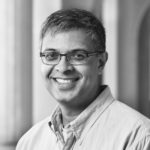

![[]](https://ecp.yusercontent.com/mail?url=http%3A%2F%2Fen.bcdn.biz%2FImages%2F2015%2F12%2F23%2F0d1e9a49-55d8-4a50-bf4e-9e5039c7faea.jpg&t=1605829257&ymreqid=91068bba-c626-c00c-1c25-4100bf019200&sig=oajIa3_cGhf1xzxSUCtiNQ--~D) 2 ‘Who’s coming?’
2 ‘Who’s coming?’ ![[]](https://ecp.yusercontent.com/mail?url=http%3A%2F%2Fen.bcdn.biz%2FImages%2F2015%2F12%2F23%2F56df8888-c60c-496a-9a67-5b57d51195ca.jpg&t=1605829257&ymreqid=91068bba-c626-c00c-1c25-4100bf019200&sig=ahVbAQgjtnGmdm3nXQGFDA--~D)
![[]](https://ecp.yusercontent.com/mail?url=http%3A%2F%2Fen.bcdn.biz%2FImages%2F2015%2F12%2F23%2Fce1b8ab7-0dd5-4001-9f61-04e2711147aa.jpg&t=1605829257&ymreqid=91068bba-c626-c00c-1c25-4100bf019200&sig=VuWmr2qOdojpQphFC.V6Mw--~D)
![[]](https://ecp.yusercontent.com/mail?url=http%3A%2F%2Fen.bcdn.biz%2FImages%2F2015%2F12%2F23%2Fce96b256-9a4d-47c9-8782-f8e499428cde.jpg&t=1605829257&ymreqid=91068bba-c626-c00c-1c25-4100bf019200&sig=qwQFjr9FEjKVXn5U4QMDRw--~D)
![[]](https://ecp.yusercontent.com/mail?url=http%3A%2F%2Fen.bcdn.biz%2FImages%2F2015%2F12%2F23%2F74507356-26d3-4a45-ad66-8bb61f49d89e.jpg&t=1605829257&ymreqid=91068bba-c626-c00c-1c25-4100bf019200&sig=6TePddtGjfNwKcbjv9wgFw--~D)
![[]](https://ecp.yusercontent.com/mail?url=http%3A%2F%2Fen.bcdn.biz%2FImages%2F2015%2F12%2F23%2F9e165955-0452-4633-b6c5-9fcd21f22ef3.jpg&t=1605829257&ymreqid=91068bba-c626-c00c-1c25-4100bf019200&sig=gsa4dNh9iWnzmrzu574Dog--~D)
![[]](https://ecp.yusercontent.com/mail?url=http%3A%2F%2Fen.bcdn.biz%2FImages%2F2015%2F12%2F23%2F1e6fb3ec-a860-4fac-a73f-c5fcd2625c55.jpg&t=1605829257&ymreqid=91068bba-c626-c00c-1c25-4100bf019200&sig=7crDiprX3Kn93hVGbOVqtg--~D)
![[]](https://ecp.yusercontent.com/mail?url=http%3A%2F%2Fen.bcdn.biz%2FImages%2F2015%2F12%2F23%2F998a76f2-41ff-4105-b762-8e8c4d59a742.jpg&t=1605829257&ymreqid=91068bba-c626-c00c-1c25-4100bf019200&sig=60ruICv213q50mzTjCAmDQ--~D)
![[]](https://ecp.yusercontent.com/mail?url=http%3A%2F%2Fen.bcdn.biz%2FImages%2F2015%2F12%2F23%2F99e1f705-ec0e-4f95-9902-6c2218dc6399.jpg&t=1605829257&ymreqid=91068bba-c626-c00c-1c25-4100bf019200&sig=kzysJhrrw8LB3j6C7xAILg--~D)
![[]](https://ecp.yusercontent.com/mail?url=http%3A%2F%2Fen.bcdn.biz%2FImages%2F2015%2F12%2F23%2F8033d354-7669-4f81-9248-e41baa366274.jpg&t=1605829257&ymreqid=91068bba-c626-c00c-1c25-4100bf019200&sig=IC_HulonCPojqR80dqobsQ--~D)
![[]](https://ecp.yusercontent.com/mail?url=http%3A%2F%2Fen.bcdn.biz%2FImages%2F2015%2F12%2F23%2Fc58aac18-7582-424d-9e2e-9f4fd20af6b7.jpg&t=1605829257&ymreqid=91068bba-c626-c00c-1c25-4100bf019200&sig=NZ_Hna7eWMmaFBpqEePWmA--~D)
![[]](https://ecp.yusercontent.com/mail?url=http%3A%2F%2Fen.bcdn.biz%2FImages%2F2015%2F12%2F23%2Fa714ca2f-52fb-4aaf-b34f-d92e5de401f9.jpg&t=1605829257&ymreqid=91068bba-c626-c00c-1c25-4100bf019200&sig=EcBWdFH_H3IKlqDV14ehmw--~D)
![[]](https://ecp.yusercontent.com/mail?url=http%3A%2F%2Fen.bcdn.biz%2FImages%2F2015%2F12%2F23%2F0857a84b-fd58-4f22-bc05-ae4a7627e066.jpg&t=1605829257&ymreqid=91068bba-c626-c00c-1c25-4100bf019200&sig=V3rEALunkPVvZbRYqe310A--~D)
![[]](https://ecp.yusercontent.com/mail?url=http%3A%2F%2Fen.bcdn.biz%2FImages%2F2015%2F12%2F23%2F68fc34e5-8fc3-42fa-931c-1d2d413c5743.jpg&t=1605829257&ymreqid=91068bba-c626-c00c-1c25-4100bf019200&sig=9ajViGS7Fb6151pI0.y9fg--~D)
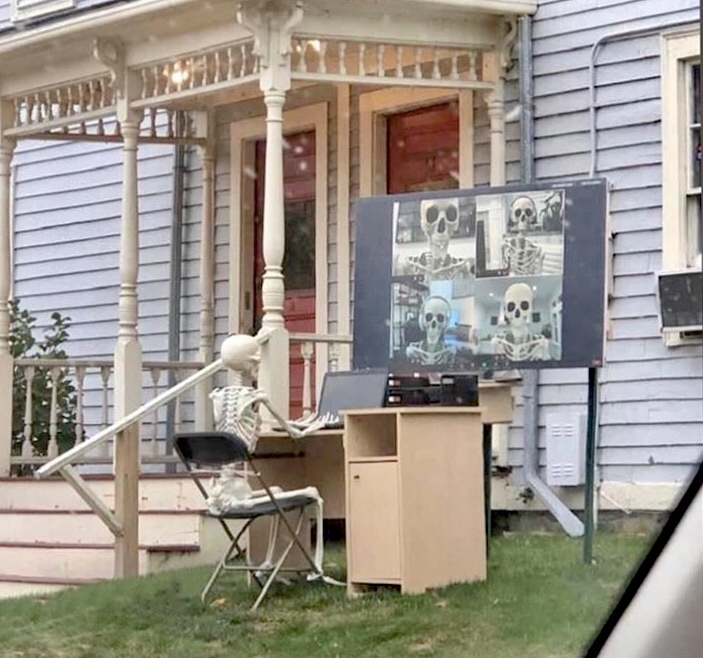


 Justplainbill's Weblog
Unbelievable, 2 Feb 21
Our NEW HEALTH CZAR below, and I thought John Kerry was the worst possible appointment made by Joe Biden, no longer.
Sometimes the pure transparent adherence to a false, fake and hypocritical ideology can’t help but make you laugh, no matter how sad and illogical the action is. To a logical, rational thinking person, sometimes it’s just too much. This one takes the cake, especially in light of the second pic.
But now we have a true Role Model to base our lives on!
(right click to open the images in a new tab; truth will out)